







Where Small-Sized Integrated Skid-Mounted Water Purification Systems Fit Best
Small-Sized Integrated Skid-Mounted Water Purification Treatment Equipment is best suited for projects that need fast deployment, compact footprints, and reliable water treatment performance. From remote communities and temporary sites to industrial facilities and emergency applications, these systems offer flexible, efficient solutions. Understanding where they fit best helps information-focused buyers evaluate practical benefits, installation conditions, and long-term operational value.
In the environmental and energy sector, water treatment decisions are rarely based on equipment size alone. Buyers also need to compare inlet water quality, discharge or reuse targets, site constraints, construction schedules, operating labor, and disinfection requirements. This is where Small-Sized Integrated Skid-Mounted Water Purification Treatment Equipment becomes highly relevant.
For information-driven decision makers, the main question is not whether compact systems work, but where they work best. In practical terms, these packaged units often perform well when flow demand is moderate, civil construction must be minimized, and commissioning needs to happen within 7–30 days instead of several months.
Shandong Wit Environmental Protection Technology Co.Ltd, backed by long-term engineering experience in municipal wastewater, industrial wastewater, aquaculture wastewater, ecological restoration, and chlorine dioxide application, understands that compact water treatment is most valuable when it is matched to the right operating scenario rather than promoted as a universal answer.
Where compact skid-mounted systems create the most value
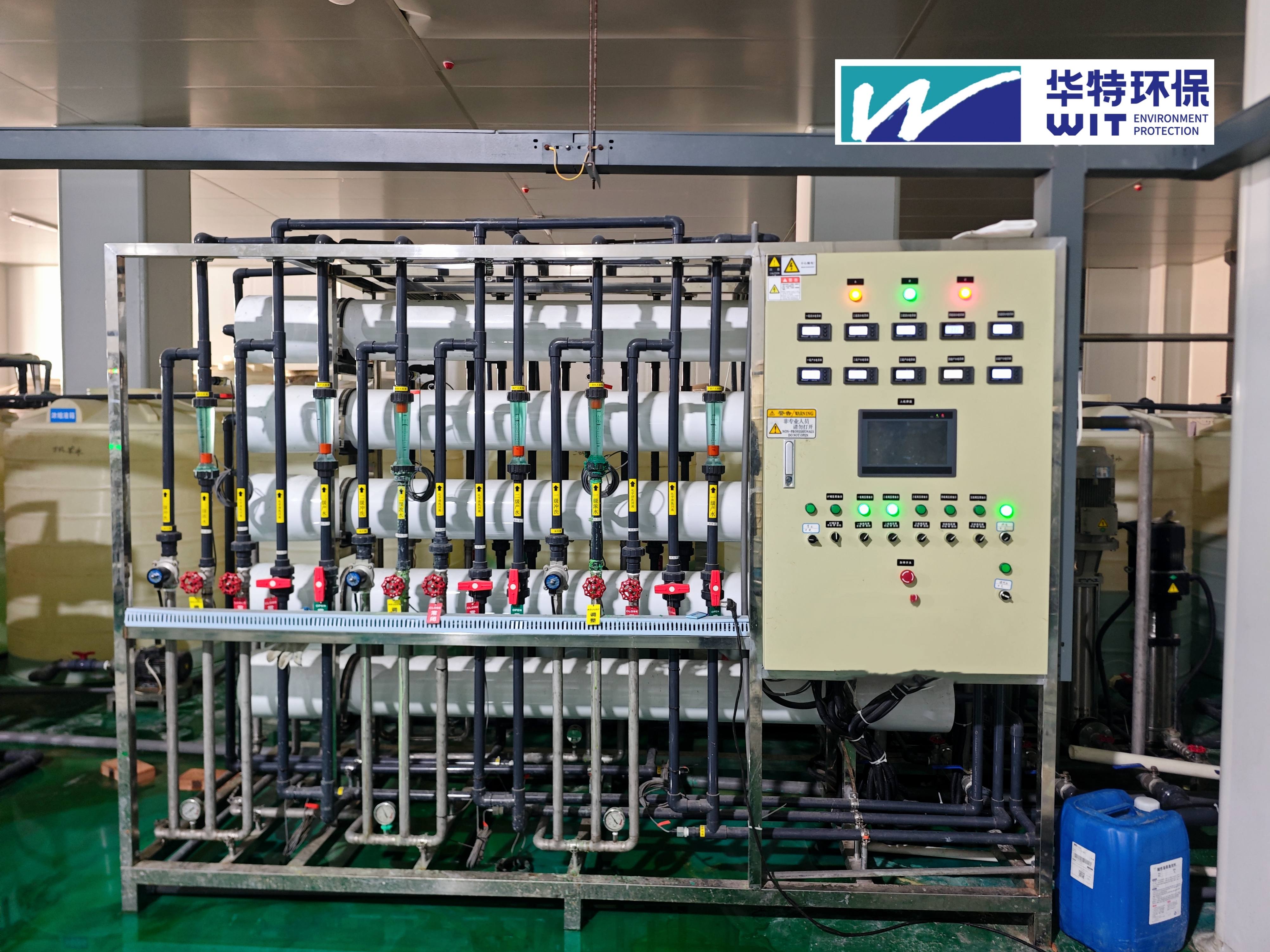
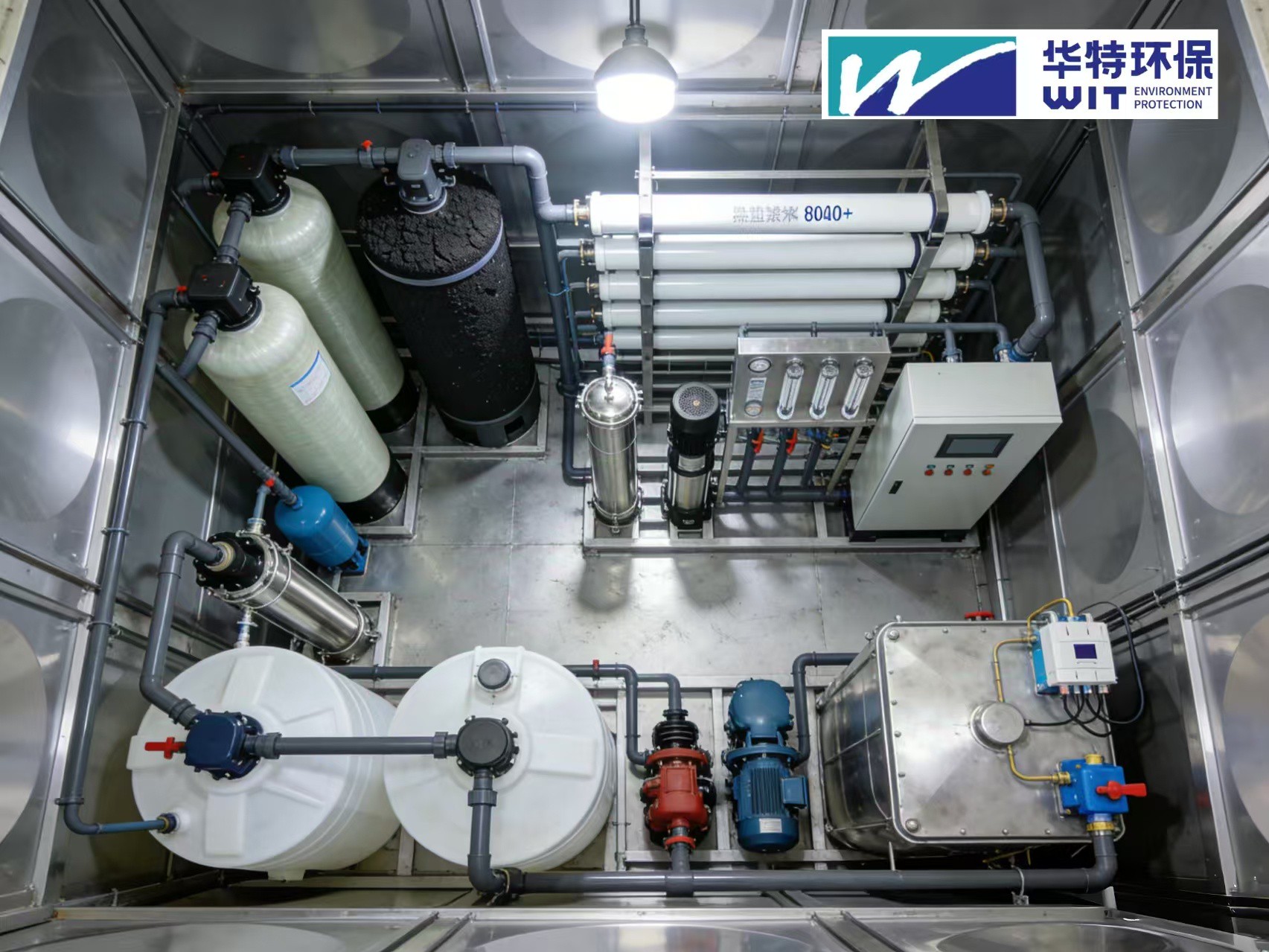
Small-Sized Integrated Skid-Mounted Water Purification Treatment Equipment usually fits best in projects with 5 m³/h to 100 m³/h treatment demand, limited installation area, and a clear need for modular delivery. These systems reduce on-site work because major process units are pre-assembled, pre-piped, and pre-wired before shipment.
Remote communities and decentralized water supply
Rural settlements, mountain service areas, island communities, and scattered residential clusters often lack the land, budget, or timeline for conventional plant construction. In these cases, integrated skids can shorten site preparation to 1–2 weeks and reduce civil interfaces to basic foundations, power connection, and pipeline tie-ins.
For decentralized applications, the key value lies in stable treatment under variable raw water conditions. Typical process combinations may include coagulation, sedimentation, filtration, activated carbon, membrane separation, and disinfection, depending on whether the source is surface water, groundwater, or reclaimed water.
Temporary sites and fast-track construction projects
Construction camps, mining support bases, temporary municipal works, and event-based installations often need water treatment for 6 months to 3 years rather than 20 years. A skid-mounted format is useful because it can be installed, relocated, or expanded in stages with fewer permanent structures.
This is particularly important where project schedules are compressed. If a buyer needs water treatment online within 10–20 days, modular equipment generally offers a more realistic path than a traditional plant requiring extensive concrete work, multi-trade coordination, and long commissioning cycles.
Industrial polishing, reuse, and auxiliary treatment
Many factories do not need a full central water plant replacement. Instead, they need a compact unit for pretreatment, side-stream polishing, process water conditioning, or wastewater reuse support. In such cases, Small-Sized Integrated Skid-Mounted Water Purification Treatment Equipment can serve textile, food processing, electronics, chemical, and aquaculture operations with targeted functions.
Industrial buyers usually focus on 4 factors: water quality fluctuation, operating continuity, chemical dosing control, and maintenance frequency. A properly selected skid can reduce operator burden by centralizing pumps, valves, instruments, and controls in one manageable module.
The table below highlights common application environments and the reasons compact integrated systems are often selected.
The main conclusion is straightforward: compact skids work best where deployment speed, modularity, and constrained space matter as much as treatment performance. They are less attractive when very large daily volumes, highly complex water matrices, or broad future expansion requirements demand a more customized plant layout.
How to evaluate technical fit before procurement
A compact footprint should never replace process verification. Before selecting Small-Sized Integrated Skid-Mounted Water Purification Treatment Equipment, buyers should assess at least 6 technical items: influent quality, target effluent standard, daily operating hours, peak flow factor, available utilities, and disinfection strategy.
Raw water variability and treatment objective
If turbidity varies between 5 NTU and 200 NTU, or if COD, ammonia, iron, manganese, algae, or microbial load fluctuates sharply by season, the skid must be designed for process flexibility. Buyers should ask whether the unit supports dosing adjustment, bypass logic, buffer capacity, and online monitoring.
The treatment goal also changes equipment configuration. Water for discharge, process reuse, irrigation, or auxiliary industrial use may require very different combinations of clarification, filtration, membrane separation, oxidation, and disinfection. A smaller system can still be robust, but only if the process path is correctly defined from the beginning.
Disinfection and oxidation considerations
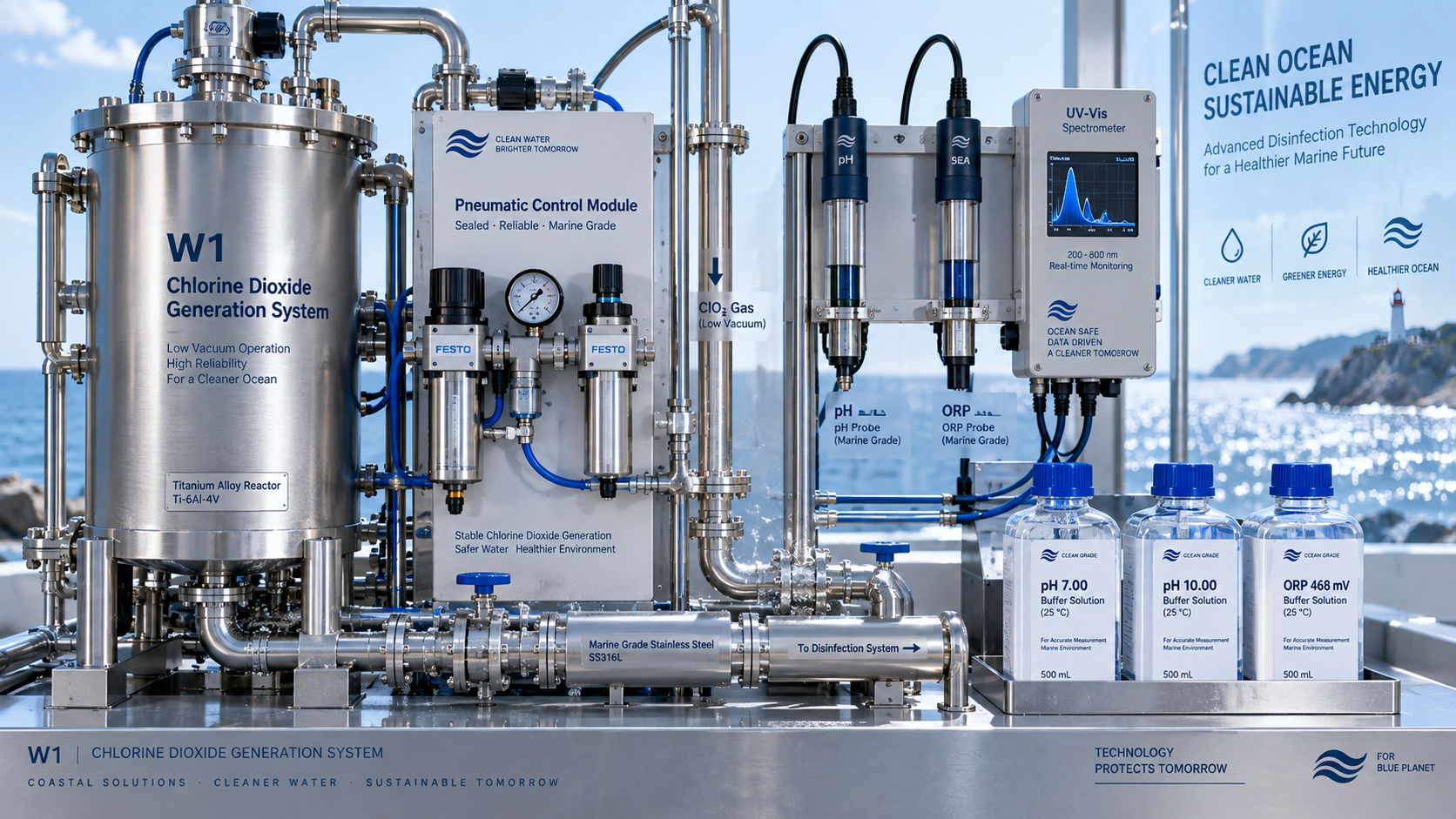
In compact water treatment systems, disinfection is often one of the most critical final barriers. For some industrial water treatment and wastewater reuse scenarios, chlorine dioxide is selected because of its oxidation capability and applicability across different water matrices. In projects requiring integrated chemical preparation support, buyers may also evaluate W2 type (high negative pressure) chlorine dioxide preparation technology as part of a broader treatment and disinfection framework.
Installation conditions and O&M reality
A skid-mounted unit may save space, but it still needs stable power, drainage, ventilation, chemical storage planning, and safe operator access. In practical layouts, maintenance clearance of 0.8–1.2 meters around key components is often advisable, especially for pumps, membrane housings, dosing points, and instrument panels.
Labor availability matters too. If the site only has 1 operator per shift or part-time monitoring, control logic and alarm design become more important than nominal capacity alone. Remote data access, auto-flush cycles, and simple consumable replacement intervals can significantly improve long-term usability.
The following table can help information-focused buyers compare key selection dimensions before sending inquiries or requesting quotations.
The pattern here is clear: procurement success depends on system matching, not brochure claims. A smaller integrated skid is usually a strong choice when the buyer can clearly define water characteristics, duty cycle, installation constraints, and maintenance expectations before final configuration.
Common limitations, implementation steps, and practical buyer advice
Even well-designed compact systems have boundaries. They may not be the ideal solution for very high-flow municipal expansion, raw water with multiple extreme contaminants, or projects where the treatment train is expected to double within 12 months. Knowing these limits helps buyers avoid oversimplified procurement decisions.
When a small integrated system may not be the best fit
- Daily treatment demand is expected to exceed modular expansion logic within 1–2 years.
- Influent quality varies beyond the control range of a compact standard process package.
- Site owners require highly customized redundancy, complex zoning, or multiple treatment branches.
- Local regulations demand extensive future tie-ins to a central utility network or large plant campus.
A practical 5-step implementation path
- Define water source, flow rate, and effluent objective with 7–30 day operating data if available.
- Confirm site constraints including footprint, drainage, power load, and access for lifting or transport.
- Select the treatment train and disinfection method based on contaminant profile and reuse target.
- Review commissioning scope, operator training, and spare parts plan for the first 3–6 months.
- Establish inspection frequency for filters, dosing systems, sensors, and sludge or concentrate handling.
Why supplier engineering depth matters
In environmental projects, equipment quality is only one part of delivery success. Engineering coordination, process adaptation, and field support are equally important. That is why many buyers prefer partners with cross-sector experience in municipal, industrial, and ecological governance rather than single-product vendors.
A company with experience across wastewater treatment, constructed wetlands, resource reuse, and disinfection technologies can usually provide more balanced guidance on whether a skid-mounted approach is appropriate, or whether the project should move toward a larger custom-built solution. In some treatment chains, supporting oxidation and disinfection modules such as W2 type (high negative pressure) chlorine dioxide preparation technology may also be evaluated as part of system optimization.
Frequently asked questions from information-stage buyers
One common question is whether compact skid-mounted units are only for emergency use. The answer is no. Many are used as long-term decentralized or industrial support systems, provided the flow range, water quality, and maintenance plan are realistic.
Another question is whether small systems are easier to maintain. They can be, but only when wear parts are accessible, chemical dosing is stable, and cleaning procedures are straightforward. A poorly matched small system can become harder to manage than a larger but better-engineered installation.
For buyers comparing alternatives, the most useful next step is usually a requirement sheet covering 8–10 inputs: raw water type, key pollutants, required output, daily operating hours, ambient conditions, utility availability, automation preference, footprint, expected service life, and preferred commissioning schedule.
Small-Sized Integrated Skid-Mounted Water Purification Treatment Equipment delivers the strongest value in projects that need compact design, shorter installation cycles, and reliable modular performance. It is especially suitable for decentralized supply, temporary deployments, industrial side-stream treatment, and emergency response where 5 m³/h to 100 m³/h capacity is often enough and site conditions are constrained.
For organizations evaluating practical water treatment options, the right choice depends on process fit, disinfection strategy, operating conditions, and supplier engineering capability. If you want to assess whether a skid-mounted solution matches your project, contact us to get a tailored recommendation, discuss technical details, or learn more about integrated environmental treatment solutions.



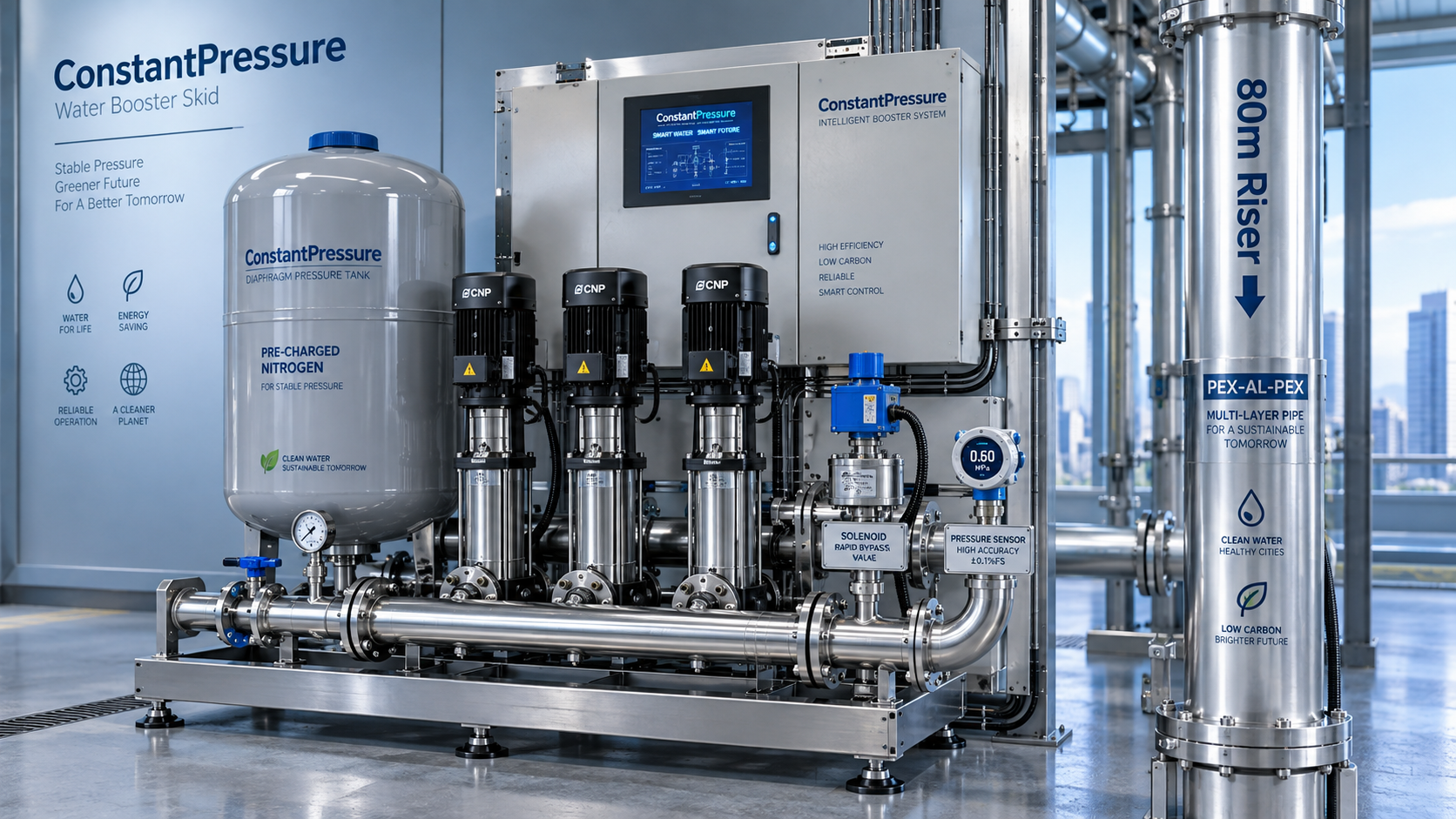
 How ConstantPressure Water Supply Skid-Mounted Equipment avoids water hammer during pump start-up in district heating networks
 chlorine dioxide preparation technology in coastal desalination plants?") What maintenance intervals are validated for W1 type (low negative pressure) chlorine dioxide preparation technology in coastal desalination plants?
What maintenance intervals are validated for W1 type (low negative pressure) chlorine dioxide preparation technology in coastal desalination plants? Does Large-Scale Integrated Skid-Mounted Water Purification Treatment Equipment include redundant control logic for SCADA integration?
 How ConstantPressure Water Supply Skid-Mounted Equipment responds to sudden valve closure events in high-rise buildings
 chlorine dioxide preparation technology?") What feedwater pH range limits the stability of W1 type (low negative pressure) chlorine dioxide preparation technology?
What feedwater pH range limits the stability of W1 type (low negative pressure) chlorine dioxide preparation technology? Can Industrial Water Purification Equipment meet ISO 22000 water quality requirements for beverage production lines?
GET A FREE QUOTE
Service Commitment: Upon receipt of your message, a dedicated representative will contact you as soon as possible to provide efficient and professional service support.
