







Key Process Units Inside Large-Scale Integrated Skid-Mounted Water Purification Treatment Equipment Explained
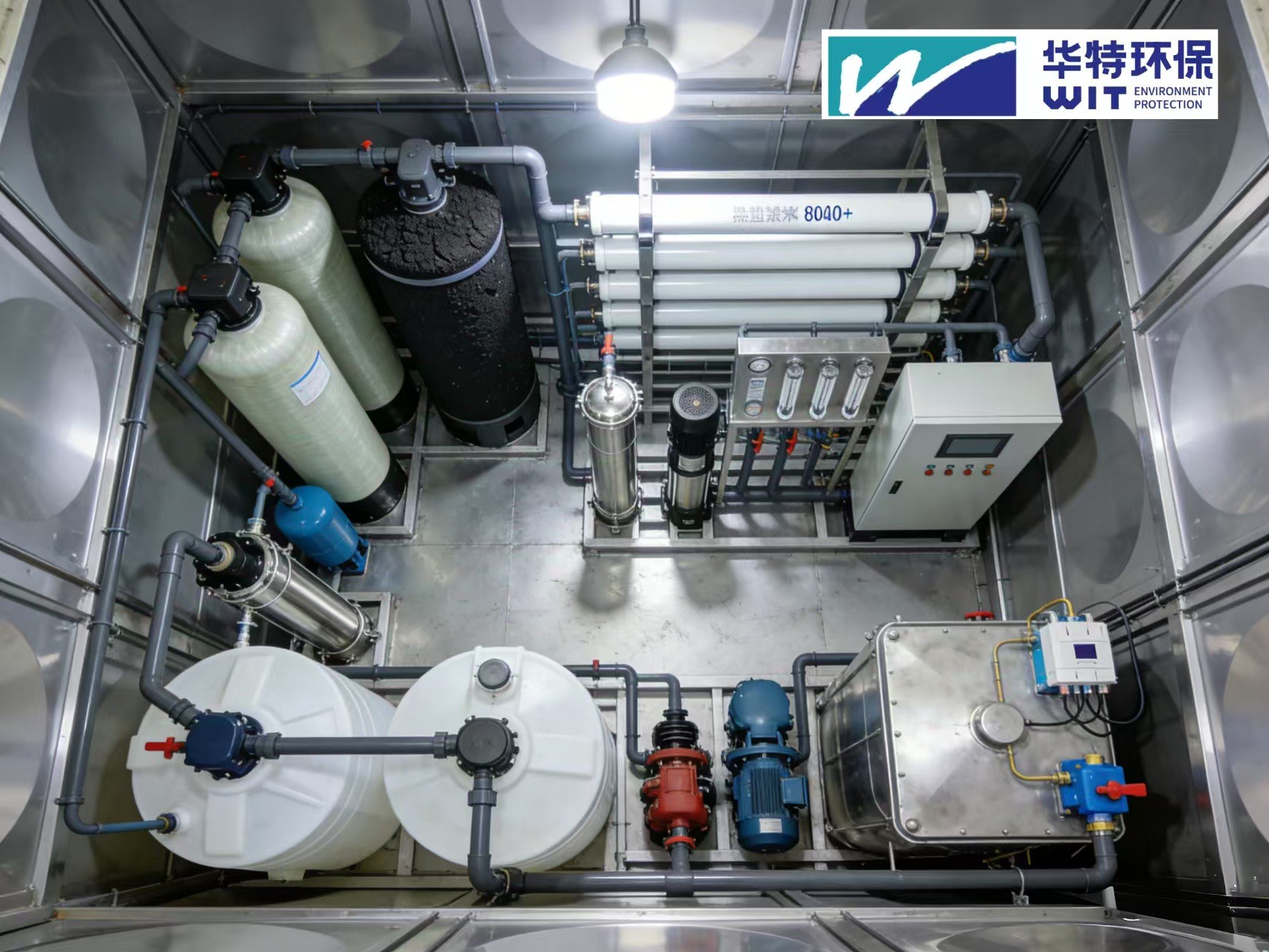
Technical review of Large-Scale Integrated Skid-Mounted Water Purification Treatment Equipment usually starts with process continuity: whether each internal unit is matched to influent variability, hydraulic loading, fouling tendency, chemical compatibility, and maintenance access. A skid-mounted system may look compact from the outside, but its engineering value depends on how pretreatment, reaction, separation, disinfection, sludge handling, and control are arranged inside a limited footprint without creating operational conflicts.
Pretreatment sets the boundary conditions for the whole skid
The first unit is rarely complicated, but it often determines whether downstream sections remain stable. In large-scale integrated equipment, pretreatment commonly includes coarse screening, fine screening, grit or particle interception, and equalization where the feed source is inconsistent. If raw water carries fibrous solids, algae, suspended sand, or intermittent oil, the pretreatment train has to be selected for the actual contaminant shape and not only for nominal particle size.
For skid-mounted layouts, duplex basket strainers, wedge wire screens, static screens, or compact rotary drum units may be used depending on solids character. Stainless steel grades such as 304 or 316 are common, but chloride-rich water, coastal deployment, or oxidizing chemical exposure may require closer attention to corrosion allowance, gasket material, and weld passivation quality. A frequent misjudgment is assuming that a finer opening always gives better protection. In practice, an overly fine first barrier can cause unstable head loss, frequent blinding, and difficult cleaning, especially when influent solids are soft and compressible.
Equalization is sometimes omitted to save space, yet in many projects the absence of even a small buffer tank makes the rest of the skid work harder. Variable turbidity, pH shock, or sudden conductivity changes can destabilize dosing ratios and membrane flux. Where feed fluctuation is expected, equalization volume, mixer arrangement, and level control logic deserve the same attention as the main treatment modules.
Chemical dosing and reaction sections must be evaluated as a mixing problem
Coagulation, flocculation, pH adjustment, dechlorination, scale inhibition, and oxidation reduction steps are often grouped into one compact section. The design issue is not simply whether these chemicals are present, but whether the skid provides enough sequence control and reaction time for them to work as intended. Static mixers can be effective for rapid dispersion, but they do not replace staged reaction zones where floc growth or neutralization kinetics require residence time.
In water purification skids handling suspended solids or colloidal matter, coagulant feed usually interacts with raw water alkalinity, temperature, and organic content. A unit designed around jar-test assumptions may perform differently after transport and field installation if the hydraulic profile changes. Pump pulsation, poor injection quill placement, and short-circuiting inside compact tanks can all reduce reaction efficiency.
Some systems integrate higher-rate solids capture technologies ahead of membrane or filtration sections. In that context, equipment such as Rare Earth Disk Separation and Purification Skid-Mounted Equipment / Magnetic Coagulation Skid-Mounted Equipment may be considered where magnetic seed addition and rapid solid-liquid separation fit the feed characteristics. The engineering question is whether the added separation intensity reduces downstream fouling enough to justify the extra dosing, recirculation, and magnetic media management requirements.
Clarification and solids separation inside a compact footprint
After chemical reaction, the skid may use inclined plate settlers, lamella modules, dissolved air flotation, magnetic separation, multimedia filtration, or membrane barriers. The right unit depends on whether the target is turbidity reduction, algae removal, color reduction, fine suspended solids capture, or polishing before reverse osmosis. Large-scale integrated skid-mounted water purification treatment equipment often combines two mechanisms because compact skids have limited tolerance for upset loading.
Lamella clarification can work well when floc density is stable and sludge withdrawal is reliable. Problems appear when sludge hoppers are undersized, drain angles are shallow, or viscous sludge bridges inside the bottom section. In flotation units, recycle pressure stability, air dissolution efficiency, and scum removal mechanics matter more than brochure-level surface loading claims. If microbubbles are inconsistent, flotation performance drifts quickly even when the tank body looks adequately sized.
Where advanced pretreatment is required, magnetic coagulation or disk-based rare earth separation may be inserted as an intensification step rather than as a standalone answer. The point is not novelty; it is whether the skid can maintain solids capture under variable inlet conditions without excessive sludge carryover to the next unit.
Filtration and membrane modules are where many hidden constraints appear
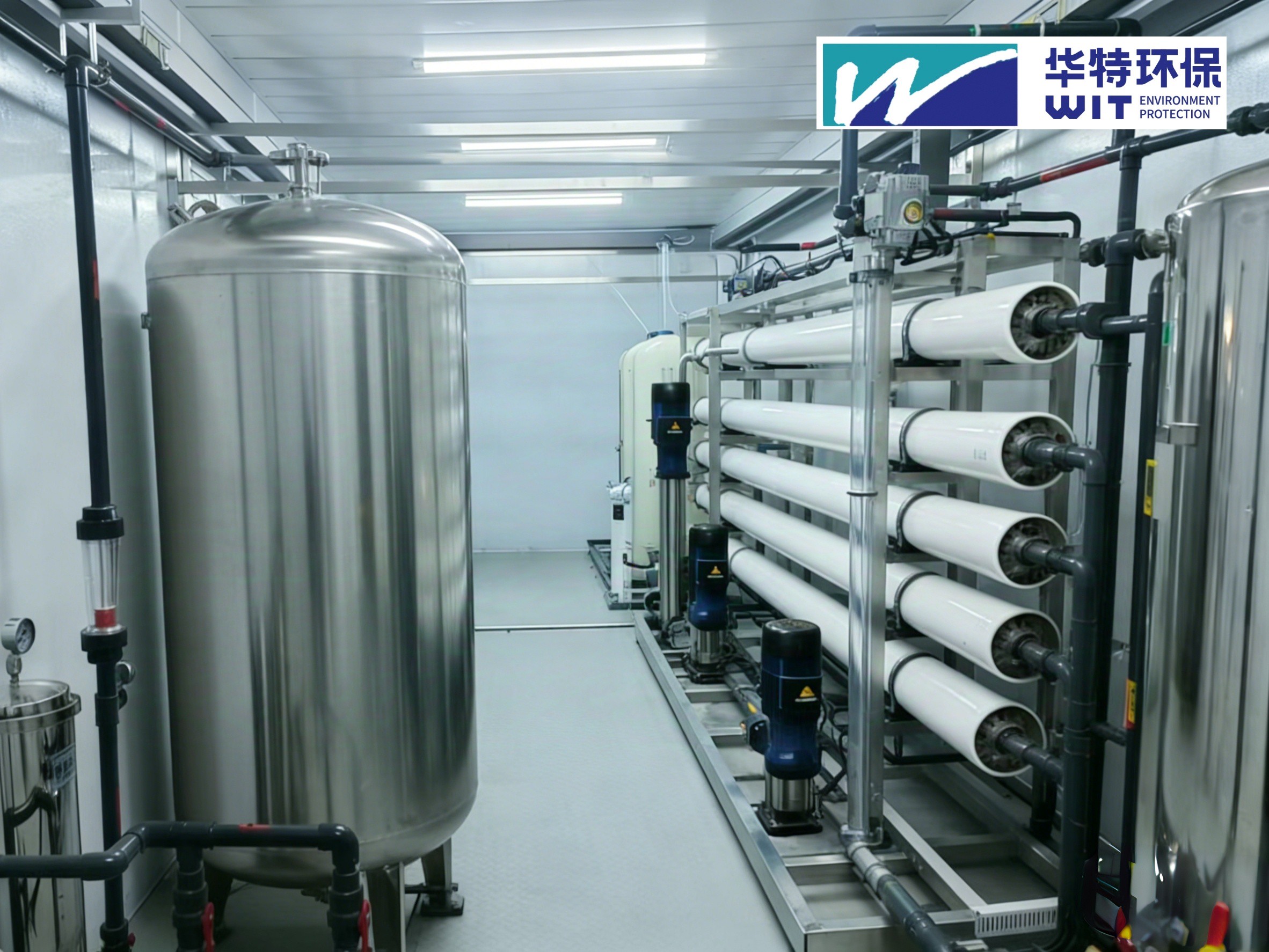
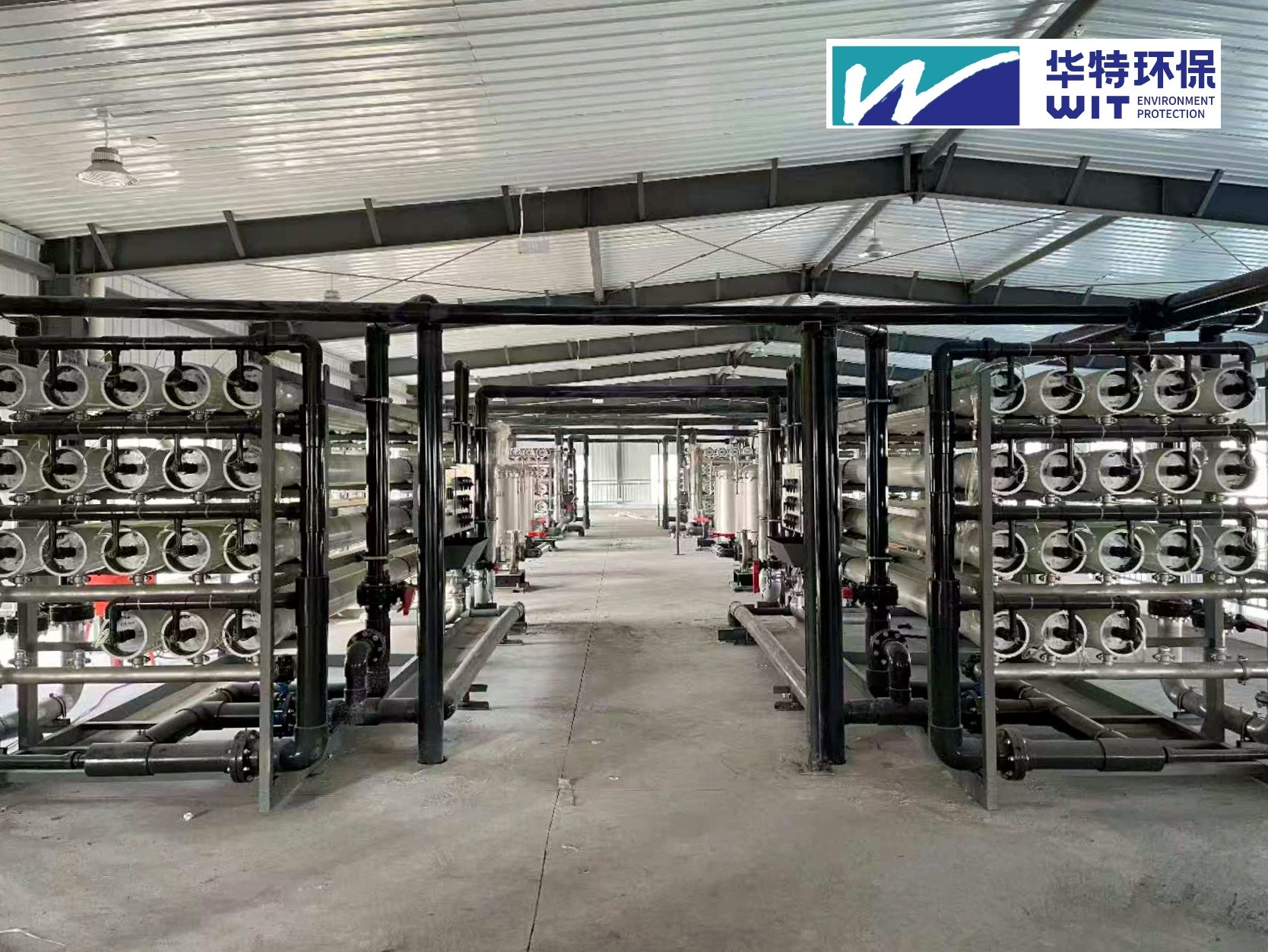
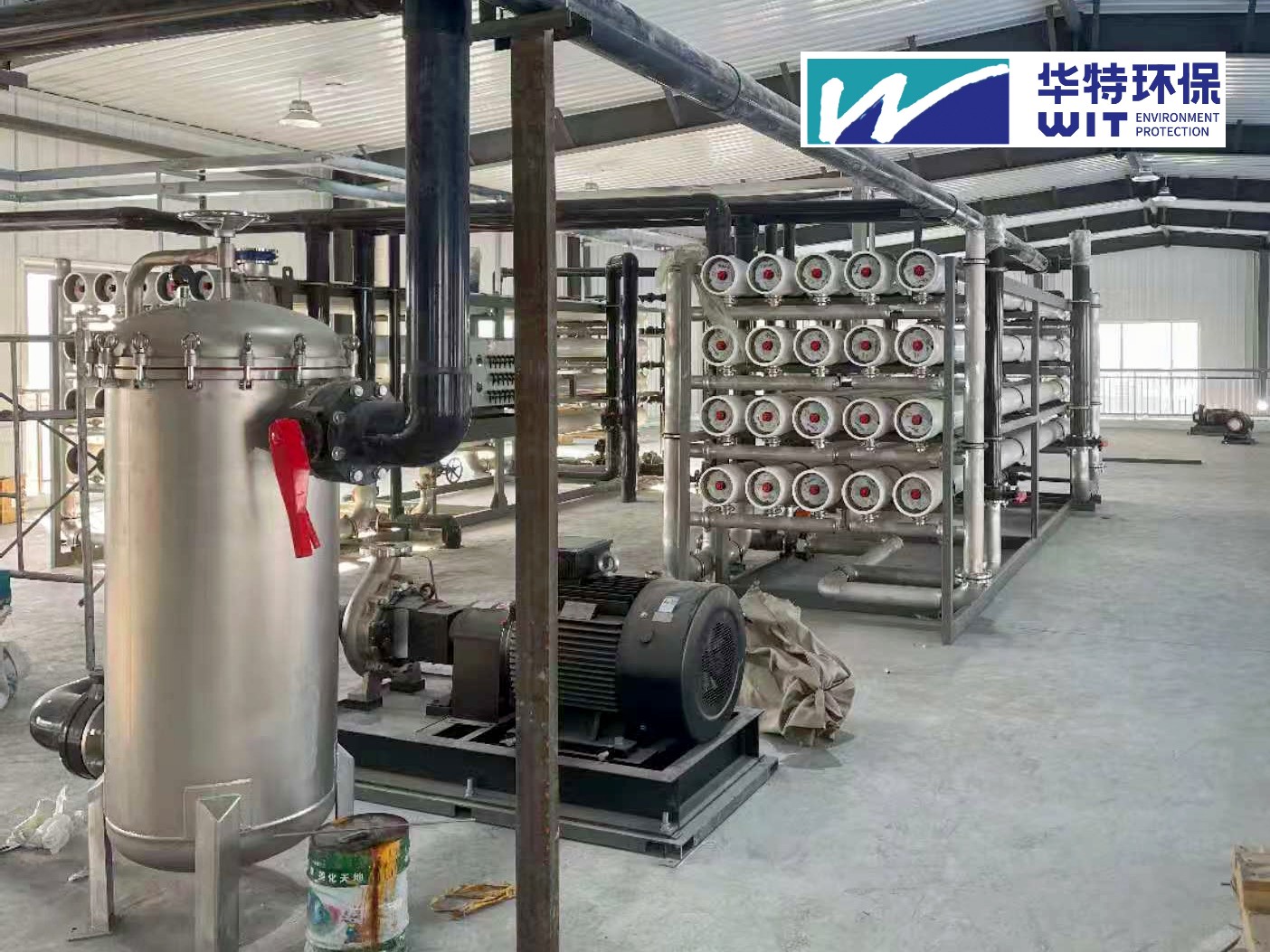
Pressure sand filters, activated carbon filters, ultrafiltration, nanofiltration, and reverse osmosis are common in integrated water purification skids. Technical assessment should focus on flux assumptions, backwash or chemical cleaning strategy, feed channel fouling risk, and the quality of upstream conditioning. A membrane train can appear oversized on paper and still underperform if pretreatment allows residual floc fragments, oil traces, oxidants, or hardness scaling precursors to reach the elements.
For pressure vessels and piping, material selection is tied to both chemistry and cleaning practice. FRP vessels may be acceptable in some polishing steps, while stainless manifolds or lined carbon steel may be preferred in others. Elastomers, valve seats, and instrument wetted parts should be checked against sodium hypochlorite, chlorine dioxide, acids, alkalis, antiscalants, and reducing agents that the skid is expected to handle.
A common field issue is transport-induced stress. Large skids shipped as near-complete assemblies may experience vibration, frame twist, or minor nozzle misalignment. On membrane systems, that can show up later as leakage at end caps, instrument drift, or uneven distribution across parallel trains. Factory hydrotesting is useful, but site recommissioning still needs venting, torque verification, and control loop confirmation after installation.
Disinfection is a controlled contact step, not a chemical add-on
Disinfection inside large integrated skids may use chlorine dioxide, sodium hypochlorite, ultraviolet reactors, ozone, or combined barriers. Selection depends on feed quality, target water use, residual requirements, and by-product sensitivity. Technical review should examine where disinfectant is injected, how contact time is secured, whether there is dead volume or bypass risk, and how residual is monitored.
Chlorine dioxide systems, for example, require attention to feed chemical isolation, generation stability, ventilation, and compatibility of seals and dosing lines. UV disinfection should be examined through transmittance assumptions, sleeve fouling tendency, lamp access clearance, and whether upstream turbidity control is good enough for the installed reactor. A disinfection stage cannot compensate for unstable solids removal upstream; it only performs reliably when the rest of the skid holds its part of the process envelope.
Sludge, backwash water, and drains should not be treated as secondary details
Compact treatment skids often devote most design effort to the clean-water side while leaving sludge draw-off, backwash recovery, and floor drainage underdeveloped. That creates avoidable operating interruptions. Every clarification or filtration step generates a reject stream that has to be drained, thickened, recirculated, or discharged into a compatible downstream system.
- Intermittent sludge valves may save actuator count, but they can plug if solids are sticky or if line velocity is too low.
- Backwash pumps and air scour systems need enough isolation and interlock logic to prevent pressure shocks on adjacent units.
- Drain points should be physically reachable; a low nozzle hidden behind chemical skids is a maintenance problem waiting to happen.
On integrated packages, poor sludge handling often reveals itself indirectly through rising differential pressure, shortened filter runs, or recurring membrane cleaning frequency rather than through an obvious alarm.
Instrumentation and control determine whether the skid is actually integrated
Integration is not achieved by mounting several vessels on one steel base. It depends on whether pressure transmitters, flowmeters, turbidity analyzers, conductivity probes, pH sensors, ORP meters, level switches, and valve feedback points are arranged into usable control logic. A technically sound skid should allow operators to distinguish between fouling, dosing failure, blocked pretreatment, pump cavitation, and sensor malfunction without excessive manual diagnosis.
Sensor location matters. A turbidity meter placed too close to a chemical injection point may read unstable values. Conductivity probes installed in poorly mixed branches can distort membrane recovery calculations. Sample lines that are too long, unflushed, or exposed to temperature swings reduce the value of online instrumentation even when the devices themselves are acceptable.
Control cabinets inside or beside the skid should also be reviewed for heat dissipation, cable segregation, ingress protection, and maintainable wiring layout. In outdoor or humid environments, enclosure condensation and terminal corrosion can become recurring faults if panel climate control is overlooked.
Mechanical layout affects serviceability and long-term stability
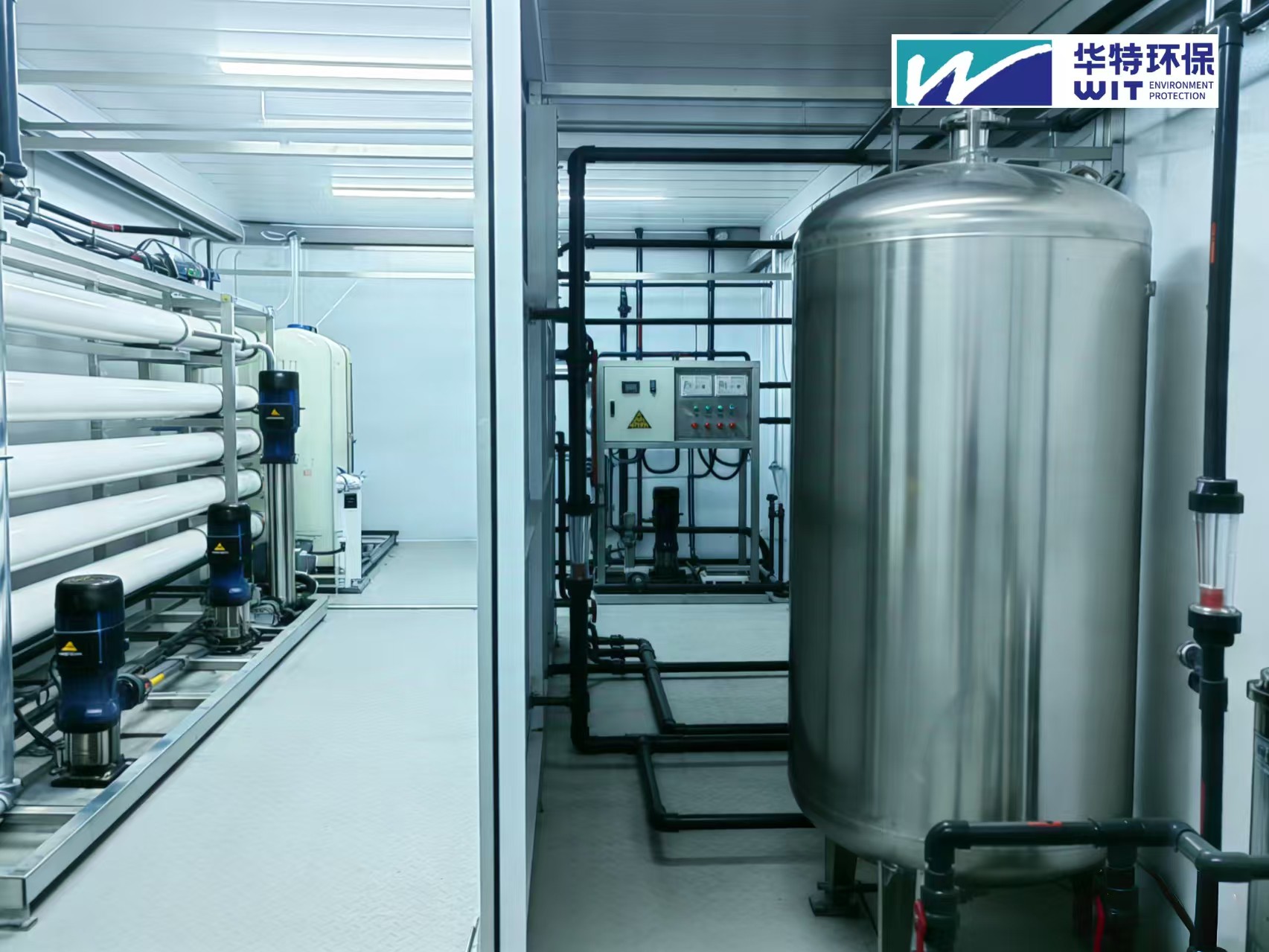
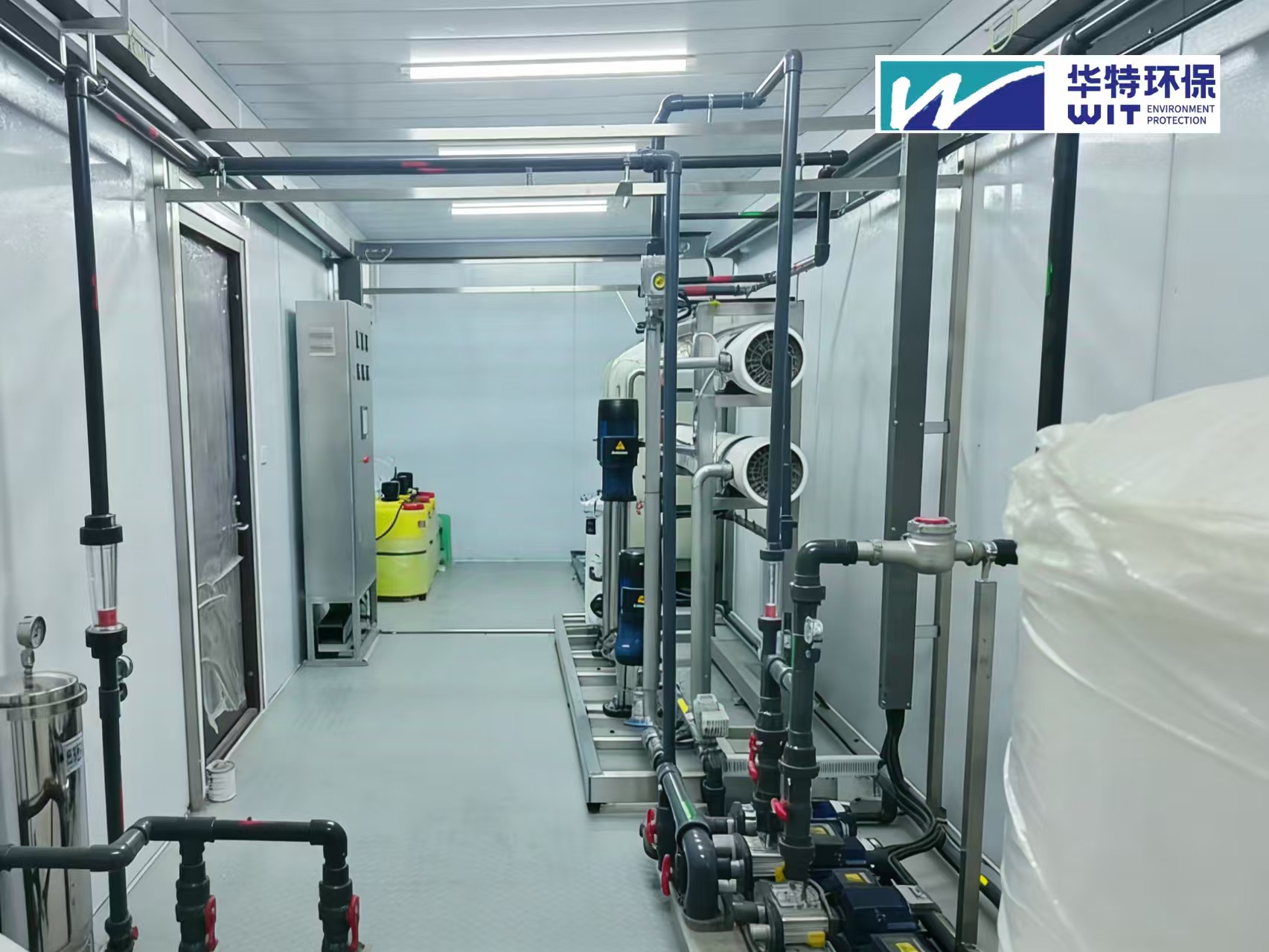
When evaluating key process units inside Large-Scale Integrated Skid-Mounted Water Purification Treatment Equipment, the physical relationship between units is as important as the process diagram. Pump suction lengths, valve access, lifting space above cartridge housings or membrane racks, chemical unloading paths, and walkable clearance around instruments all influence whether the skid remains maintainable after commissioning.
Frame design deserves scrutiny as well. A rigid base with appropriate lifting points and transport reinforcement reduces distortion during shipment and crane handling. Piping supports should account for dynamic loads from pumps, water hammer risk, and thermal expansion where hot cleaning solutions are used. Compact skids sometimes pack equipment tightly enough that one leaking fitting can spray motors, analyzers, or electrical conduits nearby, turning a minor issue into a multi-system shutdown.
In some treatment trains, an additional high-rate separation module such as Rare Earth Disk Separation and Purification Skid-Mounted Equipment / Magnetic Coagulation Skid-Mounted Equipment can improve front-end solids control, but only if the surrounding pumps, chemical dosing, and sludge circuits are designed around its operating rhythm rather than attached as an afterthought.
The strongest technical evaluations usually come from reading the skid as a working process rather than a list of vessels and pumps. If pretreatment protects the reaction zone, if reaction supports the chosen separator, if reject streams are managed cleanly, and if controls reflect real operating states, the equipment has a far better chance of delivering stable water quality under real site conditions.


 Which Standards and Certifications Matter for Large-Scale Integrated Skid-Mounted Water Purification Treatment Equipment?
 Key Process Units Inside Large-Scale Integrated Skid-Mounted Water Purification Treatment Equipment Explained
 Common Startup Failures in Large-Scale Integrated Skid-Mounted Water Purification Treatment Equipment and How to Fix Them
 When Does Large-Scale Integrated Skid-Mounted Water Purification Treatment Equipment Make Sense for Industrial Water Projects?
 How to Compare Capacity, Footprint, and Water Quality in Large-Scale Integrated Skid-Mounted Water Purification Treatment Equipment
 What Maintenance Planning Is Needed to Keep Large-Scale Integrated Skid-Mounted Water Purification Treatment Equipment Stable?
GET A FREE QUOTE
Service Commitment: Upon receipt of your message, a dedicated representative will contact you as soon as possible to provide efficient and professional service support.
