







How to Compare Capacity, Footprint, and Water Quality in Large-Scale Integrated Skid-Mounted Water Purification Treatment Equipment
Meta Title: How to Compare Capacity, Footprint, and Water Quality in Large-Scale Integrated Skid-Mounted Water Purification Treatment Equipment
If you are comparing Large-Scale Integrated Skid-Mounted Water Purification Treatment Equipment, the real question is not which unit has the biggest nameplate output. It is whether the system can deliver stable water quality under your actual influent conditions, fit the site without creating installation headaches, and keep enough operating margin for seasonal or process fluctuations. Many selection mistakes happen because capacity, footprint, and effluent quality are reviewed separately. In practice, they are tightly linked.
A quick answer is this: start with raw water variability, then test whether the claimed treatment capacity still holds at your target water quality, and only then compare footprint. A compact skid that needs frequent chemical correction, upstream buffering, or downstream polishing may look efficient on paper but cost more space and effort at project level.
Capacity is not just flow rate
One of the most common evaluation errors is taking rated capacity at face value. A supplier may state a daily or hourly throughput, but technical assessors should immediately ask under what water conditions that figure was achieved. Turbidity, suspended solids, organics, hardness, algae load, temperature, and source water swings can all reduce effective throughput.
For large-scale skid-mounted systems, useful capacity should be checked against at least three conditions: normal influent, peak influent, and upset influent. If a unit can meet the target only when raw water is unusually stable, the practical capacity is lower than the brochure suggests.
In municipal make-up water, industrial process water, and decentralized emergency supply projects, the better question is often: how much treated water can the skid produce while still meeting the required outlet standard over a full operating cycle? That gives you a more honest basis for comparison than nominal flow alone.
Ask for clarification on these points before scoring capacity:
- Design flow versus guaranteed flow
- Influent water quality assumptions
- Peak factor and turndown range
- Backwash, cleaning, or regeneration downtime
- Whether auxiliary tanks or equalization are required outside the skid
A system that claims high throughput but loses significant uptime to cleaning may underperform a slightly larger unit with steadier operation.
How footprint should really be compared in skid-mounted water treatment
Footprint comparisons often get distorted because vendors highlight skid dimensions, while the project team has to live with the total installed envelope. That includes access clearance, chemical dosing area, pipe routing, operator movement, lifting space for maintenance, sludge or waste handling, and sometimes weather protection.
So when you compare footprint, separate it into two numbers: equipment footprint and operating footprint. The first is what sits on the floor. The second is what the site must reserve for the system to function safely and be maintained without improvisation.
This matters most in retrofit projects. A skid that looks attractive for a tight plant room can become troublesome if membrane replacement, media loading, pump servicing, or instrument calibration requires partial disassembly. In those cases, the “smallest” unit may create the largest long-term burden.
Another detail people miss is hydraulic layout. A compact arrangement with poor internal piping logic can increase head loss, complicate troubleshooting, and reduce expansion flexibility. For assessors, a slightly larger but cleaner process layout is often the better engineering decision.
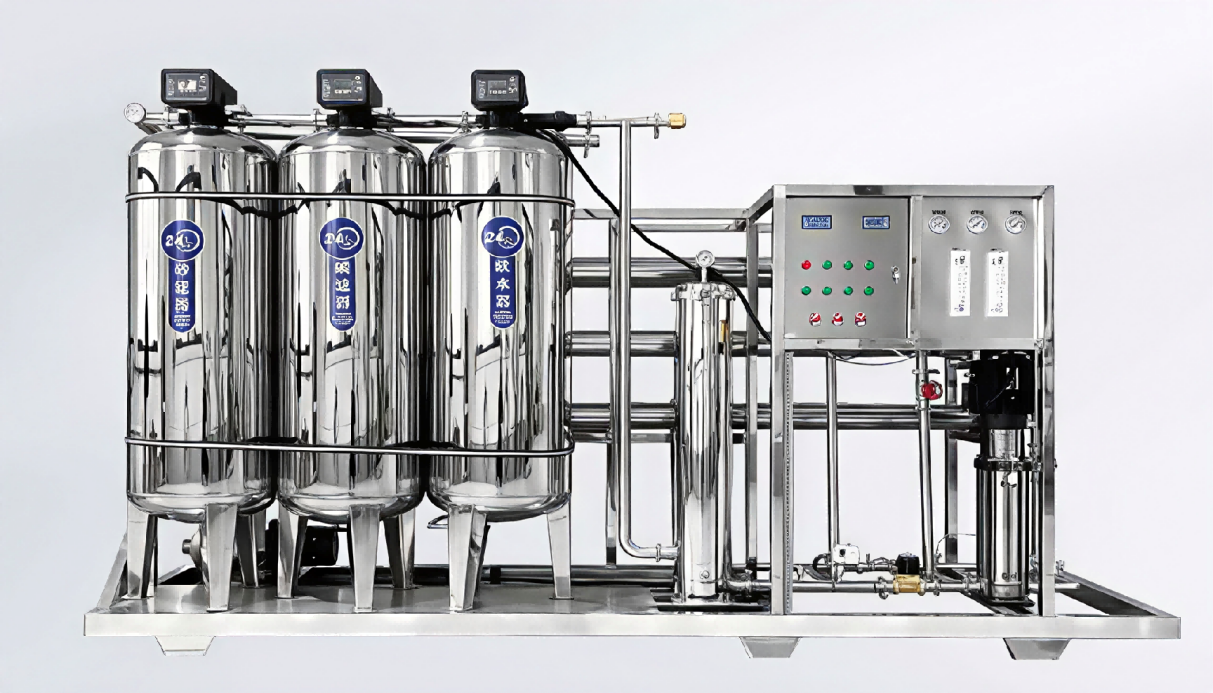
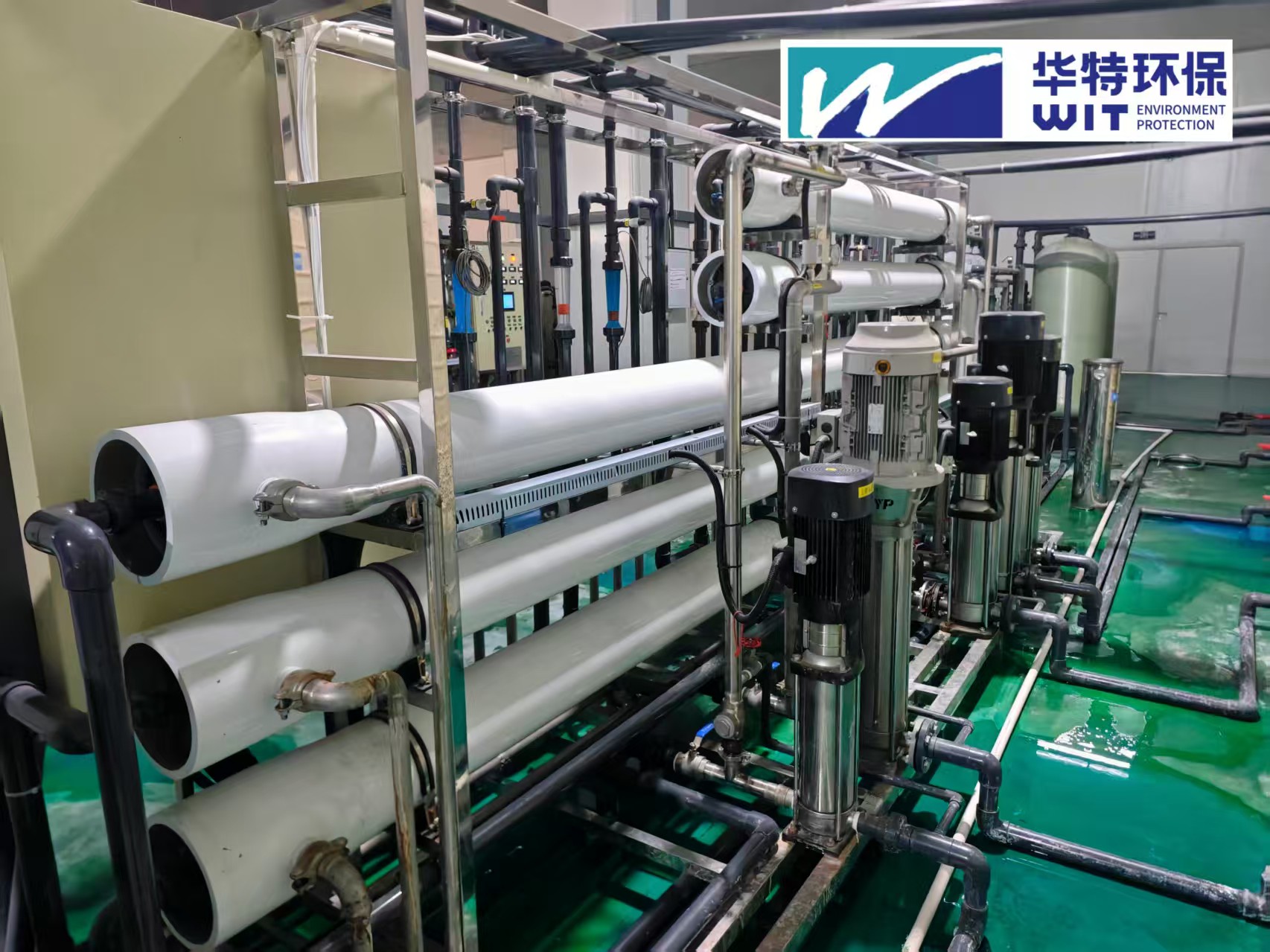
When site conditions are constrained, it helps to review whether the integrated skid can eliminate separate civil structures or reduce field assembly. That is where packaged solutions sometimes provide real value. For example, Large-Scale Integrated Skid-Mounted Water Purification Treatment Equipment may be worth reviewing when a project needs faster deployment and tighter control over factory integration, but the decision still has to come back to raw water, maintenance access, and outlet targets.
Water quality is the real pass-fail item
In actual selection work, finished water quality should drive the comparison, not sit at the end of the checklist. A skid-mounted system can be considered suitable only if it consistently reaches the required standard under realistic operating conditions, not just during acceptance testing.
That means you need to define the target properly. “Good water quality” is too vague for technical evaluation. The decision basis should be tied to the project purpose: process reuse, pretreatment for RO, municipal supply, cooling water, aquaculture, or discharge polishing all have different priorities.
Depending on the application, key indicators may include turbidity, SDI, residual suspended solids, COD reduction, color, microbial control, hardness, or oxidant residual management. If disinfection is part of the treatment train, compatibility with the overall process also matters. Companies with broader water and oxidation expertise, such as Shandong Wit Environmental Protection Technology Co.Ltd, tend to be more useful in these discussions because they work across wastewater treatment, industrial water treatment, and chlorine dioxide applications rather than treating the skid as an isolated product.
One practical rule: if two systems have similar capacity and footprint, choose the one with the clearer performance boundary. In other words, you want to know when water quality will start to drift, what alarms appear first, and what operators can do before noncompliance occurs. Predictability is more valuable than optimistic claims.
The trade-off most evaluations miss
Capacity, footprint, and water quality are not three separate scoring columns. They pull against each other.
Higher hydraulic loading can reduce retention time and hurt clarification or filtration performance. A smaller skid may compress process zones or maintenance access. Tighter water quality targets may require more stages, more dosing control, or more conservative design margins, which can increase both size and cost.
That is why the best comparison is scenario-based, not brochure-based. Take the same influent profile and target outlet standard, then compare how each option behaves under:
- average load
- peak turbidity or solids shock
- low-temperature operation, if relevant
- maintenance interruption
- future capacity increase
When you do this, some attractive options drop out quickly. They may still work in stable source water or short-duration operation, but they are weak choices for sites with variable influent or strict compliance risk.
What to request from suppliers before making a shortlist
A strong technical comparison needs more than a data sheet. Ask for a process description, design basis, utility consumption assumptions, instrument list, and clear statement of exclusions. If pilot data or reference performance exists for similar influent, that is far more useful than generic claims.
You should also confirm what is inside the skid boundary and what remains the owner’s responsibility. This affects both footprint and delivery schedule. In large projects, factory integration quality can save substantial field coordination time, but only if the package scope is clearly defined.
Where project risk is high, it is reasonable to ask for performance verification logic, not just promises. That may include jar testing, pilot verification, reference cases, or a documented guarantee structure. Specific values still need to be verified against project conditions and official contract documents.
Assessors who are comparing long-list options may also look at whether the supplier has broader engineering depth behind the skid package. That is where a company with experience in municipal wastewater, industrial wastewater, aquaculture wastewater, ecological restoration, and process disinfection has an edge: it usually means the team understands how the unit behaves in a full treatment chain, not only as factory-assembled equipment.
When a skid-mounted solution is a strong fit, and when it is not
These integrated systems are usually a strong fit when the project needs faster deployment, reduced field fabrication, standardized quality control, and a compact process block for municipal or industrial use. They are also useful where site labor is limited or where prefabrication lowers installation uncertainty.
They are less attractive when influent quality is highly unstable and large equalization or complex pretreatment is unavoidable, when civil works are already in place and custom integration is easier, or when the project depends on frequent process modification after commissioning.
That does not mean skid-mounted treatment is inflexible. It means the selection should match the operating reality. In some projects, a packaged system is the right answer. In others, it becomes a constrained answer to a wider process problem.
Near the end of the evaluation, bring the discussion back to one question: which option can keep the required water quality with the least operational strain inside your real site limits? That is the fairest way to compare Large-Scale Integrated Skid-Mounted Water Purification Treatment Equipment, and it usually leads to better decisions than chasing the smallest footprint or the highest advertised flow.



 Sodium Chlorite Generator Certification Pathways: NSF/ANSI 60 vs. EN 12904 for Municipal vs. Industrial Applications
 Sewage Treatment Plant Capacity Planning for Climate-Resilient Infrastructure: Accounting for Rainfall Variability and Population Growth
 Small Water Purification System Performance Under Variable Turbidity: Real-World Data from Off-Grid Agricultural Communities
 When Does a Small Water Purification System Outperform Centralized Treatment? Use Cases in Disaster Response and Mining Camps
 Small Water Purification System for Remote Clinics: Power-Independent Options and WHO Drinking Water Guidelines Compliance
 Ultrapure Water Equipment ROI Calculator: Estimating Payback Period Based on Yield Improvement and Defect Reduction
GET A FREE QUOTE
Service Commitment: Upon receipt of your message, a dedicated representative will contact you as soon as possible to provide efficient and professional service support.
