







Common Startup Failures in Large-Scale Integrated Skid-Mounted Water Purification Treatment Equipment and How to Fix Them
Startup issues in Large-Scale Integrated Skid-Mounted Water Purification Treatment Equipment can quickly turn from minor commissioning trouble into unstable effluent quality, repeated alarms, chemical waste, and avoidable downtime. For operators, the difficult part is that many failures do not begin as obvious mechanical breakdowns. They show up first as drifting turbidity, inconsistent pressure, abnormal dosing consumption, membrane stress, or control logic that behaves differently from what the process actually needs.
That is why startup should never be treated as a simple switch-on procedure. In large integrated skids, pretreatment, dosing, pumping, filtration, instrumentation, electrical control, and discharge quality are tightly linked. A problem in one point often appears somewhere else. If operators diagnose only the symptom, the same failure tends to return.
Why startup failures are so common in skid-mounted systems
Compared with conventional fixed water treatment installations, skid-mounted units arrive with a high level of integration. That shortens field installation time, but it also creates a common misunderstanding: if the skid is preassembled, startup should be straightforward. In reality, the most sensitive part begins after delivery, when the unit is exposed to actual raw water, local power conditions, site piping, real operator habits, and changing hydraulic loads.
Most startup failures come from one of four gaps:
- the design assumptions do not fully match site water quality or flow fluctuation;
- field installation introduces pressure loss, backflow risk, or instrument interference;
- automation logic is technically correct but operationally impractical;
- operators start the system before chemical, hydraulic, and control conditions are stable.
When troubleshooting Large-Scale Integrated Skid-Mounted Water Purification Treatment Equipment, it is useful to think in chains rather than isolated faults. If the pump trips, ask what caused the pressure condition. If the membrane fouls early, ask what happened upstream. If dosing is unstable, check not just the dosing pump but also tank level signal, suction condition, calibration, and raw water variation.
Unstable dosing is often the first real startup failure
Dosing problems are among the most frequent causes of poor initial performance. Coagulants, disinfectants, pH adjusters, antiscalants, and reducing agents all depend on accurate feed rate and good mixing. During startup, operators often focus on whether the dosing pump is running, when the more important question is whether the chemical is reaching the process at the right concentration and at the right time.
Typical signs include:
- rapid swings in pH or ORP;
- turbidity removal that looks acceptable one hour and poor the next;
- chemical consumption far above design expectation;
- frequent low-level alarms or air entering the suction line.
The root causes are usually practical rather than complex: improper dilution, blocked injection quills, suction tubing leakage, poor mixer operation, wrong pump stroke setting, or chemical incompatibility with actual water temperature and quality. In some projects, the skid itself is sound, but the dosing arrangement is too basic for variable influent conditions. In those cases, operators benefit more from improving feed stability than from repeatedly adjusting setpoints by hand. Systems that use a dedicated Automatic Dosing Device for Sewage Treatment can reduce startup variability when dosing precision and response speed are limiting performance, especially where influent load changes significantly during the day.
The practical fix is to verify dosing in sequence: confirm chemical preparation concentration, prime the line fully, check suction integrity, calibrate actual output against setpoint, confirm injection point pressure, and observe mixing effectiveness downstream. Many startup teams skip the calibration step and assume the pump nameplate output is the real output. That assumption causes long hours of false troubleshooting.
Pressure fluctuation usually points to hydraulic mismatch, not just pump trouble
Operators often respond to pressure alarms by checking the pump first. That is necessary, but it is not enough. In large skids, unstable inlet or outlet pressure is frequently caused by hydraulic mismatch between the packaged equipment and site conditions.
Common examples include undersized upstream supply, partially closed valves left from pressure testing, air pockets in high points, incorrect backwash line arrangement, clogged prefilters, and discharge piping that creates more resistance than expected. Variable-frequency drives can also amplify instability if the control loop is tuned too aggressively.
What makes this issue serious is that pressure fluctuation affects more than flow. It can disrupt filter loading, deform membrane operating windows, trigger false low-flow interlocks, and create inconsistent dosing contact time. In membrane-related sections, repeated pressure shock during startup can shorten component life well before operators realize the system is being overstressed.
The fix is to establish a stable hydraulic baseline before chasing alarms. Record suction pressure, discharge pressure, differential pressure across each treatment step, and actual flow at steady state. Then compare readings during load changes, backwash transitions, and chemical injection events. If pressure instability coincides with valve switching or pump ramping, the problem is often control logic or pipeline layout rather than equipment failure.
Control system alarms are often configuration problems disguised as equipment faults
Another common startup trap is overtrusting the HMI alarm description. An alarm may identify the component that stopped, but not the true initiating cause. For example, a low-level trip on a chemical tank may be due to sensor positioning, foam interference, or scaling on the probe, not actual low inventory. A high-pressure shutdown may be caused by a downstream valve status mismatch rather than overperformance of the pump.
During startup, PLC logic is typically tested under planned conditions. Real operation is less orderly. Signals can fluctuate, instruments may not be fully stabilized, and maintenance bypasses are sometimes left in place longer than intended. This is where nuisance alarms start to multiply.
Operators should focus on three checks:
- whether the instrument reading is physically credible;
- whether the alarm threshold fits startup conditions;
- whether interlocks are sequenced in the right order for the process.
Many systems fail to start smoothly because the control philosophy is technically complete but too rigid for commissioning. A short startup delay, signal filtering adjustment, or revised permissive sequence can eliminate repeated stops without reducing safety. That said, interlocks tied to overpressure, chemical safety, electrical protection, or disinfection integrity should never be bypassed casually.
Component mismatch becomes visible only when the full process runs together
Large integrated skids may pass factory tests and still show startup weakness on site because certain components were selected around design averages, while the actual plant operates at the edges of those assumptions. This is especially common with filters, valves, dosing pumps, membranes, flowmeters, and online analyzers.
One example is a flowmeter selected for nominal flow but installed where startup flow is much lower and highly variable. Another is a dosing pump sized for peak demand but forced to run at the extreme low end during normal operation, where accuracy declines. A third is material compatibility: seals, tubing, or probes may degrade faster than expected when actual chemical concentration or temperature differs from the original basis.
Operators usually notice the result before they identify the cause: unstable readings, frequent recalibration, short maintenance cycles, or treatment performance that never quite becomes repeatable. In these cases, the right response is not to “operate around” the problem indefinitely. It is to document the operating range, identify which component is consistently outside its best working window, and escalate for modification or replacement.
Raw water variability is often underestimated during commissioning
Some of the most frustrating startup failures are not equipment defects at all. They are consequences of changing raw water conditions that were not fully reflected in the commissioning plan. Municipal source water, industrial reuse water, aquaculture wastewater, and mixed influent streams can all vary sharply in suspended solids, organic load, conductivity, temperature, and oxidant demand.
If the system is started during a relatively stable period, operators may believe the skid is performing normally, only to see sudden decline when rainfall, production shifts, or seasonal changes alter influent characteristics. This is why startup acceptance based on a short observation window can be misleading.
A more reliable approach is to track performance against water quality shifts, not just against clock time. If turbidity rises, does coagulant demand respond predictably? If conductivity changes, does membrane recovery remain safe? If organic load increases, does disinfectant residual remain adequate? Startup is not complete until the system has demonstrated control under realistic variation.
How operators can shorten troubleshooting time
The fastest way to solve recurring startup problems is to avoid random adjustment. Many plants lose days because several people change setpoints, valve positions, and dosing rates at the same time, making the original cause impossible to trace.
A better field method is simple:
- stabilize one operating condition at a time;
- change only one variable before observing the result;
- record actual values, not impressions;
- separate hydraulic issues from chemical issues and from control issues;
- verify instruments before making process decisions from their readings.
Where chemical feed is a repeated source of instability, it is often worth reviewing whether the existing arrangement is sufficient for the plant’s actual fluctuation pattern. In some applications, upgrading the chemical feed section with a more responsive Automatic Dosing Device for Sewage Treatment is less about adding sophistication and more about removing a chronic source of operator intervention.
The real goal is not startup, but repeatable operation
Most startup failures in Large-Scale Integrated Skid-Mounted Water Purification Treatment Equipment are fixable, but only if the site treats startup as process validation rather than equipment activation. Stable operation depends on the fit between design, raw water reality, hydraulic conditions, chemical control, and automation logic.
For operators, the most useful question is not “Which alarm appeared?” but “What operating relationship broke down first?” Once that mindset is in place, troubleshooting becomes faster and more accurate. Water quality improves, unnecessary chemical use drops, and the system moves from fragile startup behavior to repeatable full-capacity operation.



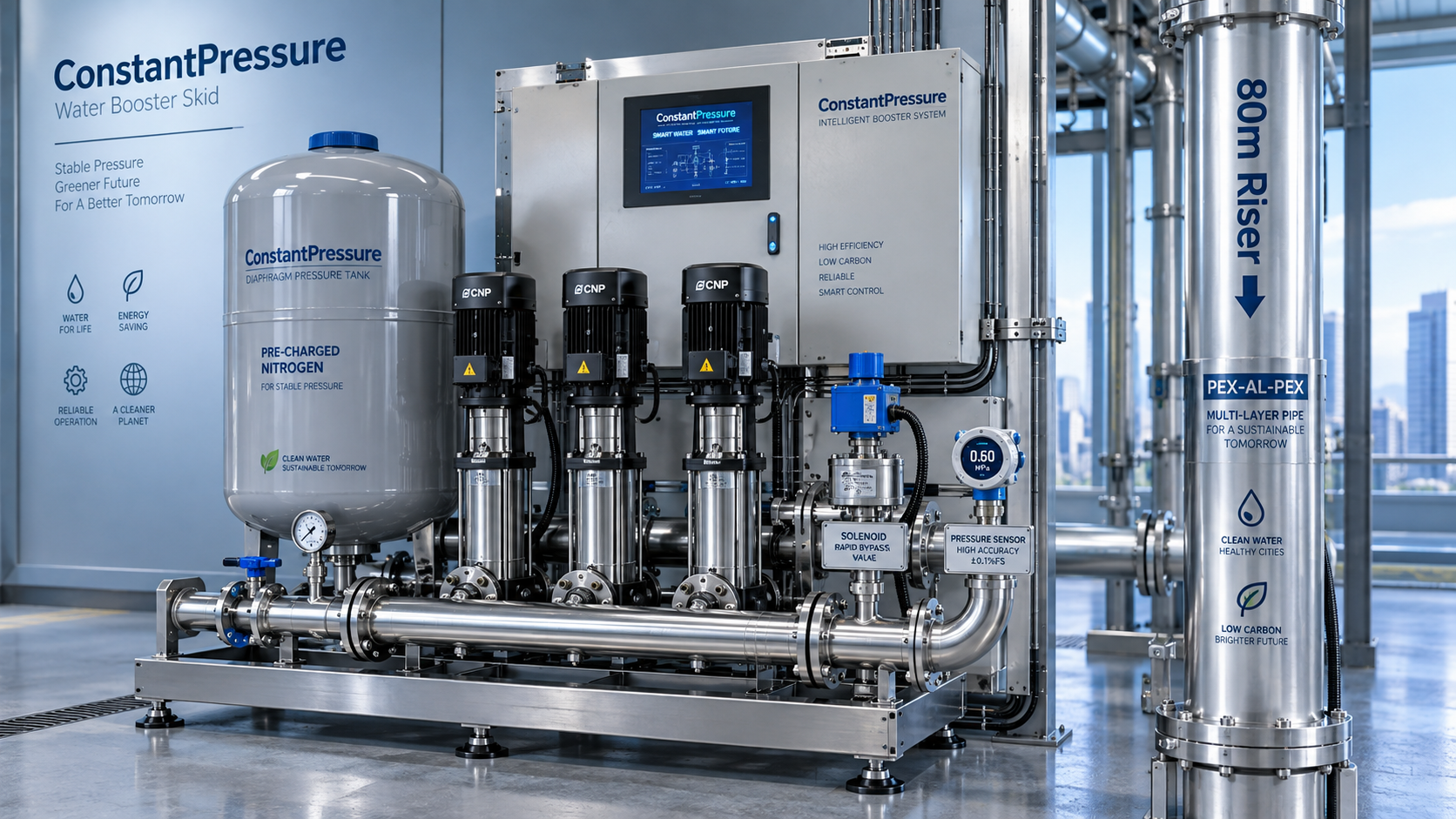
 How ConstantPressure Water Supply Skid-Mounted Equipment avoids water hammer during pump start-up in district heating networks
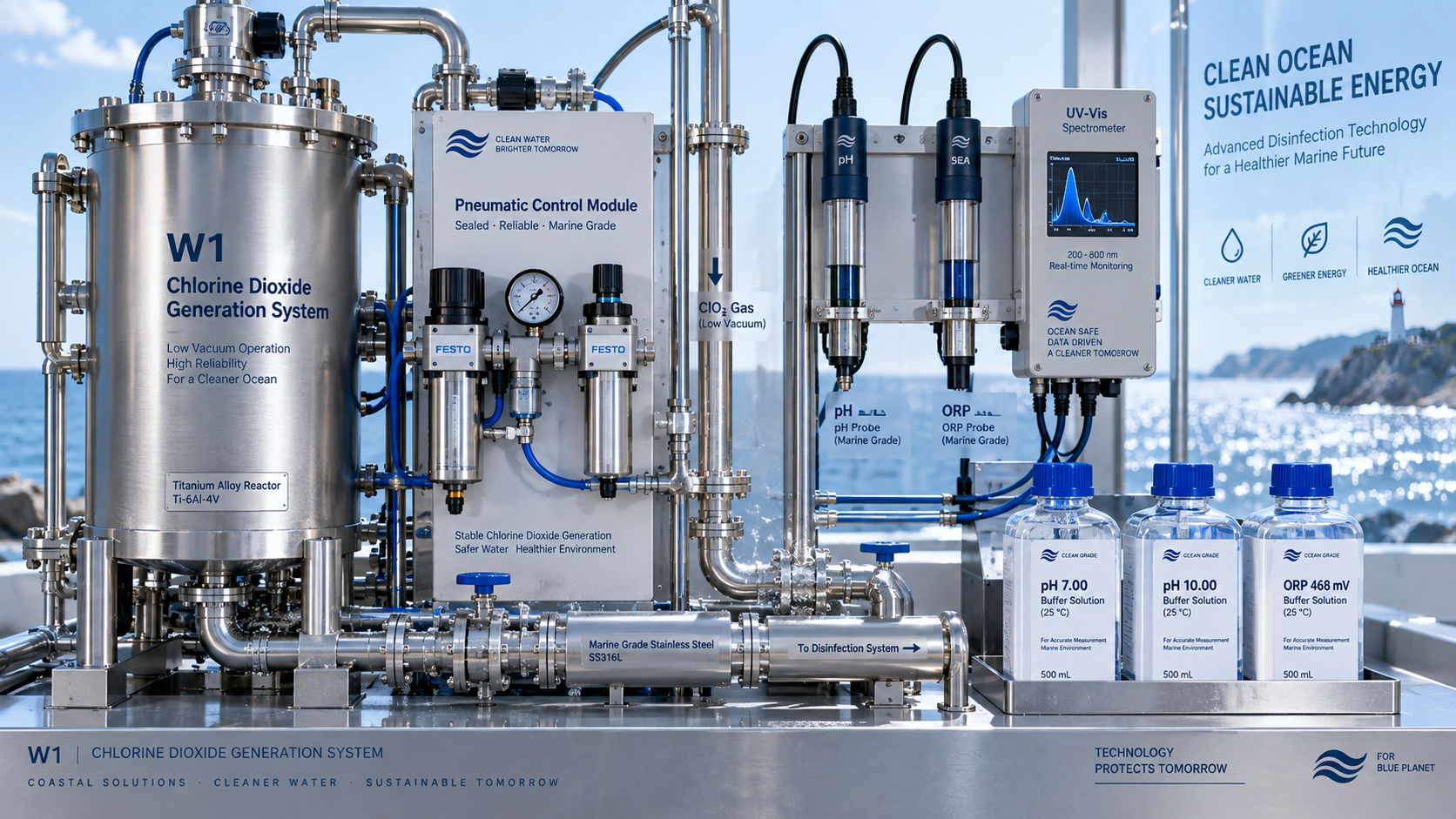
 chlorine dioxide preparation technology in coastal desalination plants?") What maintenance intervals are validated for W1 type (low negative pressure) chlorine dioxide preparation technology in coastal desalination plants?
What maintenance intervals are validated for W1 type (low negative pressure) chlorine dioxide preparation technology in coastal desalination plants? Does Large-Scale Integrated Skid-Mounted Water Purification Treatment Equipment include redundant control logic for SCADA integration?
 How ConstantPressure Water Supply Skid-Mounted Equipment responds to sudden valve closure events in high-rise buildings
 chlorine dioxide preparation technology?") What feedwater pH range limits the stability of W1 type (low negative pressure) chlorine dioxide preparation technology?
What feedwater pH range limits the stability of W1 type (low negative pressure) chlorine dioxide preparation technology? Can Industrial Water Purification Equipment meet ISO 22000 water quality requirements for beverage production lines?
GET A FREE QUOTE
Service Commitment: Upon receipt of your message, a dedicated representative will contact you as soon as possible to provide efficient and professional service support.
