







What to check before choosing sodium chlorite preparation technology
What to check before choosing Sodium chlorite preparation technology
Before selecting Sodium chlorite preparation technology, several checkpoints deserve close attention.
These include process safety, raw material stability, operating cost, product purity, equipment reliability, and engineering support.
In environmental and energy projects, the chosen route directly affects disinfection performance, compliance, uptime, and lifecycle value.
Why does process safety come first?
Sodium chlorite preparation technology must be assessed for reaction control, chemical storage, ventilation, and emergency isolation.
A safer process reduces leakage risk, operator exposure, and unstable output during continuous water treatment operation.
Check whether the system includes automated dosing, pressure monitoring, alarm interlocks, and corrosion-resistant materials.
How important is raw material and output stability?
Stable raw materials are essential for predictable conversion efficiency and final product consistency.
Ask about feedstock purity tolerance, supply continuity, storage requirements, and sensitivity to temperature changes.
Reliable Sodium chlorite preparation technology should maintain steady concentration across varying operating loads.
This matters in municipal wastewater, industrial reuse, and ecological treatment systems with fluctuating water quality.
What cost factors should be compared beyond purchase price?
Do not judge Sodium chlorite preparation technology only by initial equipment cost.
Compare power consumption, reagent conversion rate, labor demand, spare parts frequency, and maintenance downtime.
A compact treatment project may also benefit from integrated supporting systems.
For example, Integrated Skid-Mounted Domestic Sewage Treatment Equipment can support efficient site deployment in certain environmental applications.
How do purity and by-products affect application results?
Product purity influences oxidation efficiency, dosage accuracy, and downstream water quality control.
Excess by-products may increase corrosion, affect compliance, or create additional treatment burdens.
When reviewing Sodium chlorite preparation technology, request analytical data, operating records, and testing standards.
What supplier capabilities should be reviewed?
Technology selection is not only about the reactor or formula.
Engineering experience in wastewater treatment, chlorine dioxide systems, and full-process service is equally important.
Review project references, commissioning ability, training support, and after-sales response.
For broader site integration, solutions like Integrated Skid-Mounted Domestic Sewage Treatment Equipment may also reflect system design capability.
Which common mistakes should be avoided?
- Choosing only by low price
- Ignoring raw material supply risks
- Overlooking by-product control
- Skipping pilot or reference verification
- Underestimating maintenance and operator training
The best Sodium chlorite preparation technology is the one that fits process targets, safety rules, and long-term operating conditions.
Start with a checklist, compare real engineering data, and confirm service capability before final approval.



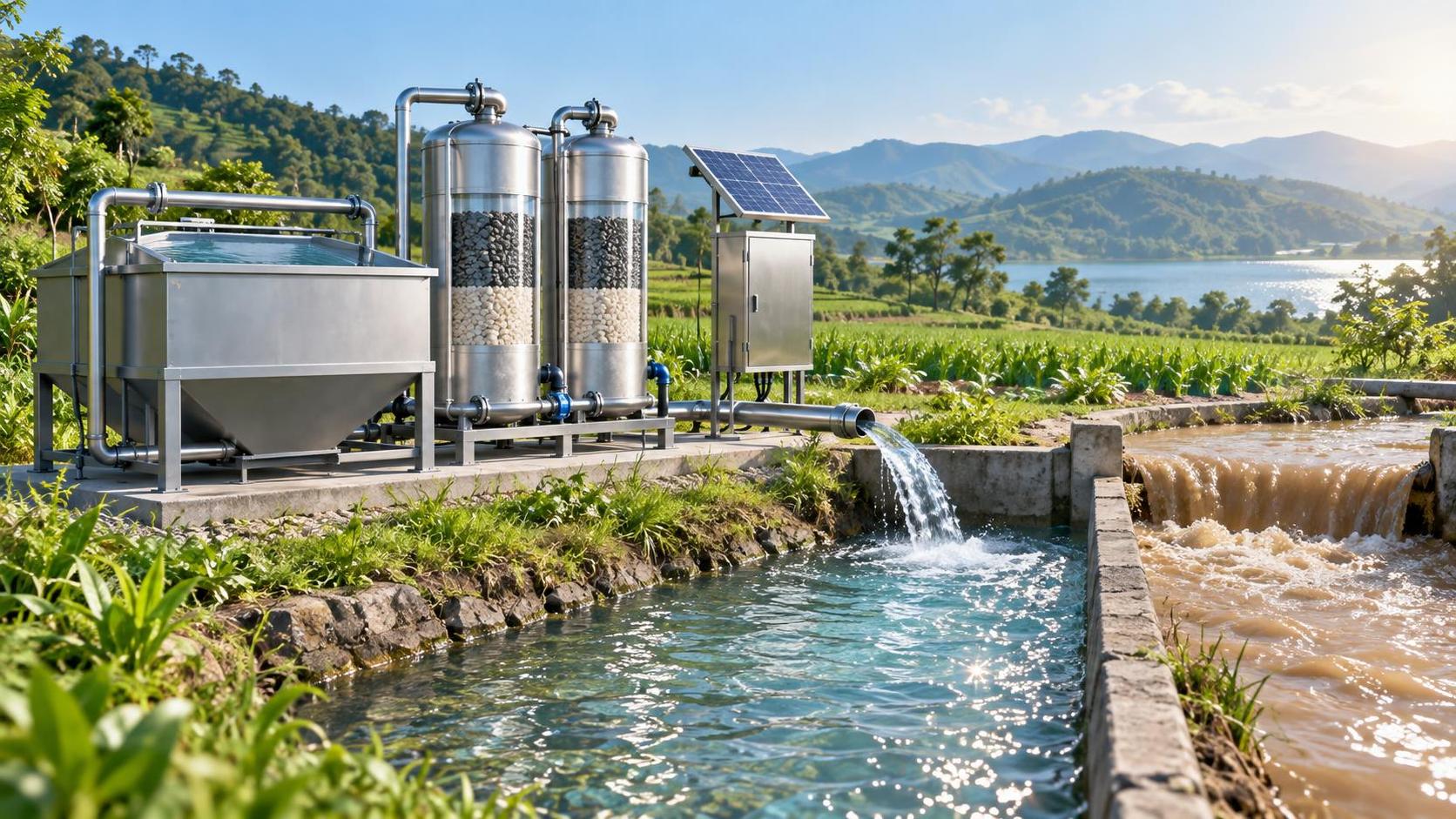
 Small Water Purification System Performance Under Variable Turbidity: Real-World Data from Off-Grid Agricultural Communities
 When Does a Small Water Purification System Outperform Centralized Treatment? Use Cases in Disaster Response and Mining Camps
 Small Water Purification System for Remote Clinics: Power-Independent Options and WHO Drinking Water Guidelines Compliance
 Ultrapure Water Equipment ROI Calculator: Estimating Payback Period Based on Yield Improvement and Defect Reduction
 How Ultrapure Water Equipment Validates Compliance with SEMI F63-1118 for 28nm+ Wafer Fabrication
") Ultrapure Water Equipment for Semiconductor Manufacturing: Key Specifications Beyond Resistivity (TOC, Particle Count, Metals)
Ultrapure Water Equipment for Semiconductor Manufacturing: Key Specifications Beyond Resistivity (TOC, Particle Count, Metals)
GET A FREE QUOTE
Service Commitment: Upon receipt of your message, a dedicated representative will contact you as soon as possible to provide efficient and professional service support.
