







What are the different types of domestic sewage systems?
What are the different types of domestic sewage systems?
Understanding the different types of domestic sewage systems is not just a planning exercise. It affects public health, operating cost, land use, discharge compliance, and, in many places, whether a housing project can move forward at all. People often ask for “the best” sewage system, but in practice there is no universal answer. What works for a dense urban district may be a poor fit for a scattered rural settlement, and a low-maintenance option in one climate can become troublesome in another.
In environmental engineering, the real question is usually this: how much wastewater is generated, how stable is the flow, what effluent standard applies, and who will operate the system after installation? Those four issues usually narrow the choice faster than any brochure does.
The main categories people usually mean
Domestic sewage systems are commonly divided into centralized systems and decentralized systems. That sounds simple, but there are several practical sub-types inside each group.
1. Centralized sewer networks
This is the classic municipal model: wastewater from homes enters a pipe network, is conveyed to a central treatment plant, and then treated in one location. In large towns and cities, this is often the most efficient long-term approach because operation can be standardized and treatment performance is easier to monitor.
Even here, there are important distinctions. Some cities use separate sewers for sewage and stormwater; others still operate combined systems. Combined sewers can be more vulnerable during heavy rain, when hydraulic overload affects both transport and treatment. Separate systems are generally easier to manage from a treatment standpoint, but retrofitting them into older neighborhoods can be expensive and disruptive.
Centralized systems make the most sense where population density justifies the network investment. The weak point is not usually the treatment plant itself; it is often the pipe network, infiltration, illegal connections, or pumping reliability.
2. Septic tank systems
For individual houses or small clusters without access to a municipal sewer, septic tanks remain one of the most common domestic sewage systems. They provide primary treatment by allowing solids to settle and scum to float, while partially clarified liquid flows to a soakaway, leach field, or another downstream unit.
A septic tank is often chosen because it is straightforward and relatively low in initial complexity. But it is frequently misunderstood. A septic tank is not a complete treatment solution in every setting. If the groundwater table is high, the soil permeability is poor, or the receiving environment is sensitive, a basic septic arrangement may not be enough. In those cases, additional filtration or biological treatment is usually needed.
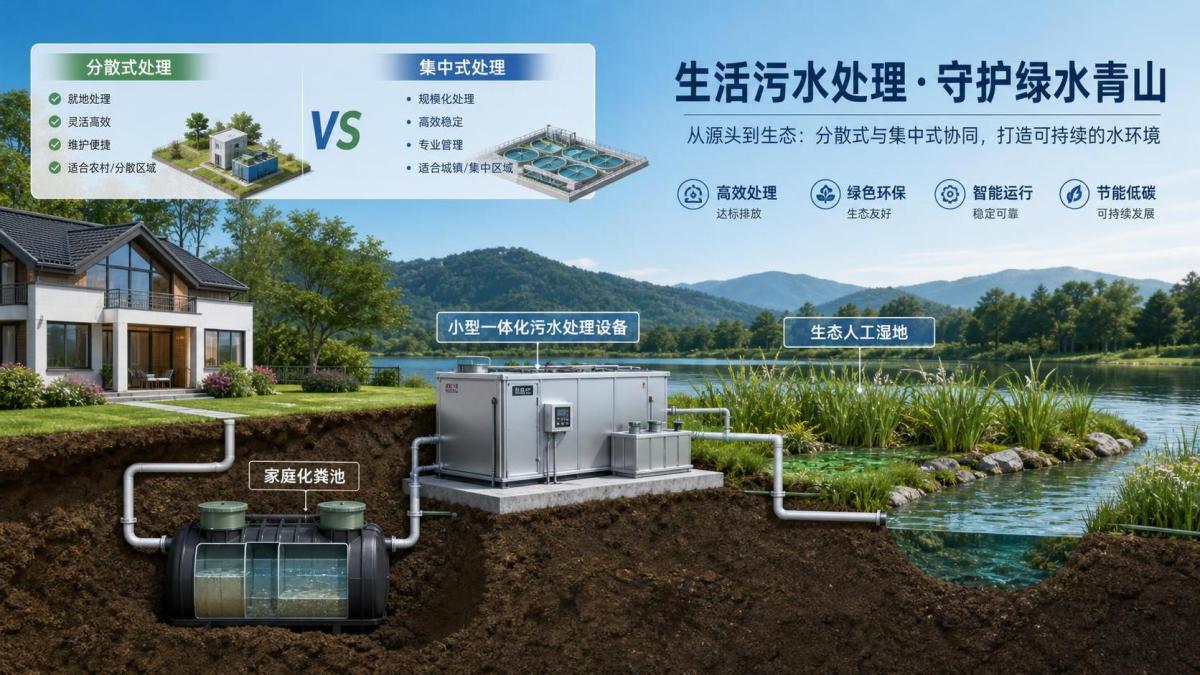
Another common problem is neglect. Tanks that are undersized or not desludged on time lose performance quickly, and then complaints show up as odor, surface ponding, or contamination risk rather than as a neat engineering report.
3. Package or decentralized treatment plants
These systems serve a building group, residential compound, village, resort, school, or other site that is too large for a simple septic tank but too remote or too dispersed for a full municipal sewer connection. Technologies vary widely: moving bed biofilm reactor (MBBR), membrane bioreactor (MBR), sequencing batch reactor (SBR), contact oxidation, and other compact biological processes are commonly used depending on effluent goals and operating conditions.
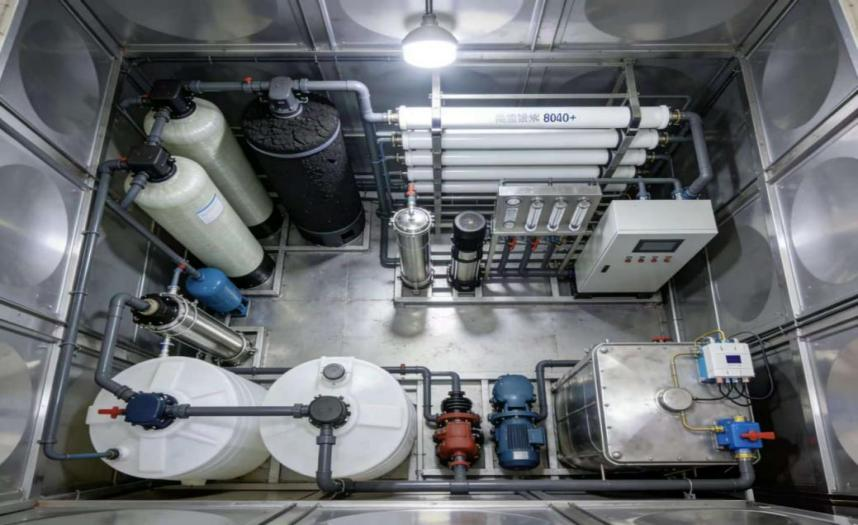
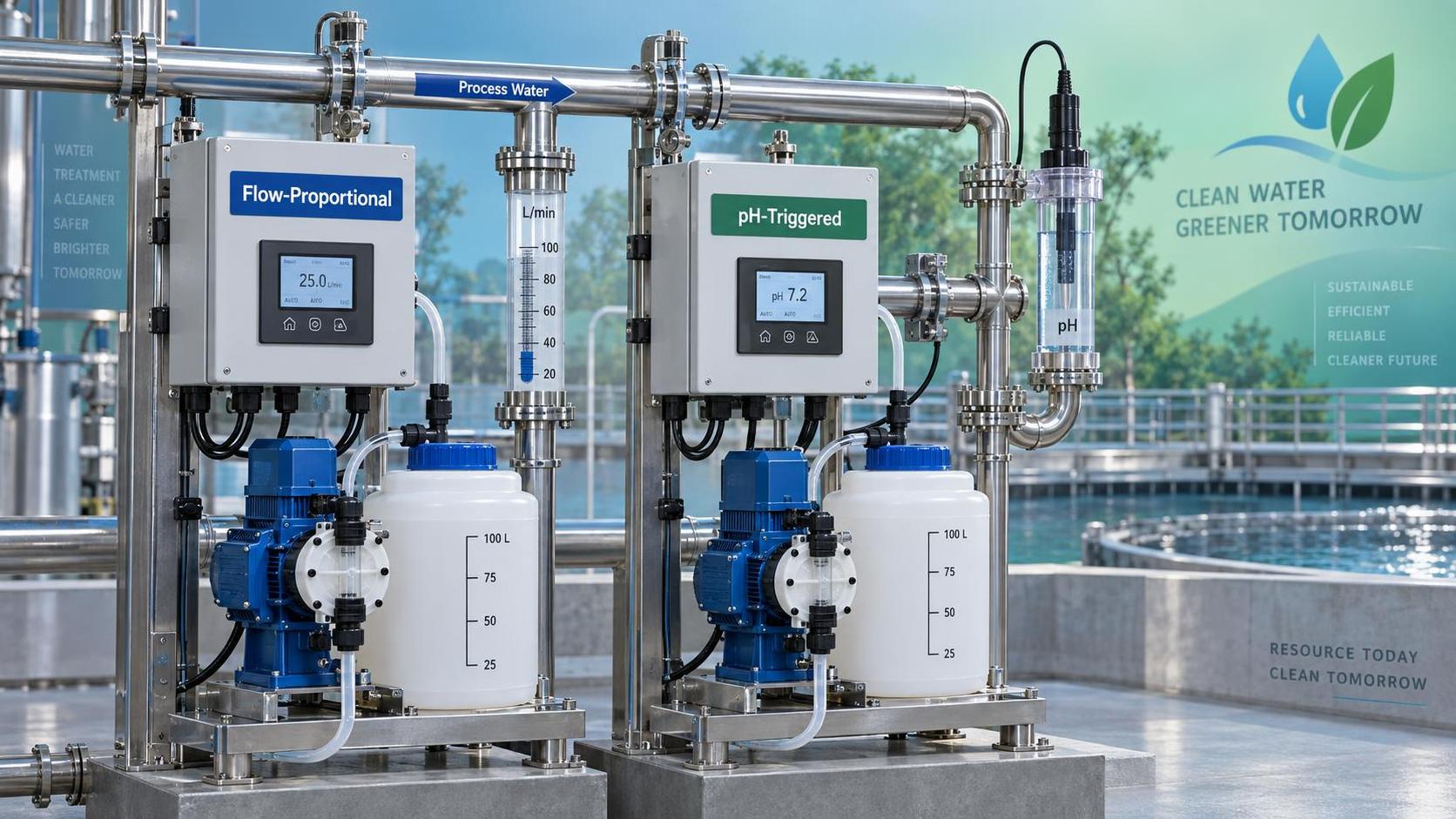
This category has grown because many communities need better treatment without waiting for large sewer expansion. A well-designed decentralized plant can produce stable effluent and reduce environmental pressure locally. The catch is that “compact” does not mean “operator-free.” Chemical dosing, sludge management, blower maintenance, and instrumentation still matter. In some projects, a unit such as an Automatic Dosing Device for Sewage Treatment is introduced to improve consistency in pH adjustment, disinfection, or coagulant addition, especially where manual operation tends to fluctuate.
4. Natural or low-energy treatment systems
In lower-density areas, domestic sewage may be treated through stabilization ponds, constructed wetlands, or hybrid ecological systems. These are not “primitive” systems when done properly; they can be technically sound options where land is available and discharge expectations match the process capability.
Constructed wetlands are especially relevant where planners want a treatment function combined with landscape improvement or habitat value. Still, they are not magic green infrastructure. Hydraulic loading, seasonal temperature, pretreatment quality, and media design all affect performance. A wetland that receives too much suspended solids too early will clog, and then its nice ecological appearance stops matching the treatment reality.
How to choose the right system
A sensible selection usually comes down to site conditions rather than preference. A few factors consistently shape the decision:
One mistake people make is choosing by capital cost alone. A cheaper system that is difficult to maintain can become the more expensive one within a few years. Another mistake is selecting advanced equipment without thinking about the local operation team. If spare parts, power quality, sludge disposal, or dosing control are weak links, the most sophisticated process may underperform a simpler one.
Where engineering experience changes the outcome
Domestic sewage treatment sounds routine until it meets real-world constraints: a village with seasonal occupancy, a suburban development far from trunk sewers, or a site where ecological restoration matters as much as discharge quality. This is where integrated environmental firms tend to add value. Companies with experience in wastewater treatment, ecological governance, and engineering delivery can usually judge earlier whether a project needs conventional collection, distributed treatment, wetland polishing, or a hybrid arrangement.
Shandong Wit Environmental Protection Technology Co., Ltd. works in that broader space. Its background in wastewater treatment, constructed wetlands, and full-process environmental solutions reflects a practical industry trend: sewage systems are no longer selected in isolation. They are increasingly tied to land restoration, resource reuse, disinfection strategy, and long-term operating management. That kind of integration matters more than many buyers expect, especially for public-sector and regional projects.
In some schemes, treatment does not end at biological removal. Chemical support systems, odor control, or disinfection reliability may become decisive, particularly for reuse-oriented or tightly regulated sites. That is why supporting equipment, including a second-stage dosing arrangement or an Automatic Dosing Device for Sewage Treatment, is sometimes part of the final design conversation rather than an afterthought.
A practical way to think about it
If you are evaluating domestic sewage systems, start by ruling out what does not fit the site. A municipal network is hard to beat where infrastructure already exists. Septic systems remain useful where loads are small and conditions allow safe infiltration or follow-up treatment. Decentralized packaged plants are often the middle ground for growing communities and independent facilities. Ecological systems can work very well, but only when land, pretreatment, and hydraulic design are treated seriously.
The best system is usually the one that can keep meeting discharge needs five years later, not just the one that looks economical on installation day. Before deciding, it is worth confirming actual influent characteristics, local discharge requirements, sludge handling options, and who will be responsible for routine operation. Those details tend to decide whether a sewage system remains invisible in the best way possible—or turns into a recurring problem.


 When Does a Small Water Purification System Outperform Centralized Treatment? Use Cases in Disaster Response and Mining Camps
 Small Water Purification System for Remote Clinics: Power-Independent Options and WHO Drinking Water Guidelines Compliance
 Ultrapure Water Equipment ROI Calculator: Estimating Payback Period Based on Yield Improvement and Defect Reduction
 How Ultrapure Water Equipment Validates Compliance with SEMI F63-1118 for 28nm+ Wafer Fabrication
") Ultrapure Water Equipment for Semiconductor Manufacturing: Key Specifications Beyond Resistivity (TOC, Particle Count, Metals)
Ultrapure Water Equipment for Semiconductor Manufacturing: Key Specifications Beyond Resistivity (TOC, Particle Count, Metals) Why Flow-Proportional vs. pH-Triggered Automatic Dosing Units Deliver Different Outcomes in Wastewater Neutralization
GET A FREE QUOTE
Service Commitment: Upon receipt of your message, a dedicated representative will contact you as soon as possible to provide efficient and professional service support.
