







What Is Integrated Skid-Mounted Domestic Sewage Treatment Equipment?
A practical starting point for decision-makers
If you are evaluating wastewater solutions for staff housing, camps, schools, service areas, small communities, or remote facilities, the main appeal of Integrated Skid-Mounted Domestic Sewage Treatment Equipment is simple: it arrives as a prefabricated system with core treatment units already assembled on a skid or modular base. That usually means less site work, faster installation, and a more controlled commissioning process than building everything piece by piece on location.
For buyers, this is less about equipment terminology and more about project control. You are looking at schedule risk, footprint, operator burden, discharge compliance, and long-term maintenance. Companies with broad wastewater treatment engineering experience, such as Shandong Wit Environmental Protection Technology Co., Ltd., tend to approach these systems as part of a full treatment solution rather than as a standalone box of hardware. That distinction matters.
So what exactly is it?
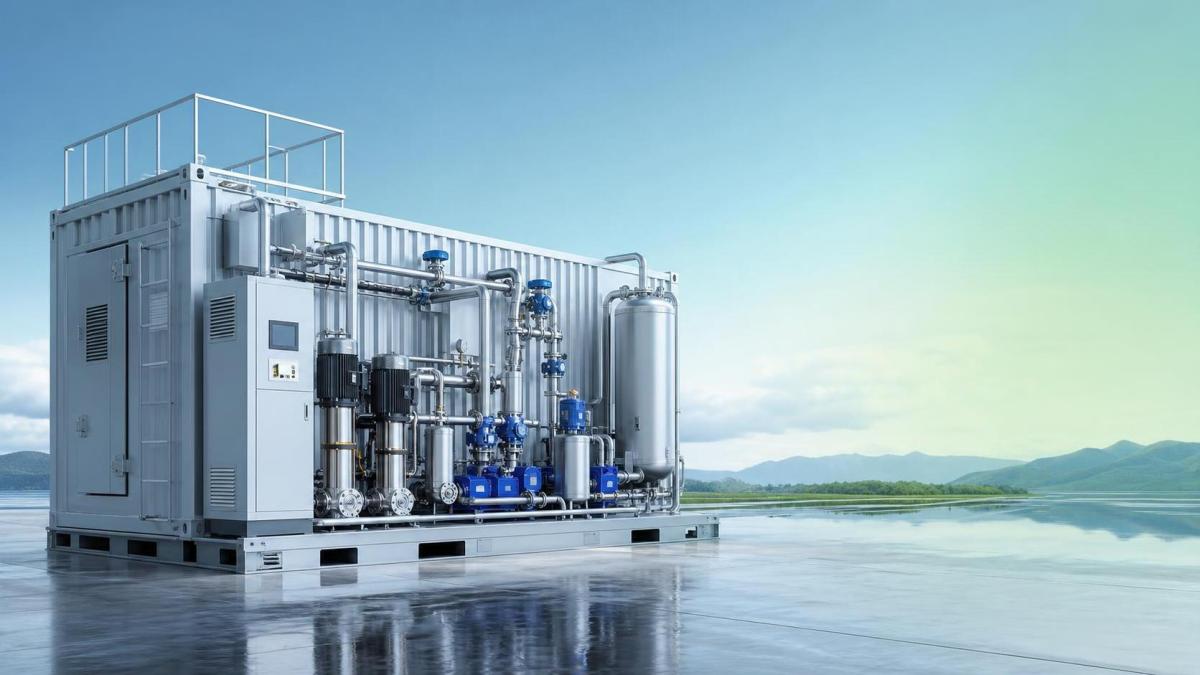
Integrated Skid-Mounted Domestic Sewage Treatment Equipment is a compact sewage treatment system designed to handle household-type wastewater in a packaged form. “Integrated” means the major process sections are combined into one coordinated unit or a small set of connected modules. “Skid-mounted” means the equipment is mounted on a structural base so it can be transported, positioned, and connected with less field assembly.
In plain terms, it is used when a site needs dependable domestic sewage treatment but does not want the cost, land use, and construction cycle of a conventional civil-built plant. Depending on project design, the unit may include pretreatment, biological treatment, sedimentation, disinfection, controls, and supporting pumps or blowers.
When does this type of system make sense?
It is usually a good fit when the wastewater source is mainly domestic in nature and the project needs a compact, standardized installation. Typical situations include temporary or semi-permanent living areas, decentralized treatment points, facilities with limited construction windows, and sites where local civil works are difficult or expensive.
It is less attractive when inflow quality changes sharply, industrial contaminants are mixed into the sewage, or future expansion is still unclear. In those cases, the process design needs extra care. A packaged system can still work, but only if the influent profile and operating targets are defined properly at the start.
Is it only about saving installation time?
No. Faster installation is one advantage, but it is not the only one, and sometimes not even the main one. The bigger operational value usually comes from standardization. Factory-prefabricated systems can reduce field welding, on-site coordination problems, and interface errors between tanks, pumps, piping, wiring, and controls.
That said, buyers often overestimate the speed benefit and underestimate the site conditions. Even skid-mounted equipment still depends on foundations, utility connections, sludge handling arrangements, ventilation, drainage, and access for maintenance. If those basics are not ready, the project will still stall.
What should a business decision-maker check before selecting one?
The right questions are not “What is the model?” but “What wastewater do we actually have?” and “What result do we need?” At minimum, you should verify:
- Daily flow and peak flow, not just average volume
- Whether the source is purely domestic sewage or mixed with kitchen grease, cleaning chemicals, or industrial wastewater
- Target discharge or reuse requirement set by the project
- Available footprint, power supply, drainage route, and sludge removal method
- Who will operate the system after handover
This last point gets missed all the time. A technically sound unit can still perform poorly if the site has no one able to manage dosing, alarms, cleaning, and routine inspection.
What is the most common selection mistake?
Treating all domestic sewage as if it were the same. A dormitory, a scenic area restroom cluster, a hospital living zone, and a staff canteen support area can all produce “domestic” wastewater, but the load pattern is different. Peak hours, suspended solids, grease content, and seasonal variation can change the required process and tank sizing.
Another common error is buying for nameplate capacity alone. Capacity matters, but control logic, maintenance access, spare parts, and adaptability to unstable inflow are just as important over the life of the project.
How does it compare with a conventional on-site treatment plant?
The decision is not about which format is universally better. It is about which one fits the project’s scale, schedule, wastewater profile, and operating reality.
What affects operating cost after installation?
The biggest drivers are process design, aeration demand, sludge management, and how stable the incoming sewage is. Compact systems are sometimes assumed to be low-cost by default. That is not always true. If the unit is oversized, poorly matched to actual load, or placed where maintenance is inconvenient, operating cost rises quietly over time.
Auxiliary systems matter too. In some projects, buyers reviewing water infrastructure may also compare related packaged equipment such as Variable Frequency Constant Pressure Water Supply Skid-Mounted Equipment. It serves a different purpose, but the comparison is useful because both categories reward the same discipline: check how the unit will be integrated into real site utilities, not just how it looks on a quotation sheet.
What documents should be reviewed during procurement?
A serious review should go beyond a brochure. Ask for the technical documents that let your team judge fit and delivery risk:
- Process description and treatment scope
- Equipment list and boundary of supply
- General arrangement or layout drawing
- Utility requirements such as power, drainage, and access
- Control and operation description
- Commissioning scope and after-sales responsibilities
If these documents are vague, procurement risk goes up fast. The problem usually appears later as scope disputes, delayed installation, or disappointing treatment performance.
Where does engineering experience make a real difference?
It matters most at the points where packaged equipment meets project reality: influent variability, process selection, commissioning, and long-term operation. Shandong Wit Environmental Protection Technology Co., Ltd. works across wastewater treatment, ecological governance, and related environmental engineering fields, with more than a decade of wastewater treatment experience and a record in municipal, industrial, and aquaculture wastewater sectors. For a buyer, that kind of background is useful because domestic sewage projects rarely fail for lack of hardware alone. They fail when design assumptions, site constraints, and operational needs do not line up.
What is a sensible next step before making a purchase decision?
Start with a short project brief, not a product request. List the sewage source, estimated flow, available installation area, discharge target, operating staff arrangement, and project timeline. That one-page summary is often enough to separate a suitable Integrated Skid-Mounted Domestic Sewage Treatment Equipment solution from one that only looks convenient on paper.
If the project is still early, the safest rule is this: define the wastewater and operating conditions first, then choose the equipment format. Doing it the other way around is where avoidable cost and performance problems usually begin.



 Small Water Purification System Performance Under Variable Turbidity: Real-World Data from Off-Grid Agricultural Communities
 When Does a Small Water Purification System Outperform Centralized Treatment? Use Cases in Disaster Response and Mining Camps
 Small Water Purification System for Remote Clinics: Power-Independent Options and WHO Drinking Water Guidelines Compliance
 Ultrapure Water Equipment ROI Calculator: Estimating Payback Period Based on Yield Improvement and Defect Reduction
 How Ultrapure Water Equipment Validates Compliance with SEMI F63-1118 for 28nm+ Wafer Fabrication
") Ultrapure Water Equipment for Semiconductor Manufacturing: Key Specifications Beyond Resistivity (TOC, Particle Count, Metals)
Ultrapure Water Equipment for Semiconductor Manufacturing: Key Specifications Beyond Resistivity (TOC, Particle Count, Metals)
GET A FREE QUOTE
Service Commitment: Upon receipt of your message, a dedicated representative will contact you as soon as possible to provide efficient and professional service support.
