







Smart Disinfection Solutions: PLC Integration in W1 Type (Low Negative Pressure) Chlorine Dioxide Preparation Technology
Why does PLC Integration matter in W1 Type chlorine dioxide preparation?
In environmental and energy applications, Smart Disinfection Solutions improve water safety, dosing accuracy, and operating stability across complex treatment systems.
PLC Integration strengthens W1 Type (Low Negative Pressure) Chlorine Dioxide Preparation Technology by automating feed control, alarm logic, and process interlocks.
This combination supports reliable chlorine dioxide generation for municipal wastewater, industrial water reuse, and disinfection processes requiring consistent output.
For advanced water treatment layouts, complementary modules such as Rare Earth Disk Separation and Purification Skid-Mounted Equipment / Magnetic Coagulation Skid-Mounted Equipment can improve upstream solids management.
What is W1 Type (Low Negative Pressure) Chlorine Dioxide Preparation Technology?
W1 Type technology is a chlorine dioxide preparation method designed for controlled, stable, and safer disinfectant production under low negative pressure conditions.
The process reduces leakage risk and supports smoother reactant transfer compared with less controlled manual systems.
In practical operation, chlorine dioxide is valued for broad-spectrum disinfection, oxidation capability, and lower sensitivity to ammonia than some conventional disinfectants.
This makes Smart Disinfection Solutions especially suitable for wastewater polishing, industrial circulating water, and odor-sensitive treatment environments.
Low negative pressure operation also helps maintain reaction stability, which is critical when flow and water quality fluctuate.
Key technical features
- Stable reactant metering and preparation efficiency
- Safer pressure management during generation
- Reduced dependence on manual adjustment
- Better compatibility with automated control systems
How does PLC Integration improve Smart Disinfection Solutions?
PLC Integration converts chlorine dioxide preparation from a reactive task into a predictable control process.
Sensors, pumps, valves, and analyzers can be linked through one logic platform for real-time response.
When influent quality changes, the PLC can adjust dosing output according to preset rules or linked monitoring values.
This reduces overuse of chemicals and improves disinfection consistency, which directly affects operating cost and compliance.
Typical PLC functions in W1 systems
- Automatic start-stop sequencing
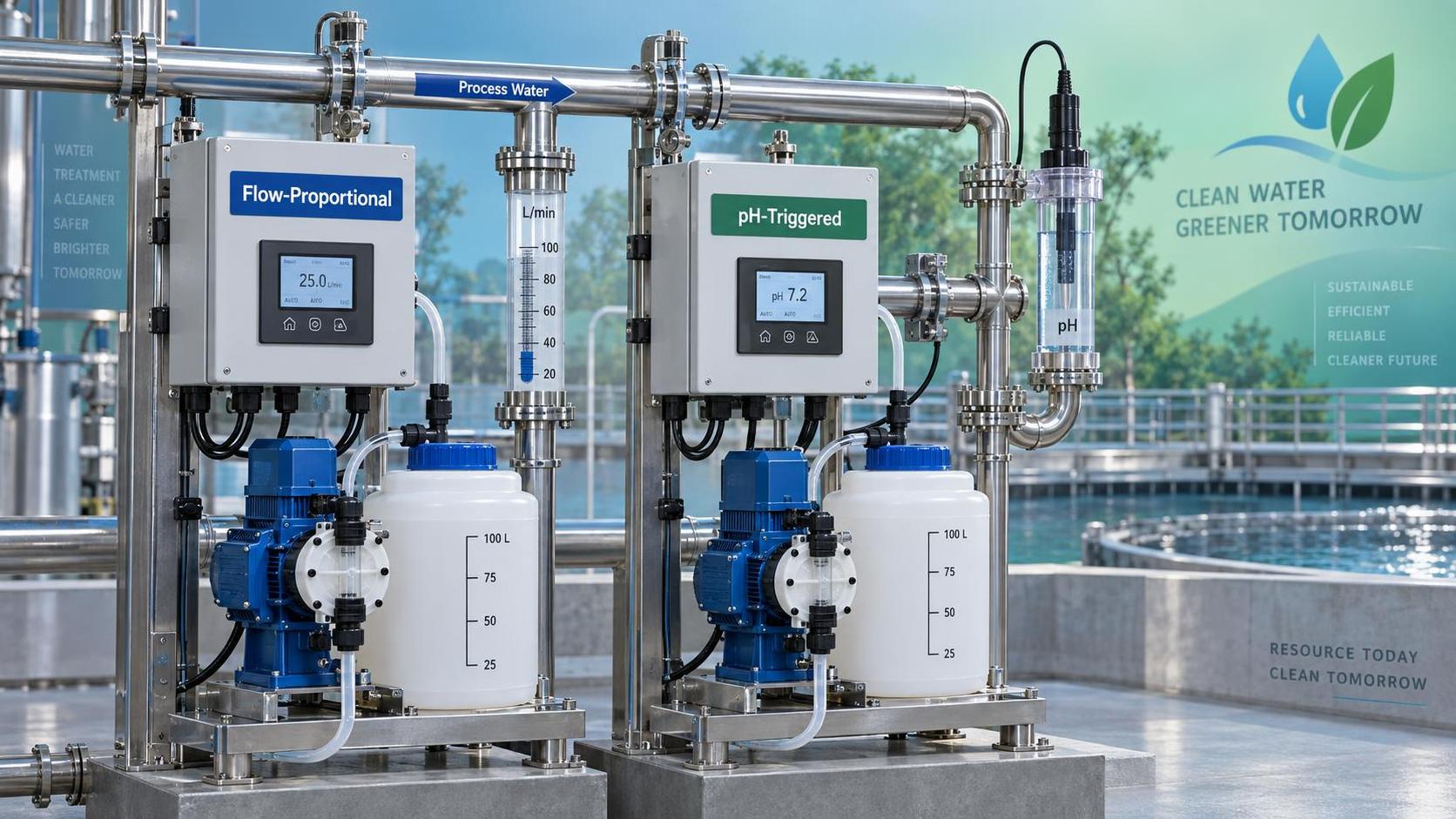
- Flow-proportional dosing control
- Low-level chemical alarms
- Pressure, temperature, and status interlocks
- Remote monitoring and historical trend recording
These functions are especially important in regional environmental projects where stable operation must continue with limited on-site intervention.
Where are these systems most effective?
Smart Disinfection Solutions using PLC Integration are effective wherever disinfection reliability and process safety are both essential.
Municipal wastewater plants benefit from automated dosing during peak hydraulic variation and seasonal microbial load changes.
Industrial water treatment projects use W1 Type systems to control biofouling, improve reuse quality, and support discharge standards.
Aquaculture wastewater treatment can also gain from stable oxidizing disinfection without relying on highly manual chemical handling.
In integrated treatment trains, clarification and pretreatment units may work together with Rare Earth Disk Separation and Purification Skid-Mounted Equipment / Magnetic Coagulation Skid-Mounted Equipment to enhance overall water quality before final disinfection.
Common application scenarios
- Municipal wastewater disinfection upgrades
- Industrial recycling water systems
- Pulp and bleaching process water treatment
- Odor and pathogen control in regional facilities
How can you compare W1 Type systems with conventional dosing methods?
The best comparison focuses on safety, automation, stability, and lifecycle efficiency rather than equipment price alone.
For long-term environmental and energy projects, stable automation usually delivers stronger value than a low initial hardware budget.
What risks and selection mistakes should be avoided?
One common mistake is choosing chlorine dioxide equipment only by rated capacity, without checking actual water quality variation.
Another is underestimating the importance of sensor accuracy, control logic, and alarm design within PLC Integration.
Poor chemical storage planning can also weaken the reliability of Smart Disinfection Solutions.
Facilities should review ventilation, material compatibility, operator training, and emergency response before commissioning.
Quick selection checklist
- Match output range to peak and normal demand
- Confirm PLC compatibility with existing SCADA
- Check interlock design and fault shutdown logic
- Review spare parts, service response, and training support
- Validate case history in similar wastewater or industrial applications
What should be considered for implementation cost and project planning?
Implementation cost includes equipment, instrumentation, control programming, installation, training, and chemical handling infrastructure.
However, project evaluation should also include reduced labor intensity, fewer dosing errors, and better compliance performance.
In many treatment facilities, automation shortens adjustment time during startup and reduces avoidable operational interruptions.
A phased plan often works best: water analysis, process matching, control design, commissioning, then operator optimization.
Smart Disinfection Solutions built on PLC Integration and W1 Type chlorine dioxide preparation offer safer control, stable dosing, and stronger operational confidence.
For environmental and energy projects, the best next step is a site-specific review of water quality, automation needs, and treatment objectives.
A well-matched system can improve disinfection performance, reduce risk, and support reliable long-term environmental compliance.


 When Does a Small Water Purification System Outperform Centralized Treatment? Use Cases in Disaster Response and Mining Camps
 Small Water Purification System for Remote Clinics: Power-Independent Options and WHO Drinking Water Guidelines Compliance
 Ultrapure Water Equipment ROI Calculator: Estimating Payback Period Based on Yield Improvement and Defect Reduction
 How Ultrapure Water Equipment Validates Compliance with SEMI F63-1118 for 28nm+ Wafer Fabrication
") Ultrapure Water Equipment for Semiconductor Manufacturing: Key Specifications Beyond Resistivity (TOC, Particle Count, Metals)
Ultrapure Water Equipment for Semiconductor Manufacturing: Key Specifications Beyond Resistivity (TOC, Particle Count, Metals) Why Flow-Proportional vs. pH-Triggered Automatic Dosing Units Deliver Different Outcomes in Wastewater Neutralization
GET A FREE QUOTE
Service Commitment: Upon receipt of your message, a dedicated representative will contact you as soon as possible to provide efficient and professional service support.
