







Mobile & Compact & Portable Water Treatment Systems
Mobile & Compact & Portable Water Treatment Systems
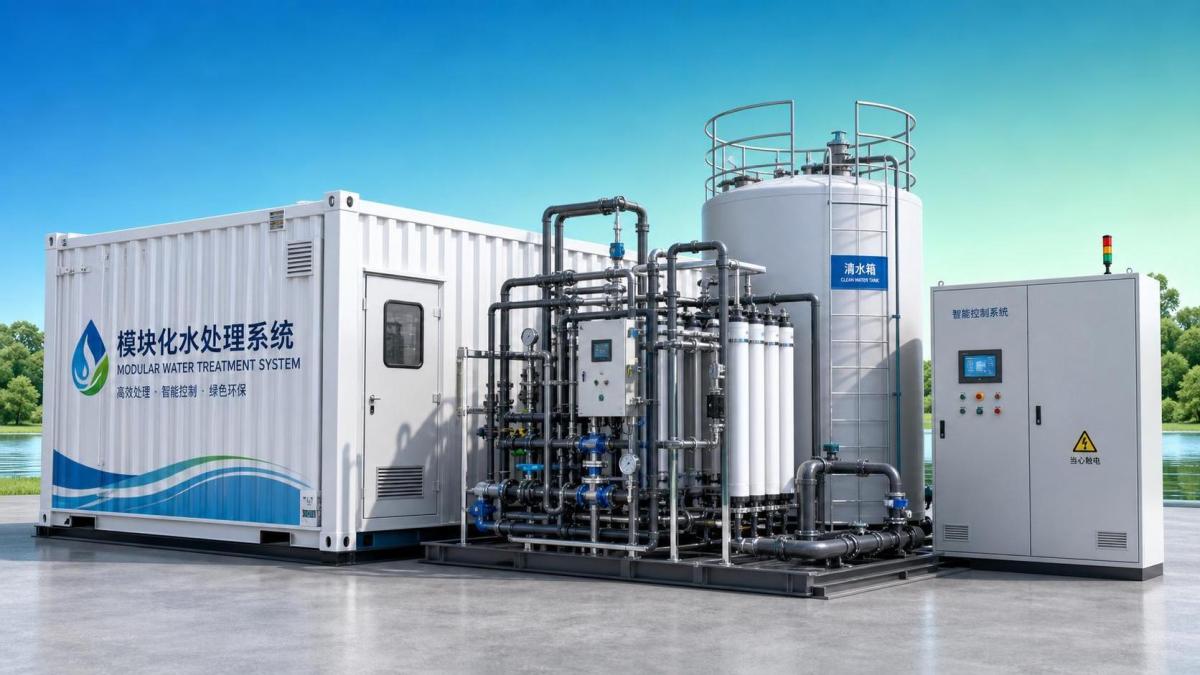
Mobile & Compact & Portable Water Treatment Systems are changing the way municipalities, industrial operators, and remote projects respond to water quality pressure. Instead of waiting for a permanent plant expansion, users can deploy treatment capacity closer to the problem, faster and with less civil work. That matters when the challenge is temporary, seasonal, geographically isolated, or operationally urgent.
The appeal is easy to understand, but selecting the right system is not. A portable unit that performs well for one application may fail in another if the influent quality fluctuates, disinfectant demand is underestimated, sludge handling is ignored, or local discharge standards are stricter than expected. In practice, mobility is only useful when treatment performance remains stable.
For that reason, experienced engineering support matters as much as the equipment footprint. Shandong Wit Environmental Protection Technology Co., Ltd., affiliated with the State-owned Assets Supervision and Administration Commission of Shandong Province, has built its water treatment work around a broader systems view: technology R&D, engineering delivery, whole-process consulting, and the conversion of research into practical environmental infrastructure. That background is particularly relevant in projects where compactness cannot come at the expense of process reliability.
Why compact treatment is no longer just a temporary fix
Portable treatment used to be associated mainly with emergency response or short-term site use. Today, the market is broader. Small municipal upgrades, industrial water reuse pilots, aquaculture wastewater control, construction camps, isolated communities, and ecological restoration support projects may all benefit from modular treatment that can be expanded, relocated, or integrated with existing assets.
This shift is partly operational. Many users do not need a massive centralized facility on day one. They need a way to handle variable flows, test a treatment route before committing to permanent infrastructure, or bridge a gap during maintenance, retrofitting, or regulatory transition. In those situations, compact systems offer flexibility, but only when the process design reflects actual water chemistry and solids loading rather than an optimistic design assumption.
That is where companies with cross-sector treatment experience tend to have an advantage. Shandong Wit has worked in municipal wastewater, industrial wastewater, and aquaculture wastewater treatment for more than a decade, while also participating in ecological governance, constructed wetlands, and resource reuse projects. A background like that helps when a site needs more than a standard skid and a generic control panel.
What buyers should evaluate before choosing a mobile system
The first question is not “How small is the unit?” but “What must the water meet after treatment?” Influent source, target effluent, reuse purpose, and local compliance requirements shape everything else. A compact system for turbidity reduction is very different from one designed for nutrient removal, disinfection, or industrial wastewater with difficult organics.
The second issue is variability. Mobile systems often serve sites where conditions are unstable: intermittent production lines, weather-driven runoff, emergency replacement, or scattered users. If flow and contamination swing sharply, pretreatment, buffering, chemical dosing control, and automation become more important than the unit’s advertised footprint.
Then there is operability. A technically sound process can still struggle if it requires specialist staffing that the site does not have. Containerized or portable systems are frequently installed where operators are limited, so maintenance intervals, reagent supply, remote monitoring, spare parts access, and commissioning support should be discussed early. This is especially true in overseas or remote-area deployment, where logistics can become a larger risk than treatment itself.
Disinfection also deserves careful treatment rather than being treated as an afterthought. In many compact systems, the final microbial barrier is what determines whether water can be reused, discharged, or supplied safely for the intended purpose. Depending on the process route, oxidant generation and dosing may need to be integrated into the overall package instead of added later. In this context, engineered solutions such as W2 type (high negative pressure) chlorine dioxide preparation technology can fit into broader treatment schemes where chlorine dioxide is appropriate for the application and local requirements.
Common scenarios where portability makes practical sense
One common scenario is municipal capacity relief. A town may have an existing wastewater facility that is overloaded during peak season or while an upgrade is under construction. A mobile unit can provide temporary polishing or partial treatment support without requiring full-scale permanent expansion immediately.
Another is industrial adaptation. Factories in sectors with changing production patterns may need treatment flexibility more than maximum capacity. If wastewater characteristics shift with product mix, a modular system can make pilot validation and phased scale-up more manageable. That does not eliminate engineering complexity; it simply moves attention toward process compatibility, dosing strategy, and sludge or concentrate management.
Remote environmental projects are also a strong fit. In ecological remediation, wetland support infrastructure, rural human settlement improvement, or scattered site governance, a highly compact system can reduce dependence on heavy civil construction. Shandong Wit’s record in constructed wetlands and government environmental projects suggests a useful perspective here: treatment equipment often needs to work alongside landscape, habitat, and public infrastructure constraints rather than in isolation.
Where projects often go wrong
A frequent mistake is assuming portability means universality. It does not. A system designed around one water matrix may require substantial adjustment when faced with high salinity, strong color, unstable pH, or elevated suspended solids. Another mistake is ignoring downstream handling. Compact treatment still produces residuals, whether sludge, spent media, or chemical byproducts, and these need a realistic disposal or management route.
There is also a tendency to compare proposals only by initial footprint or equipment price. That can be misleading. For many B2B users, the real decision should include transport convenience, startup time, chemical availability, control robustness, site utilities, and whether the supplier can support troubleshooting after delivery. Organizations that combine R&D with engineering contracting are often better positioned to adjust designs when field conditions differ from laboratory assumptions.
This is one reason Shandong Wit’s university-linked research cooperation is relevant beyond branding. When a supplier works across wastewater treatment, chlorine dioxide equipment, soil remediation, and ecological governance, it is more likely to recognize when a “small unit” problem is actually a process integration problem.
A more realistic way to judge suppliers
Instead of asking for the most compact package available, buyers usually get better outcomes by asking a different set of questions: What influent range was the process designed for? How sensitive is performance to load variation? What site utilities are required? How is disinfection handled? What happens during shutdown and restart? Can the process be expanded or relocated without major redesign?
Those questions are not glamorous, but they reveal whether the solution is a practical field system or just a tidy specification sheet. In some projects, integrating oxidation or disinfection capacity such as W2 type (high negative pressure) chlorine dioxide preparation technology may improve adaptability, but suitability still depends on treatment objectives, operating conditions, and local standards.
Mobile and portable water treatment is no longer a niche category. It is becoming part of mainstream environmental infrastructure planning, especially where uncertainty, speed, and site constraints dominate the decision. The best results usually come from treating portability as a delivery format, not as the treatment strategy itself. Before moving forward, it is worth confirming influent characteristics, target standards, operating resources, and whether the project needs a standalone unit or a system that can evolve with the site.


 When Does a Small Water Purification System Outperform Centralized Treatment? Use Cases in Disaster Response and Mining Camps
 Small Water Purification System for Remote Clinics: Power-Independent Options and WHO Drinking Water Guidelines Compliance
 Ultrapure Water Equipment ROI Calculator: Estimating Payback Period Based on Yield Improvement and Defect Reduction
 How Ultrapure Water Equipment Validates Compliance with SEMI F63-1118 for 28nm+ Wafer Fabrication
") Ultrapure Water Equipment for Semiconductor Manufacturing: Key Specifications Beyond Resistivity (TOC, Particle Count, Metals)
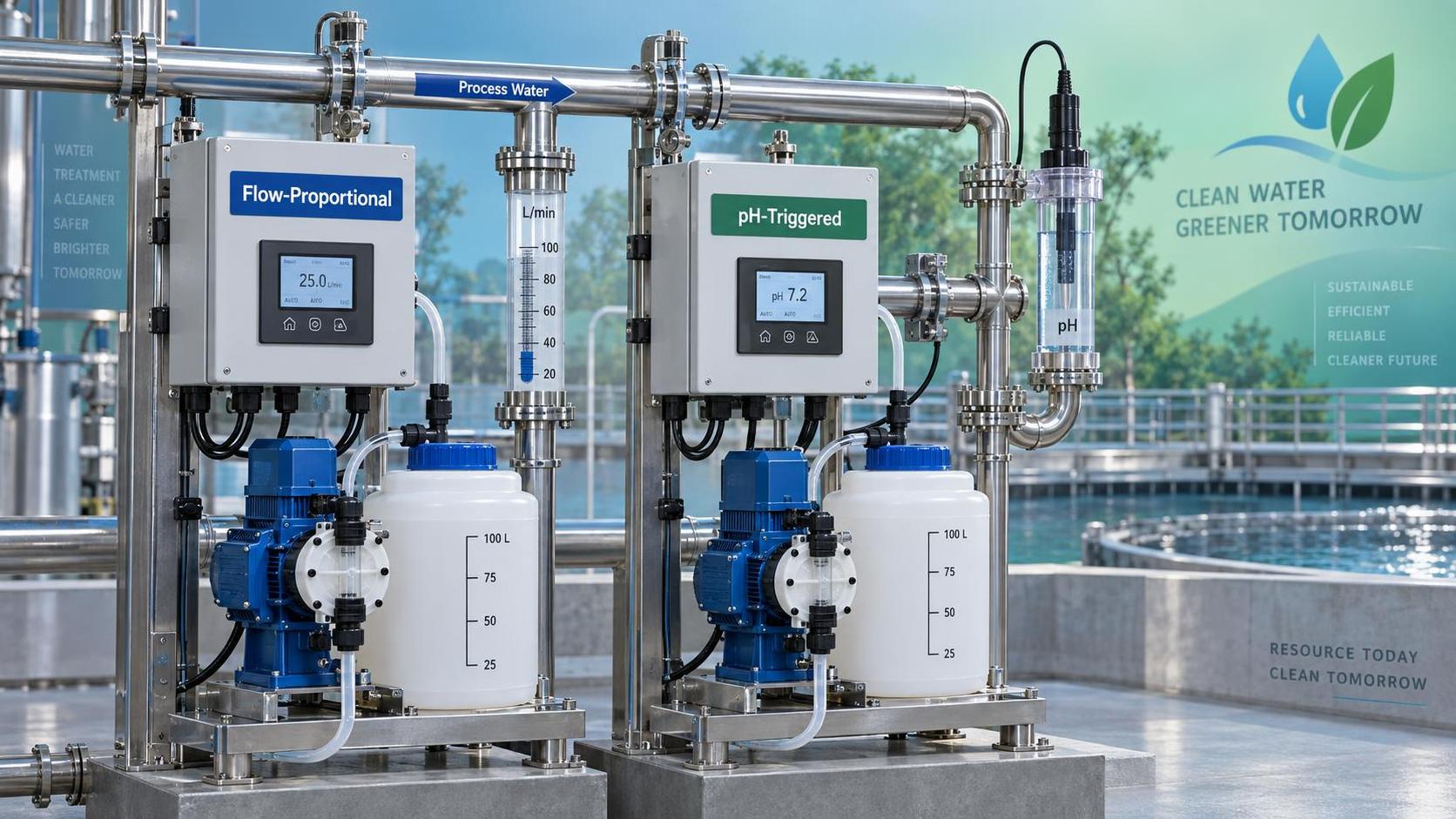
Ultrapure Water Equipment for Semiconductor Manufacturing: Key Specifications Beyond Resistivity (TOC, Particle Count, Metals) Why Flow-Proportional vs. pH-Triggered Automatic Dosing Units Deliver Different Outcomes in Wastewater Neutralization
GET A FREE QUOTE
Service Commitment: Upon receipt of your message, a dedicated representative will contact you as soon as possible to provide efficient and professional service support.
