







How sodium chlorite preparation technology affects purity
How Sodium chlorite preparation technology is reshaping purity expectations
For technical evaluation, Sodium chlorite preparation technology now defines more than product yield. It directly affects purity, reaction stability, chlorine dioxide conversion efficiency, storage safety, and environmental compliance.
In environmental and energy applications, higher purity means fewer by-products, lower corrosion risk, and more predictable dosing. This is especially critical in water treatment, disinfection, and integrated pollution control systems.
Purity standards are rising with application complexity
The market no longer accepts basic output as the main benchmark. Sodium chlorite preparation technology is increasingly judged by impurity control, process continuity, and adaptability to large-scale chlorine dioxide generation.
This shift is linked to stricter discharge targets, wider industrial reuse, and higher expectations for reliable oxidation performance in municipal and industrial wastewater treatment.
Main signals behind this shift
- More attention to chlorate, chloride, and insoluble residue levels
- Greater need for continuous and automated production control
- Higher demand for stable chlorine dioxide precursor quality
- Broader use in pulp bleaching, wastewater treatment, and ecological projects
Why Sodium chlorite preparation technology influences purity so strongly
Purity depends on how well each production stage prevents side reactions. Even small deviations in raw material quality, temperature, pH, or residence time can increase unwanted salts and reduce usable active content.
The operational impact reaches far beyond the chemical itself
When Sodium chlorite preparation technology delivers stable purity, downstream chlorine dioxide systems operate more efficiently. Dosing becomes easier to predict, oxidation performance becomes steadier, and maintenance frequency often declines.
For integrated environmental engineering, this matters because chemical quality affects process economics. It can influence odor control, microbial reduction, color removal, and overall treatment consistency.
In broader ecological projects, water chemistry stability also supports complementary systems such as Artificial Wetland Planning and Construction, where upstream treatment quality shapes biological and landscape performance.
What deserves close attention in future evaluations
- Verify whether Sodium chlorite preparation technology includes precise monitoring and automatic adjustment
- Check impurity indicators alongside nominal concentration
- Assess compatibility with chlorine dioxide generation equipment
- Review long-term operating records, not only laboratory data
- Examine energy use, corrosion resistance, and safety interlocks
A practical judgment path for the next step
A sound assessment should compare process design, purity stability, and field performance together. The best Sodium chlorite preparation technology is not simply high-yield. It is controllable, clean, scalable, and suitable for environmental engineering demands.
Organizations with strong research integration and engineering delivery, such as Shandong Wit Environmental Protection Technology Co.Ltd, show how technology depth supports reliable application in water treatment and chlorine dioxide systems.
The next action is clear: request impurity data, validate operating cases, and evaluate process control capability before selecting a technical route.



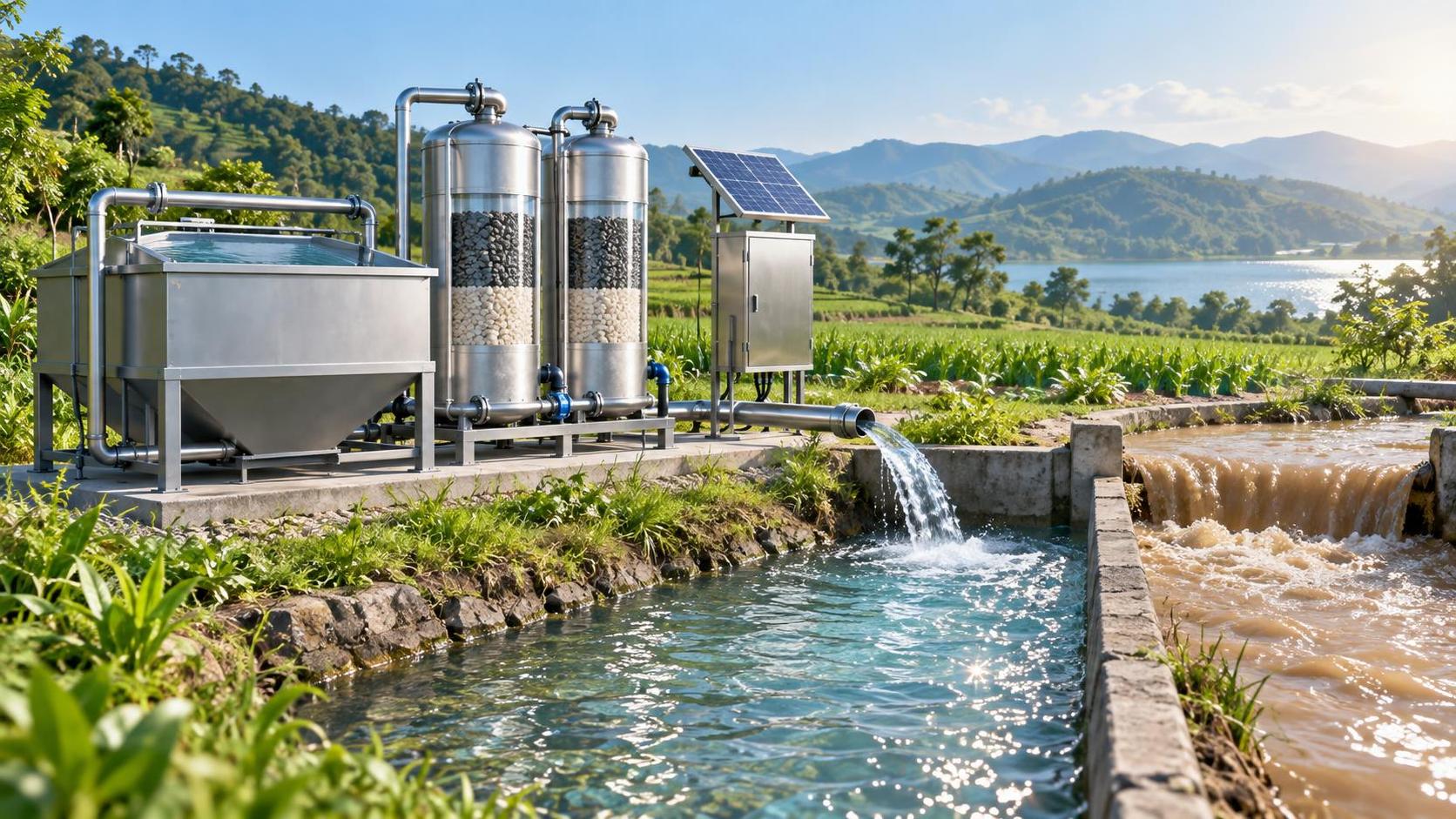
 Small Water Purification System Performance Under Variable Turbidity: Real-World Data from Off-Grid Agricultural Communities
 When Does a Small Water Purification System Outperform Centralized Treatment? Use Cases in Disaster Response and Mining Camps
 Small Water Purification System for Remote Clinics: Power-Independent Options and WHO Drinking Water Guidelines Compliance
 Ultrapure Water Equipment ROI Calculator: Estimating Payback Period Based on Yield Improvement and Defect Reduction
 How Ultrapure Water Equipment Validates Compliance with SEMI F63-1118 for 28nm+ Wafer Fabrication
") Ultrapure Water Equipment for Semiconductor Manufacturing: Key Specifications Beyond Resistivity (TOC, Particle Count, Metals)
Ultrapure Water Equipment for Semiconductor Manufacturing: Key Specifications Beyond Resistivity (TOC, Particle Count, Metals)
GET A FREE QUOTE
Service Commitment: Upon receipt of your message, a dedicated representative will contact you as soon as possible to provide efficient and professional service support.
