







What scalability limitations exist for Large-Scale Integrated Skid-Mounted Water Purification Treatment Equipment in phased expansion projects?
Scalability Isn’t Built In—It’s Engineered
For project managers planning phased expansion of water infrastructure—especially in municipal upgrades, industrial parks, or remote resource sites—the appeal of Large-Scale Integrated Skid-Mounted Water Purification Treatment Equipment is immediate: factory-built consistency, rapid commissioning, reduced civil works, and predictable OPEX. But scalability—the ability to add capacity incrementally without compromising performance, compliance, or operational continuity—is rarely inherent. It’s a function of how the system was conceived, not just how it was assembled.
In practice, most skid-mounted systems fail to scale cleanly not because of component limitations, but because of three tightly coupled design decisions made early—and often silently—during specification: hydraulic integration architecture, control layer interoperability, and physical interface standardization. These aren’t “features” to tick off a datasheet; they’re engineering commitments that determine whether Phase 2 adds 30% capacity or triggers a full system re-engineering.
Hydraulic Balancing Is the First Scalability Gate
Skids are often sized for peak flow, with pumps, membranes, and chemical dosing calibrated as a closed loop. When adding a second skid downstream—or integrating it in parallel—the real bottleneck isn’t flow rate alone. It’s pressure drop harmonization across parallel trains, backwash sequencing synchronization, and feedwater distribution uniformity. Without integrated header design (e.g., variable-frequency constant-pressure manifolds), added units create uneven loading: one train runs at 95% flux while another operates below 60%, accelerating fouling and shortening membrane life.
This isn’t theoretical. In two recent municipal expansions—one in Shandong’s coastal industrial zone, another in a central province’s wastewater reuse corridor—parallel skid additions led to >22% increase in chemical consumption and premature cartridge replacement within 14 months. Root cause? No shared hydraulic buffer, no dynamic load-sharing logic between skids, and no provision for staged pump curve adjustment during commissioning.
Control Systems Define Expansion Boundaries
A skid with a standalone PLC may operate flawlessly—but becomes a silo when scaling. True scalability requires native support for distributed I/O expansion, standardized communication protocols (Modbus TCP, OPC UA—not proprietary gateways), and firmware-level coordination of alarms, setpoint cascading, and interlock logic across multiple units. If each skid runs its own HMI with independent alarm thresholds, adding Unit #3 doesn’t just mean more hardware—it means reconciling conflicting logic trees, recalibrating sensor cross-references, and rewriting control narratives from scratch.
Forward-looking projects now specify control architecture upfront—not as an afterthought. This includes defining expansion-ready I/O headroom (e.g., ≥30% spare digital inputs per skid), requiring vendor-agnostic edge computing nodes, and mandating open API access for future SCADA integration. Without this, “modular” quickly becomes “fragmented.”
Spatial & Interface Constraints Are Non-Negotiable
Skid-mounted systems save space—but only if site layout accounts for expansion *before* foundation work begins. Common oversights include insufficient service corridor width between skids (minimum 1.8 m for maintenance + crane access), inadequate overhead clearance for future lift-and-replace of larger components, and underestimating utility tie-in points (power, air, chemical feed, drain). One aquaculture processing facility in Jiangsu had to demolish 40 m² of pre-cast concrete slab to accommodate a second skid—because the original design assumed single-unit operation and omitted redundant conduit pathways.
Also critical: mechanical interface standardization. Flange ratings, gasket materials, pipe schedule compatibility, and even grounding busbar specs must be consistent across all phases. A mismatch between Phase 1’s ANSI 150 and Phase 2’s DIN PN10 creates weeks of field modification—and potential liability if seal integrity affects discharge compliance.
Where Modular Design Actually Enables Growth
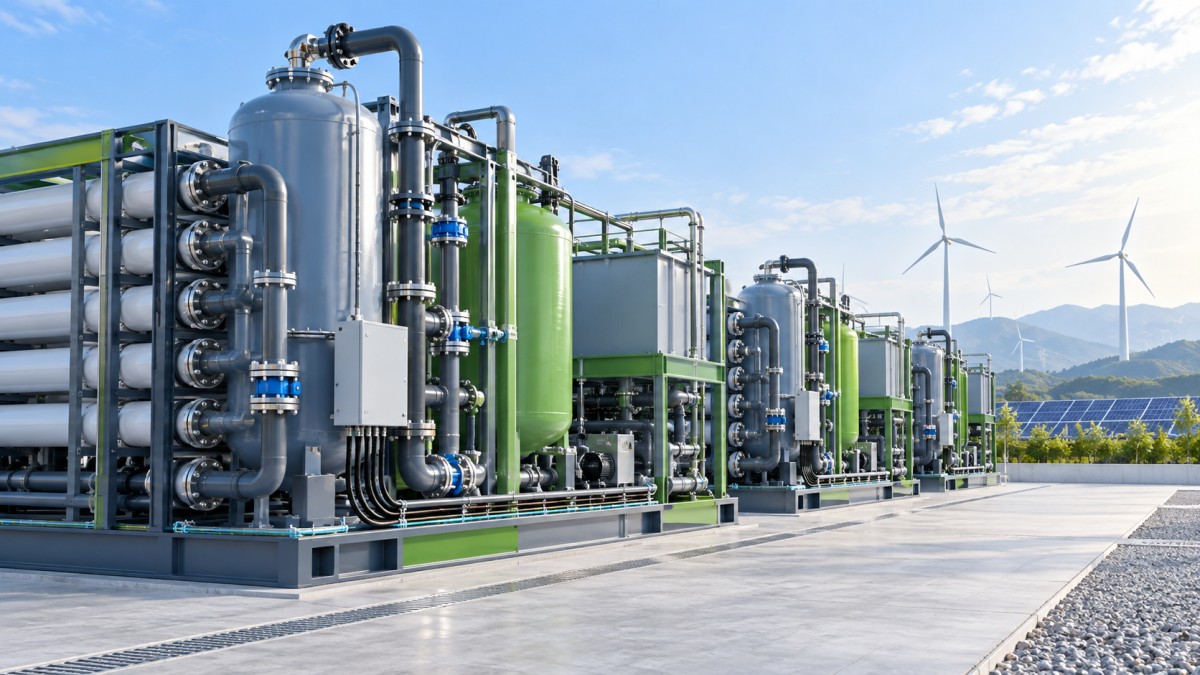
Scalability isn’t impossible—it’s just conditional. The most successful phased deployments share one trait: they treat skids not as isolated units, but as nodes in a designed ecosystem. This means specifying integrated solutions where hydraulic, control, and mechanical interfaces are co-engineered from Day 1.
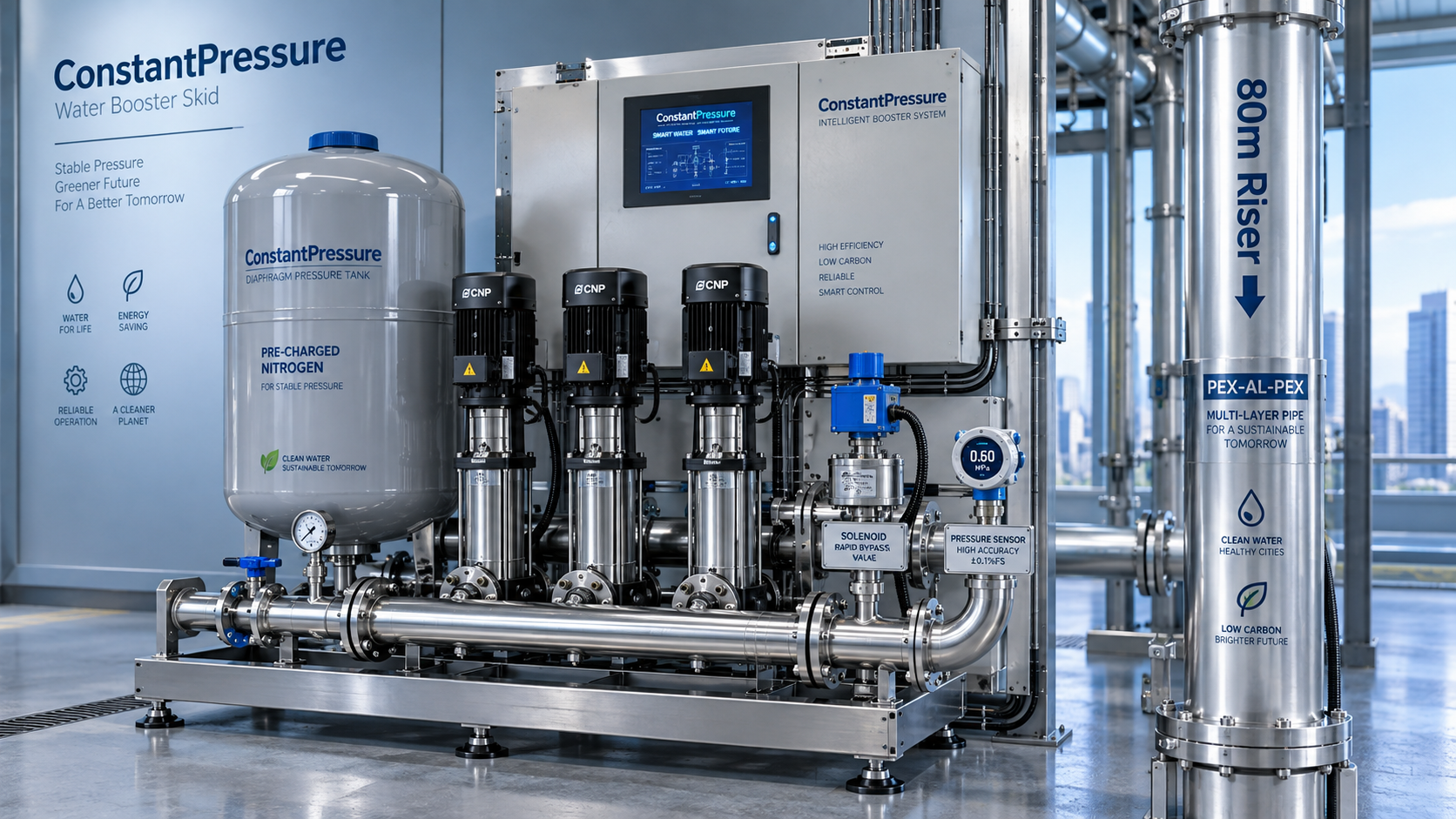
For instance, the Skid-mounted & Modular Variable-frequency Constant-pressure Water Supply Unit demonstrates how variable-frequency drive coordination across multiple skids can maintain stable pressure profiles even as flow demand shifts across phases—eliminating the need for separate booster stations or pressure-reducing valves downstream. Its control architecture supports plug-and-play addition of identical units, with automatic IP allocation and synchronized setpoint inheritance—reducing commissioning time for Phase 2 by ~65% compared to legacy approaches.
But even here, success depends on upstream discipline: consistent feedwater quality monitoring, aligned chemical dosing algorithms, and pre-agreed data tagging conventions across all phases. Scalability isn’t delivered in a shipping container—it’s negotiated in the specification document, validated in the FAT, and sustained through disciplined operations.
The bottom line: if your project timeline assumes “add another skid next year,” verify—before signing—that hydraulic headroom, control architecture, and site interface plans were engineered for growth—not just for launch.



 What scalability limitations exist for Large-Scale Integrated Skid-Mounted Water Purification Treatment Equipment in phased expansion projects?
 What footprint reduction does Large-Scale Integrated Skid-Mounted Water Purification Treatment Equipment deliver versus conventional concrete plants?
 How ConstantPressure Water Supply Skid-Mounted Equipment avoids water hammer during pump start-up in district heating networks
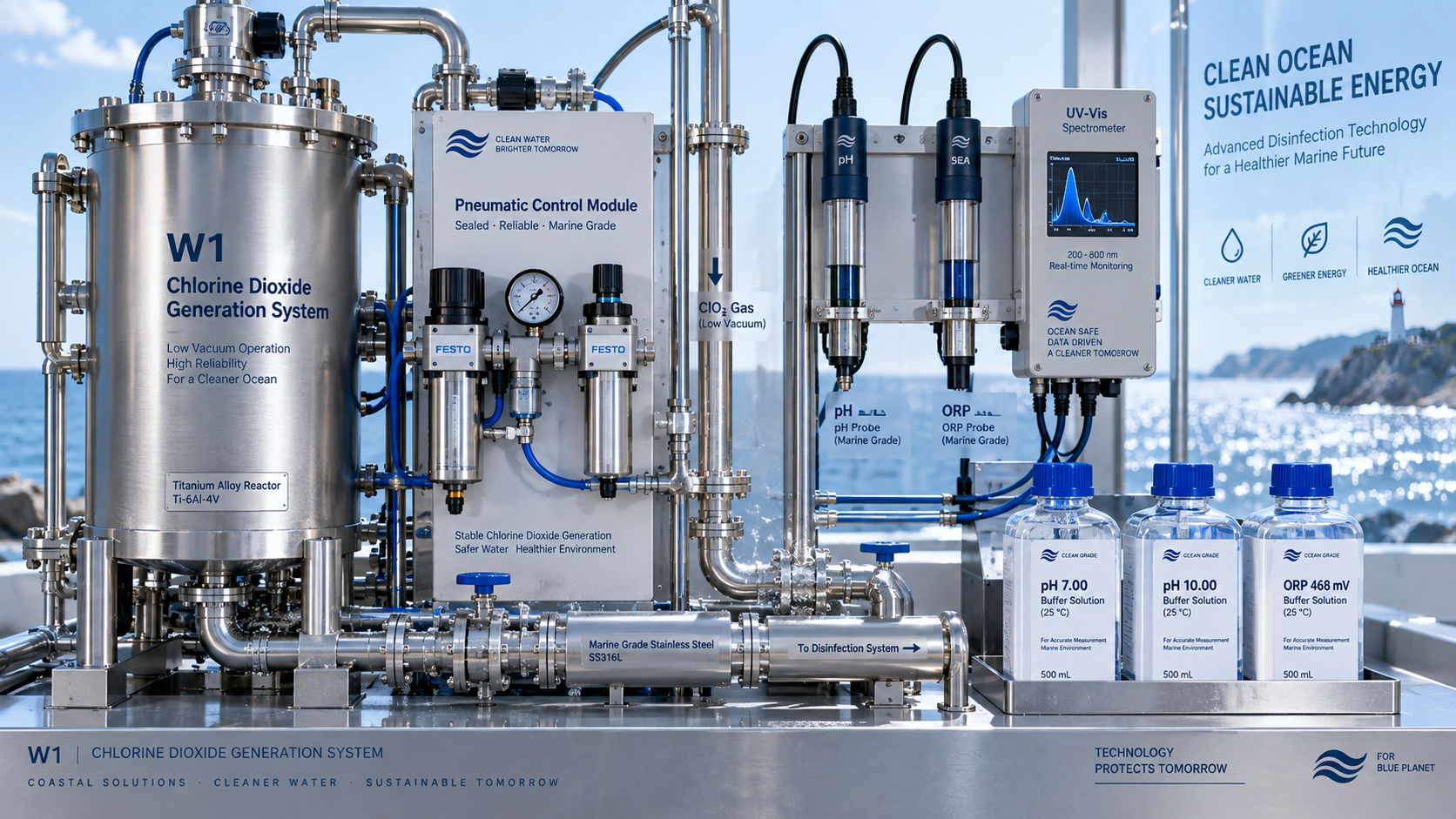
 chlorine dioxide preparation technology in coastal desalination plants?") What maintenance intervals are validated for W1 type (low negative pressure) chlorine dioxide preparation technology in coastal desalination plants?
What maintenance intervals are validated for W1 type (low negative pressure) chlorine dioxide preparation technology in coastal desalination plants? Does Large-Scale Integrated Skid-Mounted Water Purification Treatment Equipment include redundant control logic for SCADA integration?
 How ConstantPressure Water Supply Skid-Mounted Equipment responds to sudden valve closure events in high-rise buildings
GET A FREE QUOTE
Service Commitment: Upon receipt of your message, a dedicated representative will contact you as soon as possible to provide efficient and professional service support.
