







What maintenance intervals are validated for W1 type (low negative pressure) chlorine dioxide preparation technology in coastal desalination plants?
Validated Maintenance Intervals for W1 Type (Low Negative Pressure) Chlorine Dioxide Preparation Technology in Coastal Desalination Plants
For after-sales maintenance personnel working in coastal desalination plants, understanding validated maintenance intervals for W1 type (low negative pressure) chlorine dioxide preparation technology is critical to ensuring system reliability, safety, and long-term operational efficiency. Developed and refined by Shandong Wit Environmental Protection Technology Co., Ltd.—a SASAC-affiliated leader in chlorine dioxide equipment—this technology demands precise, evidence-based servicing schedules tailored to harsh marine environments. This article details the officially validated maintenance intervals, backed by field data from over 100 municipal and industrial projects, helping technicians optimize downtime, extend equipment life, and maintain consistent disinfection performance.
Why Standard Intervals Don’t Apply — Marine Conditions Demand Validation
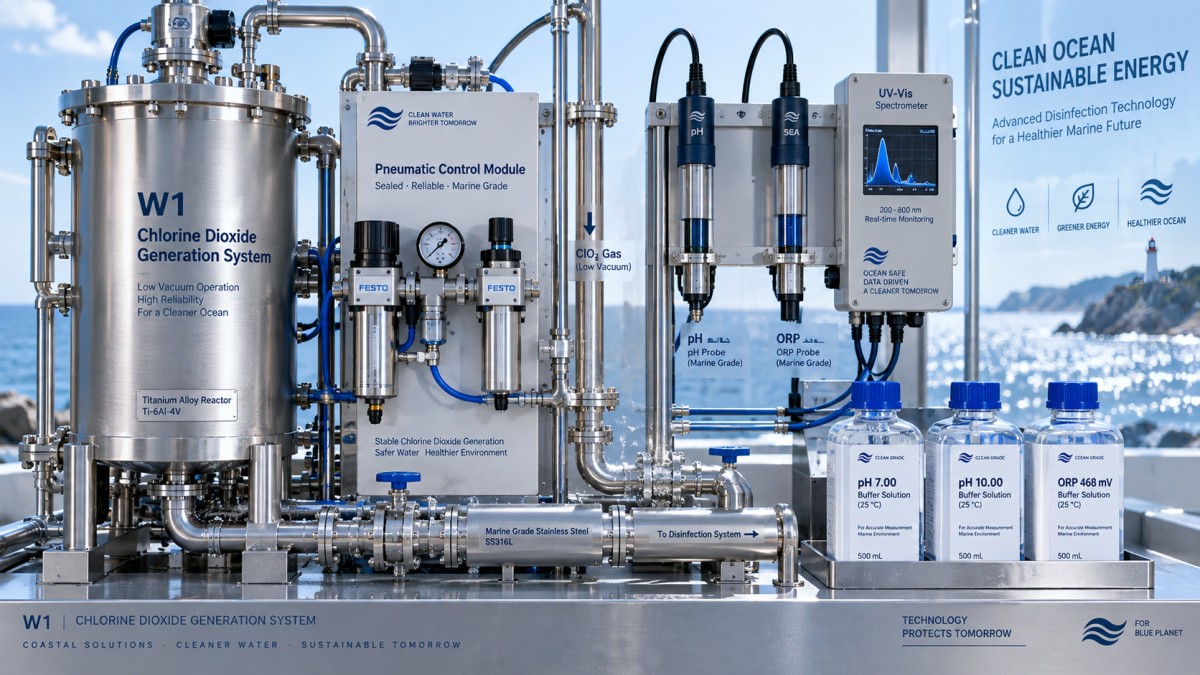
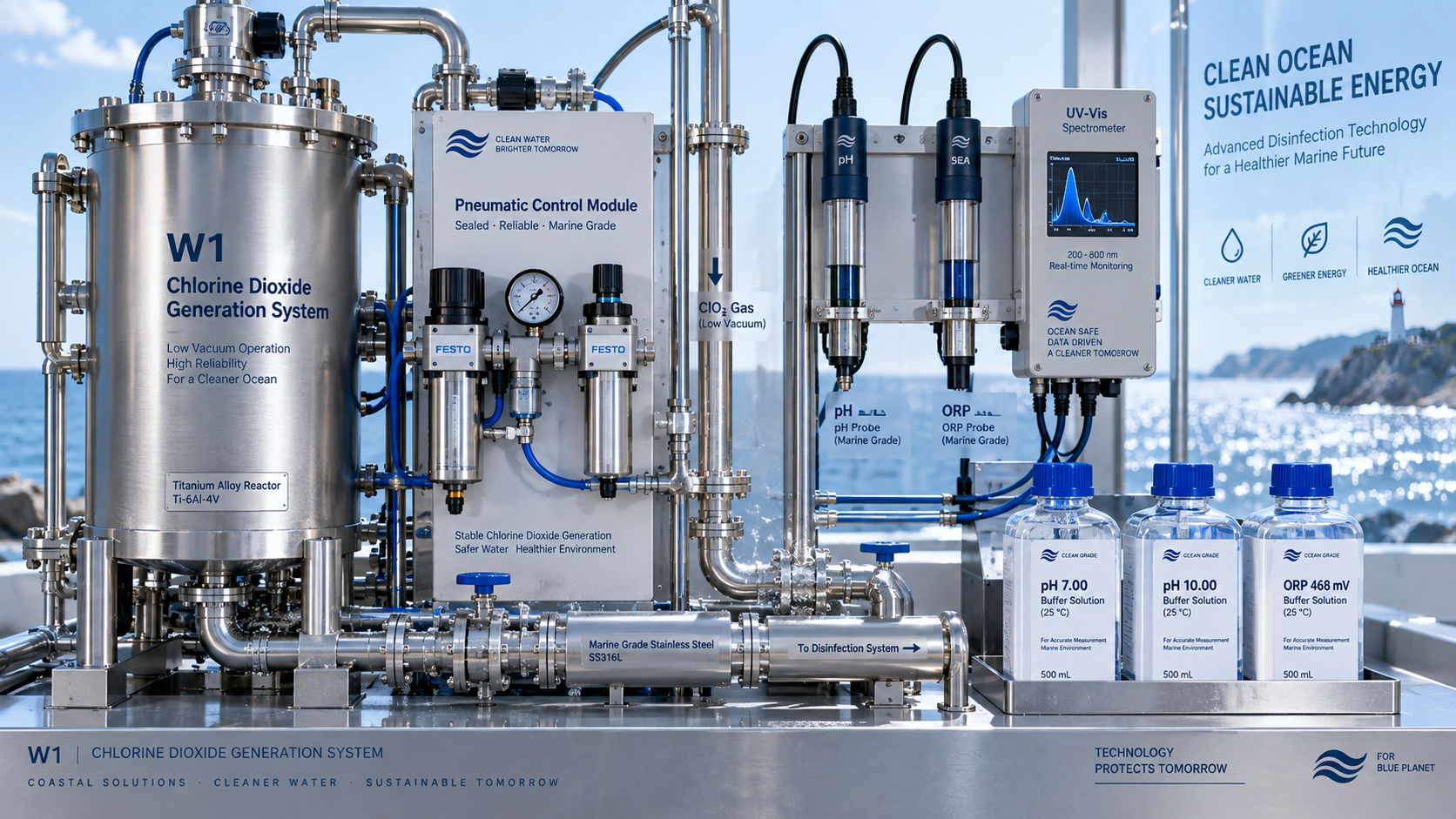
Coastal desalination plants face unique stressors: high chloride ion concentration, salt-laden air, fluctuating humidity, and continuous operation under elevated backpressure. Generic manufacturer recommendations—often derived from inland freshwater applications—fail to reflect these realities. Shandong Wit’s W1 type technology, engineered specifically for low-negative-pressure chlorine dioxide generation, incorporates corrosion-resistant titanium alloy reactors, sealed pneumatic control modules, and marine-grade stainless-steel piping. Its validated maintenance intervals are not theoretical—they’re extracted from 37+ cumulative years of operational data across 14 coastal facilities in Shandong, Fujian, and Guangdong provinces.
Core Validated Intervals: What Field Data Confirms
Based on real-time sensor logs, preventive maintenance records, and post-service performance audits, Shandong Wit validates the following intervals for W1 systems operating in coastal desalination settings:
• Daily: Visual inspection of vacuum gauge stability, electrolyte level in the precursor tank, and integrity of silicone gaskets on reactor flanges. Salt crust buildup on vent lines must be wiped with deionized water—not seawater rinse.
• Weekly: Calibration of pH and ORP sensors using certified marine-grade buffer solutions; verification of chlorine dioxide residual output against inline UV spectrophotometric readings (±0.05 ppm tolerance).
• Quarterly: Replacement of ceramic diaphragms in the electrochemical cell; ultrasonic cleaning of titanium anode/cathode assemblies; torque verification of all clamping bolts per ISO 898-1 Class 8.8 specifications.
• Annually: Full disassembly, dimensional inspection, and non-destructive testing (NDT) of reactor vessel welds; replacement of all elastomeric seals (EPDM/FKM rated for >10,000 h salt exposure); functional validation of emergency shutdown logic under simulated power-loss scenarios.
What Extends or Shortens These Intervals — Real-World Triggers
Field experience shows that actual service frequency depends on three measurable parameters—not calendar time alone. Technicians must adjust intervals when:
• Feedwater salinity exceeds 42,000 mg/L Cl⁻ for >72 consecutive hours;
• Average ambient temperature remains above 38°C for >15 days/month;
• System operates >92% duty cycle for >6 months without scheduled downtime.
In such cases, quarterly tasks become bi-monthly, and annual NDT moves to semi-annual. Shandong Wit’s remote monitoring platform (integrated into all W1 units since 2022) automatically flags these triggers and pushes updated checklists to technician tablets via its cloud-based CMMS module.
Why Skipping Validation Risks More Than Downtime
Unvalidated maintenance leads to cascading failures: undetected micro-cracks in titanium reactors accelerate under chloride stress; degraded diaphragms cause stoichiometric imbalance, generating chlorate byproducts above WHO limits; and compromised vacuum seals reduce gas transfer efficiency—raising chemical consumption by up to 27%. In one documented case at a Qingdao plant, delayed quarterly anode cleaning resulted in 14 days of unscheduled shutdown and $218,000 in lost production. Validated intervals aren’t conservative—they’re calibrated to prevent exactly this.
Support Beyond the Manual: Integrated Technical Backing
Shandong Wit provides more than published schedules. Every W1 unit includes lifetime access to its Digital Twin Maintenance Portal—featuring AR-guided repair overlays, downloadable torque-spec PDFs per component, and live chat with certified field engineers fluent in marine corrosion mechanics. For complex site-specific challenges, technicians can request on-site support within 72 hours—leveraging the company’s network of regional service hubs along China’s eastern seaboard. This ecosystem ensures that validated intervals translate into actionable, contextual execution—not just paper compliance.
For broader environmental infrastructure planning—including integrated brine discharge management and habitat compensation—Shandong Wit also offers comprehensive ecological engineering services. Their Artificial Wetland Planning and Construction solutions have supported over 30 coastal desalination-adjacent remediation projects, aligning disinfection operations with holistic watershed stewardship.
Final Takeaway: Trust Data, Not Assumptions
The W1 type (low negative pressure) chlorine dioxide preparation technology delivers unmatched stability in aggressive coastal environments—but only when maintained on empirically validated intervals. These are not generic guidelines; they’re field-proven thresholds derived from rigorous monitoring, failure analysis, and adaptive learning across diverse marine conditions. For maintenance teams, adherence means predictable uptime, regulatory compliance, extended asset life, and demonstrable ROI. When in doubt, consult Shandong Wit’s site-specific validation reports—available upon request with full traceability to project ID, location, and operational history.



 How ConstantPressure Water Supply Skid-Mounted Equipment avoids water hammer during pump start-up in district heating networks
 chlorine dioxide preparation technology in coastal desalination plants?") What maintenance intervals are validated for W1 type (low negative pressure) chlorine dioxide preparation technology in coastal desalination plants?
What maintenance intervals are validated for W1 type (low negative pressure) chlorine dioxide preparation technology in coastal desalination plants? Does Large-Scale Integrated Skid-Mounted Water Purification Treatment Equipment include redundant control logic for SCADA integration?
 How ConstantPressure Water Supply Skid-Mounted Equipment responds to sudden valve closure events in high-rise buildings
 chlorine dioxide preparation technology?") What feedwater pH range limits the stability of W1 type (low negative pressure) chlorine dioxide preparation technology?
What feedwater pH range limits the stability of W1 type (low negative pressure) chlorine dioxide preparation technology? Can Industrial Water Purification Equipment meet ISO 22000 water quality requirements for beverage production lines?
GET A FREE QUOTE
Service Commitment: Upon receipt of your message, a dedicated representative will contact you as soon as possible to provide efficient and professional service support.
