







How ConstantPressure Water Supply Skid-Mounted Equipment avoids water hammer during pump start-up in district heating networks
Imagine standing in the control room of a district heating plant just before dawn—pumps idle, pipes cold, pressure sensors holding steady. Then, with a command, the primary circulation pump engages. A split second later: a sharp, metallic clang echoes through the corridor. Not from machinery failing—but from water hammer: that violent, uncontrolled surge of pressure traveling at up to 1,200 m/s through steel piping. In district heating networks—where temperatures exceed 90°C and system inertia is high—this isn’t just noise. It’s fatigue stress on welds, premature valve wear, micro-fractures in insulation layers, and, over time, costly unplanned outages.
For technical evaluators tasked with specifying equipment for municipal or industrial thermal infrastructure, water hammer during pump start-up isn’t a theoretical risk—it’s a documented failure mode. Conventional solutions often rely on mechanical dampeners, slow-start VFDs, or manual sequencing—all of which add complexity, reduce responsiveness, or fail under variable load conditions. What if the system itself could *anticipate* the transient instead of reacting to it?
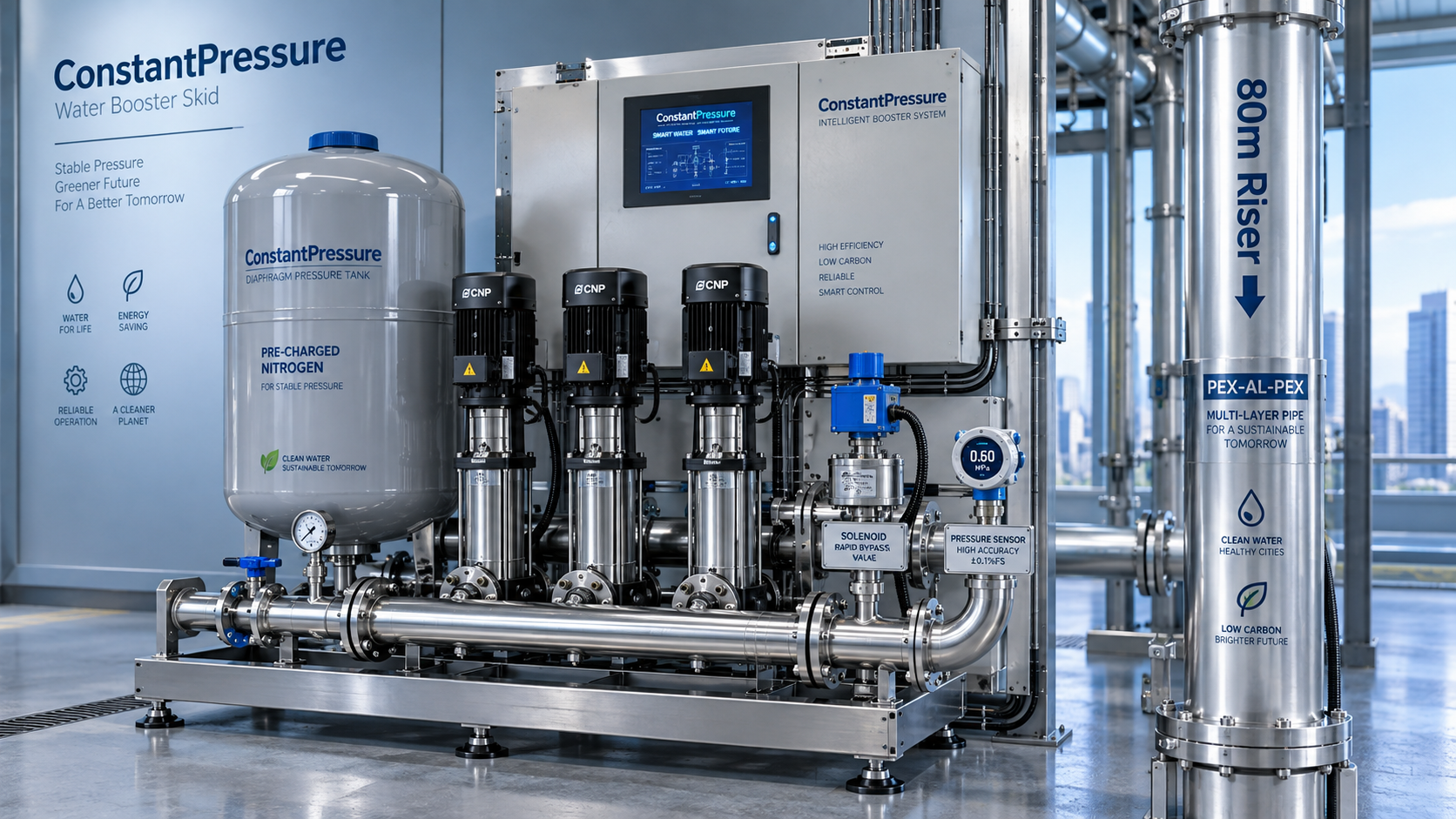
This is where ConstantPressure Water Supply Skid-Mounted Equipment shifts the paradigm—not as an add-on, but as an integrated hydraulic intelligence layer. Developed by Shandong Wit Environmental Protection Technology Co., Ltd., a SASAC-affiliated enterprise with deep roots in water system dynamics and thermal energy engineering, this skid-mounted solution treats pressure stability not as a side effect, but as its core operational logic.
The key lies in how it redefines “start-up.” Rather than initiating flow and then regulating pressure, the system first establishes a precise, low-flow pressurization baseline—typically 0.5–1.2 bar above static network pressure—before any significant volumetric displacement occurs. This pre-pressurized cushion acts like a hydraulic buffer: when the main pump ramps, the fluid has nowhere to accelerate uncontrollably. Instead, flow builds linearly, guided by real-time feedback from dual-sensor arrays (pressure + differential flow) sampling at 50 Hz. There’s no guesswork, no fixed ramp curve—and crucially, no reliance on operator intervention or external PLC logic.
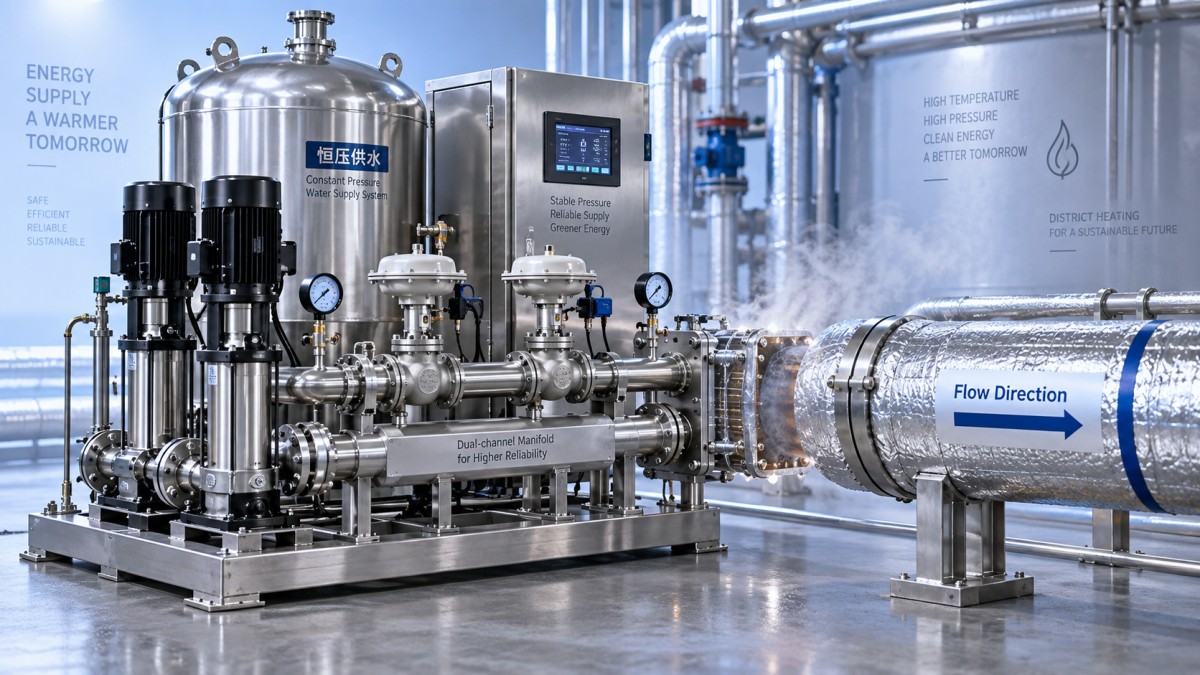
What makes this especially valuable in district heating contexts is its thermal resilience. Unlike many pressure-maintaining systems that degrade near boiling-point temperatures, the skid’s stainless-steel manifold, ceramic-sealed diaphragm regulators, and thermally compensated PID algorithms remain stable across 40–130°C operating ranges. Its compact, factory-assembled design also eliminates field-welded junctions—the very points most vulnerable to hammer-induced fatigue. And because it’s skid-mounted, commissioning time drops from weeks to hours—critical when retrofitting aging heat distribution hubs in urban cores.
Of course, reliability isn’t only about avoiding damage—it’s about sustaining performance under real-world variability. Heating demand fluctuates hourly; outdoor temperature swings alter return water temperatures; intermittent booster stations introduce secondary transients. The ConstantPressure system continuously adapts—not just to pump events, but to network-wide impedance shifts. Its embedded adaptive learning module logs pressure-response profiles across seasons, refining actuation timing without requiring firmware updates or specialist recalibration. For evaluators comparing lifecycle TCO, this translates into fewer service calls, extended valve life, and measurable reductions in thermal energy loss due to pressure-induced turbulence.
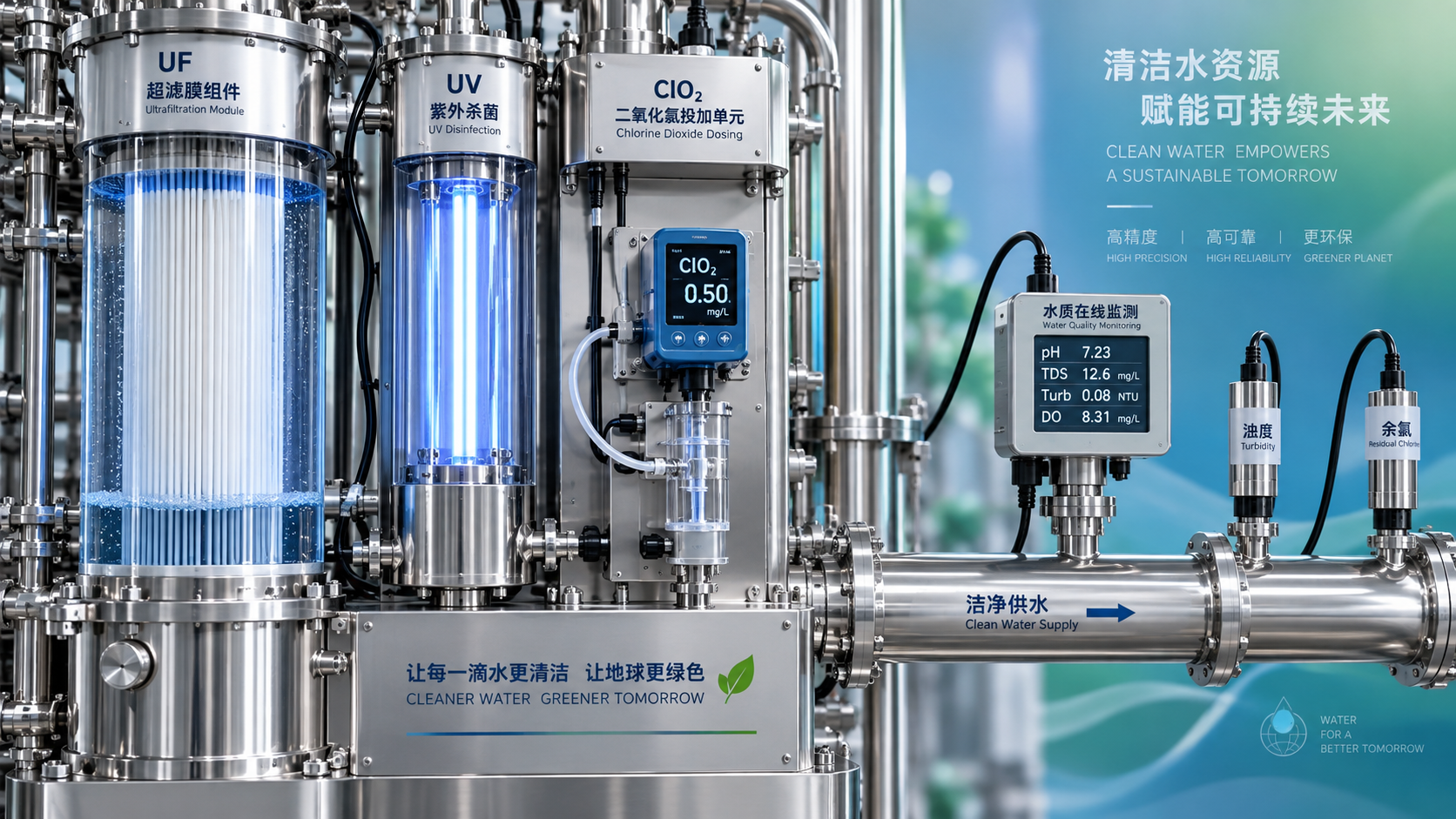
It’s worth noting that while this technology targets district heating hydraulics, its underlying architecture shares design DNA with other precision water management systems developed by Shandong Wit—such as their Industrial Pure Water / Ultrapure Water Equipment, where even minor pressure spikes can compromise membrane integrity or trigger false alarms in pharmaceutical-grade loops. That cross-domain rigor—honed across wastewater treatment, chlorine dioxide generation, and ecological restoration projects—means each iteration benefits from accumulated field insight, not just lab validation.
Still, adoption hinges on more than engineering elegance. Technical evaluators rightly ask: *How does this integrate with existing SCADA? Can it interface with legacy BMS protocols? Does it require redundant power or isolated grounding?* The answer lies in its modular I/O architecture—supporting Modbus TCP, BACnet/IP, and optional OPC UA—with configurable alarm thresholds mapped directly to ISO 5167-compliant flow diagnostics. No black-box controllers. No proprietary gateways. Just deterministic, auditable cause-and-effect relationships between sensor input and actuator output.
Water hammer doesn’t announce itself with warning lights. It announces itself with cracked flanges, leaking expansion joints, and maintenance logs full of “unexplained vibration.” Choosing equipment that treats pressure control as physics-first—not afterthought—changes how engineers think about system longevity. It moves the conversation from “how fast can we restart?” to “how smoothly can we sustain?”
For those evaluating infrastructure upgrades where safety, uptime, and thermal efficiency are inseparable, the ConstantPressure Water Supply Skid-Mounted Equipment isn’t just solving a surge problem. It’s redefining what hydraulic stability means—in real time, across seasons, and under load. Because in district heating, the quietest systems aren’t the ones that run silently. They’re the ones that never let pressure speak louder than intention.



 How ConstantPressure Water Supply Skid-Mounted Equipment avoids water hammer during pump start-up in district heating networks
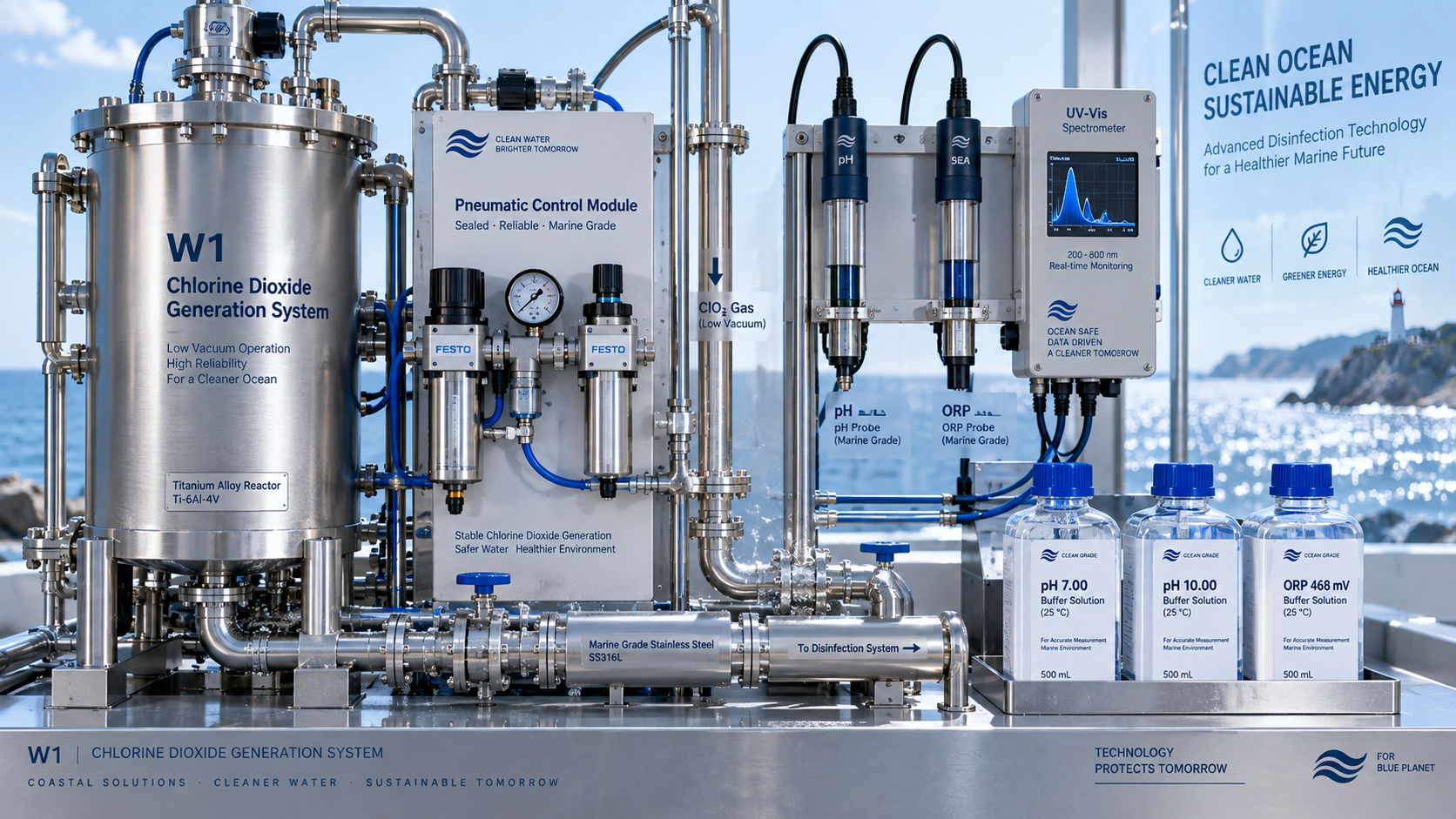
 chlorine dioxide preparation technology in coastal desalination plants?") What maintenance intervals are validated for W1 type (low negative pressure) chlorine dioxide preparation technology in coastal desalination plants?
What maintenance intervals are validated for W1 type (low negative pressure) chlorine dioxide preparation technology in coastal desalination plants? Does Large-Scale Integrated Skid-Mounted Water Purification Treatment Equipment include redundant control logic for SCADA integration?
 How ConstantPressure Water Supply Skid-Mounted Equipment responds to sudden valve closure events in high-rise buildings
 chlorine dioxide preparation technology?") What feedwater pH range limits the stability of W1 type (low negative pressure) chlorine dioxide preparation technology?
What feedwater pH range limits the stability of W1 type (low negative pressure) chlorine dioxide preparation technology? Can Industrial Water Purification Equipment meet ISO 22000 water quality requirements for beverage production lines?
GET A FREE QUOTE
Service Commitment: Upon receipt of your message, a dedicated representative will contact you as soon as possible to provide efficient and professional service support.
