







Wastewater Treatment Plant for Construction Sites
A wastewater treatment plant for construction sites is essential for controlling runoff, managing sediment-laden water, and meeting environmental compliance requirements during project execution. With proven expertise in wastewater treatment, ecological restoration, and integrated environmental engineering, Shandong Wit Environmental Protection Technology Co., Ltd. delivers reliable, site-specific solutions that help construction projects reduce pollution risks, protect surrounding water resources, and support sustainable development from planning through operation.
Construction wastewater is often underestimated because it is temporary. Yet temporary discharge can create lasting consequences: silted drainage channels, contaminated receiving waters, complaints from nearby communities, work stoppages after inspections, and costly remediation after a storm event. The central question is not whether a site needs water management equipment, but whether its treatment approach reflects the actual water quality, site layout, construction sequence, and discharge destination.
A well-designed construction-site wastewater treatment plant is therefore not simply a tank with a pump. It is a practical control system that separates clean runoff from contaminated water, removes solids before they spread, manages variable flows, and provides enough treatment stability for the project’s permitted or agreed discharge route.
Why construction water is different from municipal wastewater
Municipal wastewater plants are generally designed around relatively predictable daily flows and organic loads. Construction sites face the opposite condition. Flow can be negligible for days and then rise sharply during rain. Water quality can change as excavation, concrete work, foundation drilling, vehicle washing, dewatering, and finishing activities move across the site.
The main pollutants also vary by project stage. Early earthworks commonly generate high concentrations of suspended solids. Excavation dewatering may contain fine clay, iron, manganese, salinity, or naturally occurring groundwater constituents. Concrete washout can produce highly alkaline water. Equipment cleaning can introduce oils and surfactants. Tunnel, bridge, and piling works may create slurry with very fine particles that settle slowly and cannot be managed effectively by a basic sediment pit alone.
This variability explains why a generic “sedimentation tank” is frequently insufficient. A system that performs acceptably during dry weather may fail when rain mobilizes loose soil, overwhelms the collection network, or bypasses the treatment unit. Design must account for peak events, not only average conditions.
The first decision: reduce the water that requires treatment
The most economical wastewater treatment plant is often the one that receives less contaminated water. Before selecting treatment equipment, project teams should divide the site into clean-water and dirty-water zones.
Clean stormwater from undisturbed areas, completed roofs, and protected surfaces should be diverted away from active work zones wherever feasible. Runoff from stockpiles, haul roads, excavation areas, wash bays, and material handling zones should be collected separately. This distinction reduces hydraulic load and prevents treatment systems from being oversized simply because clean rainwater has been mixed with contaminated runoff.
Source control also includes stabilizing exposed ground, covering soil or aggregate stockpiles where appropriate, providing designated wheel-wash and concrete washout areas, and maintaining drains before sediment accumulates. These are not minor housekeeping measures. They determine whether downstream treatment can operate consistently.
What a practical treatment train looks like
Most construction wastewater systems use several treatment steps rather than one unit process. The exact configuration depends on the wastewater source, but the logic is consistent: equalize variable flow, remove coarse materials, separate fine solids, adjust water chemistry when required, and manage sludge safely.
A typical treatment train may include:
- Collection and equalization: sumps, channels, or holding tanks that buffer intermittent pumping and storm-related flow peaks.
- Screening and grit removal: protection for pumps and downstream equipment against debris, sand, and larger particles.
- Primary settling: removal of readily settleable solids through sedimentation tanks, lamella clarifiers, or similar units.
- Coagulation and flocculation: treatment for fine suspended solids that do not settle effectively by gravity alone.
- pH adjustment: particularly relevant for concrete wash water, which may be strongly alkaline, and for chemically conditioned clarification.
- Oil-water separation or adsorption: where machinery maintenance, fueling, or vehicle washing creates hydrocarbon risk.
- Filtration or polishing: used when lower turbidity is needed for reuse or sensitive receiving environments.
- Sludge thickening and dewatering: necessary because captured sediment remains a waste-management responsibility.
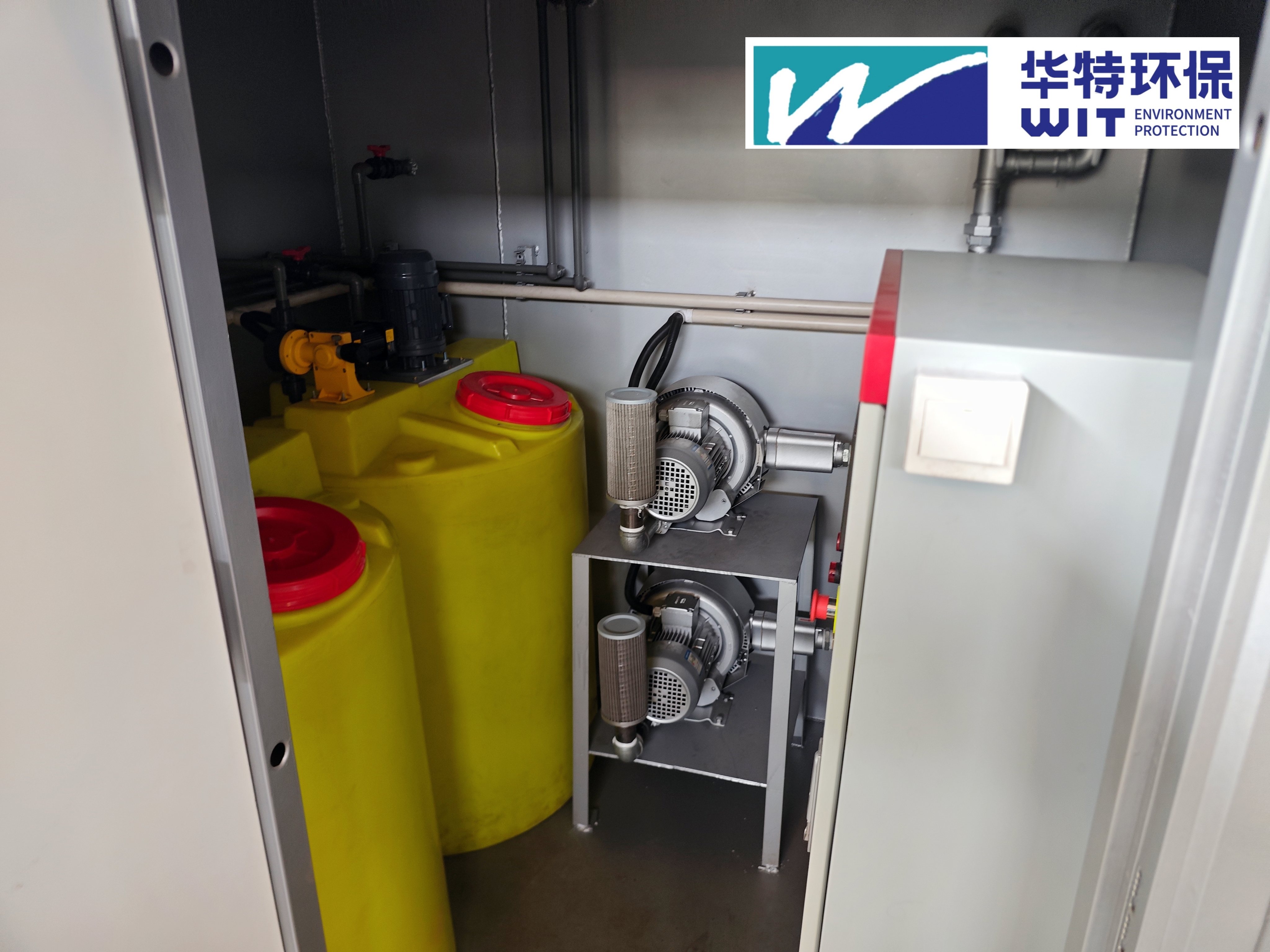
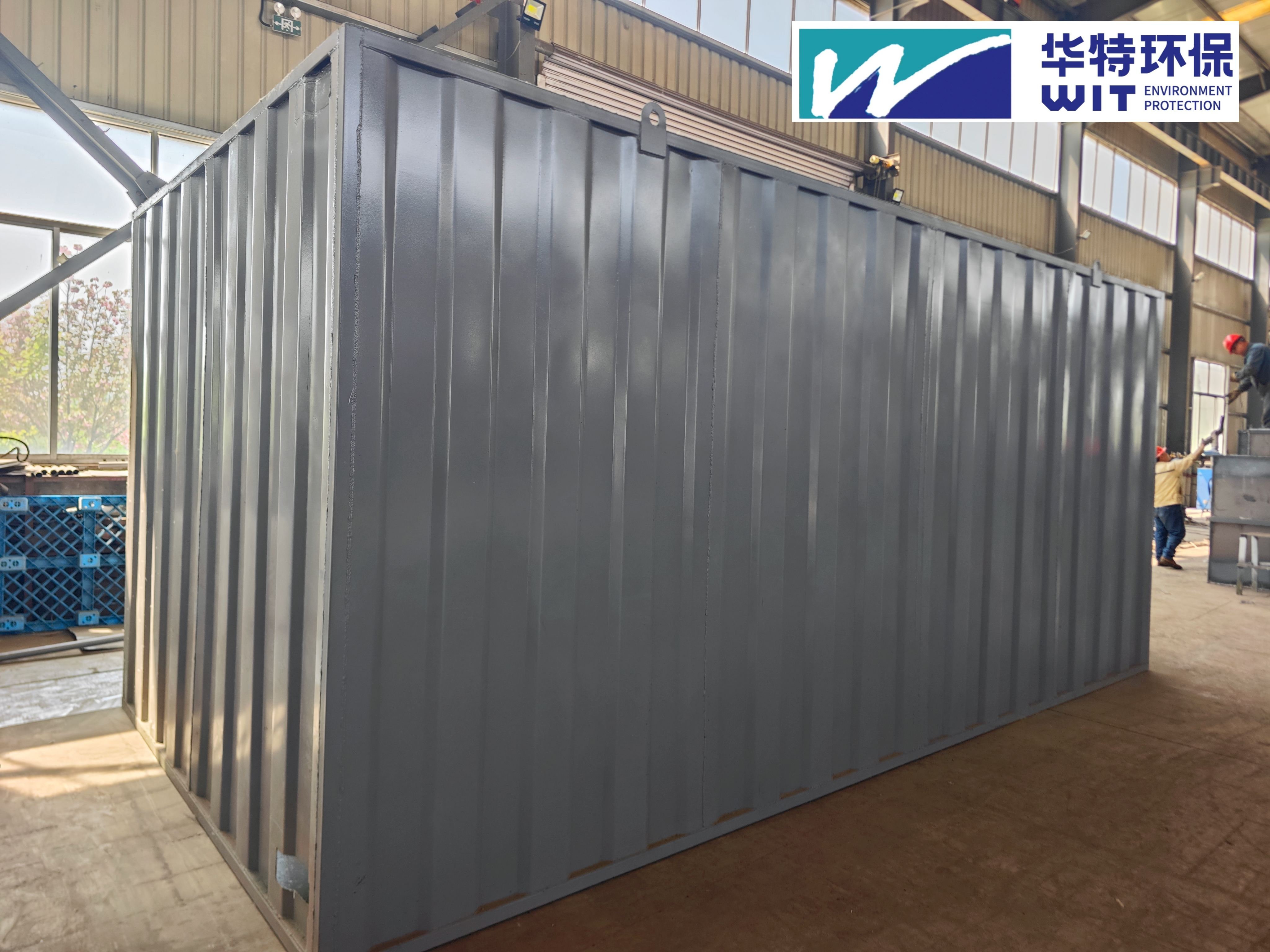
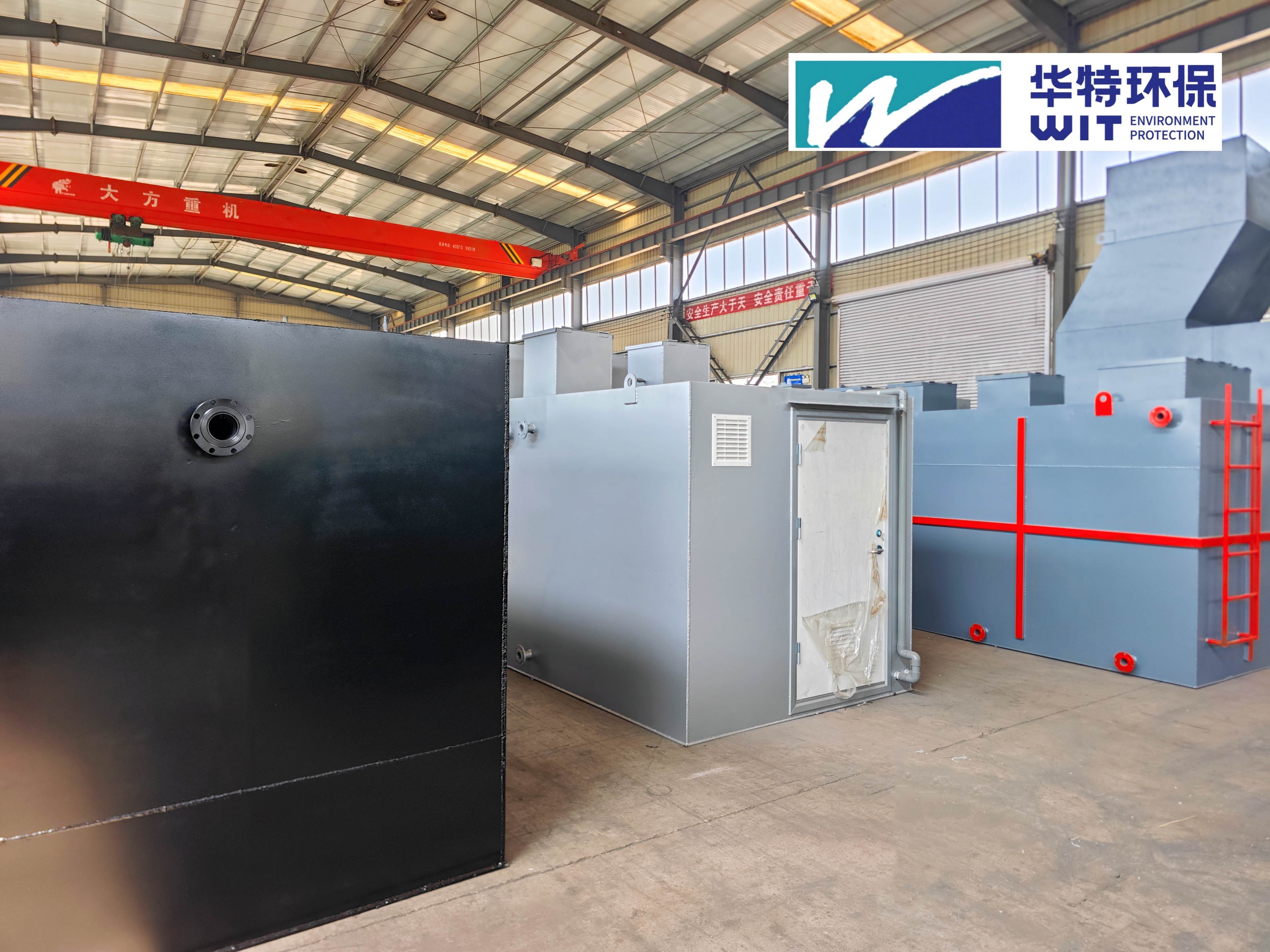
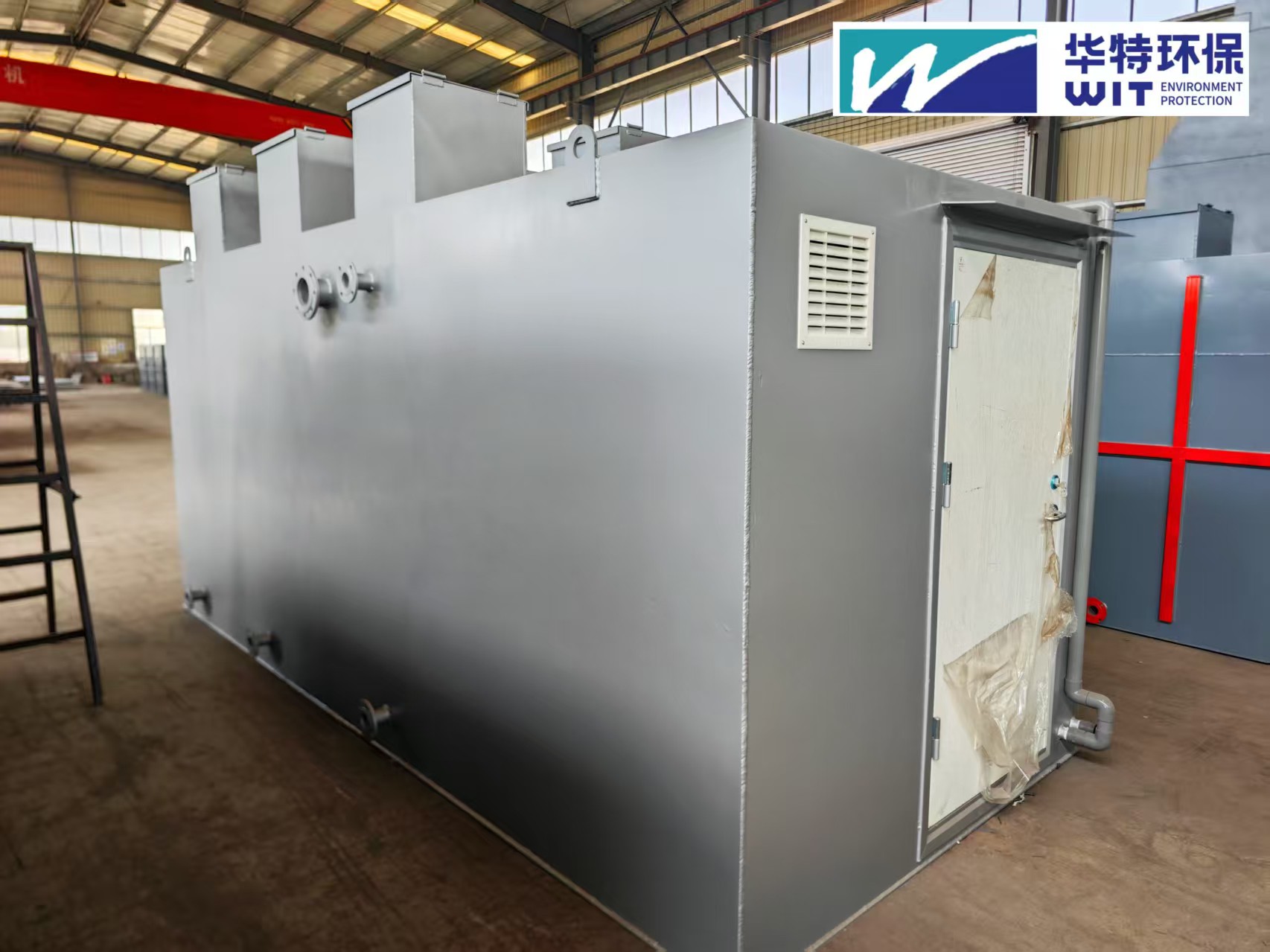
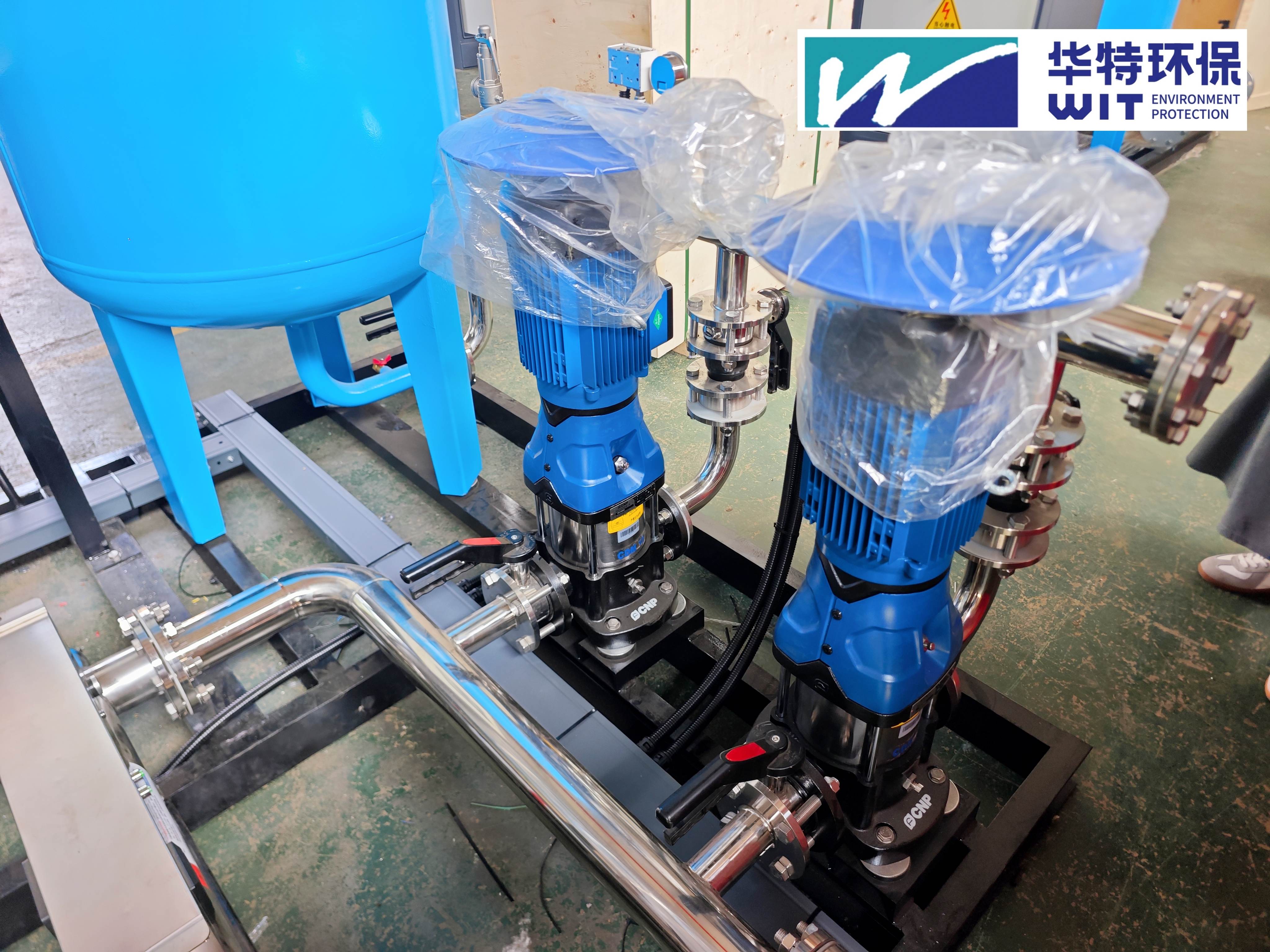
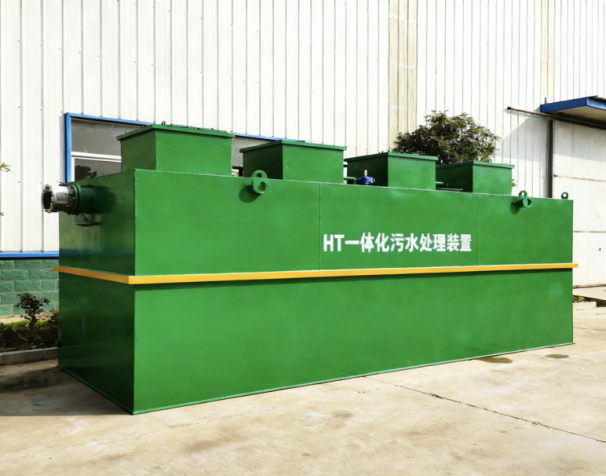
For many sites, containerized or skid-mounted equipment offers an advantage because it can be deployed rapidly, relocated as work fronts change, and removed after completion. However, modularity should not be confused with universal suitability. A compact system still requires adequate access, electrical supply, drainage connections, chemical handling arrangements, operator attention, and a clear route for dewatered sludge disposal.
Fine sediment is usually the real operational challenge
Coarse sand is relatively easy to remove. Fine clay, drilling slurry, and cementitious particles are more difficult because they can remain suspended for long periods. If the site relies only on a large settling pond, the required retention time may become impractical, especially when available land is limited.
Coagulation and flocculation can improve clarification dramatically, but chemical dosing must be based on representative jar tests or on-site trials rather than assumptions. Overdosing may increase chemical cost, create excessive sludge, or destabilize treated water quality. Underdosing leaves turbidity high and may result in non-compliant discharge. Seasonal changes in groundwater chemistry and the varying mineral composition of excavated soil can also alter treatment performance.
This is where experienced engineering support matters. A treatment supplier should be able to assess influent samples, expected flow ranges, rainfall exposure, solids characteristics, discharge conditions, and the project’s operational capacity before proposing equipment. A low initial equipment price has limited value if the system requires continuous intervention or cannot cope with real site conditions.
Disinfection is not always necessary, but it can be important
Not every construction wastewater stream requires disinfection. Sediment-laden runoff from earthworks is primarily a solids-control issue. However, disinfection may become relevant where treated water is reused for dust suppression, wheel washing, equipment cleaning, temporary sanitary applications, or where water has contact with biological contamination.
The choice of disinfectant should consider water quality, contact time, safety procedures, storage constraints, and possible impacts on downstream discharge or reuse. Chlorine dioxide is used in a range of water-treatment applications because of its oxidizing and disinfection capability, although its use must be engineered and managed carefully. For projects evaluating on-site generation rather than transporting prepared chemicals, W3 type (comprehensive method) chlorine dioxide preparation technology may be relevant within a broader water-treatment and reuse strategy, subject to the specific process requirements and applicable safety controls.
Compliance depends on the discharge route
There is no single discharge target that applies to every construction project or every country. Requirements may differ according to whether treated water is released to a municipal sewer, a surface-water body, a stormwater network, or reused on site. Local environmental permits, sewer authority conditions, project environmental management plans, and client specifications may each impose separate obligations.
Project teams should establish the intended discharge route before finalizing plant design. This affects the required treatment level, sampling parameters, monitoring frequency, and emergency response measures. It also determines who must approve the discharge arrangement.
A common mistake is to buy equipment first and clarify permissions later. This can lead to a treatment plant that is technically capable of removing sediment but lacks the monitoring, pH control, storage capacity, or documentation required by the discharge authority. Another error is assuming that water which looks clear is suitable for release. Visual clarity does not confirm pH, dissolved pollutants, residual chemicals, oil content, or microbiological quality.
Selection should be based on lifecycle reliability, not nominal capacity
When comparing a wastewater treatment plant for construction sites, nominal flow rate is only one part of the decision. Procurement and project teams should examine how the plant performs under fluctuating load, how quickly it can be mobilized, and how much operational discipline it requires.
Useful evaluation questions include:
- What are the expected average and peak flows, including storm-event scenarios?
- Which water sources will enter the system, and can they be segregated?
- Are fine clays, slurry, alkaline concrete wash water, oils, or dissolved groundwater contaminants present?
- What treated-water quality is required for the planned discharge or reuse route?
- How will sludge be dewatered, stored, transported, and documented?
- Can the unit be expanded or relocated as the construction programme changes?
- What operator training, remote support, spare parts, and maintenance response are available?
Reliability is especially important for projects with tight schedules. A treatment unit that requires frequent shutdowns for cleaning, has no buffer capacity, or depends on difficult-to-source consumables can become a programme risk rather than an environmental safeguard.
From temporary facility to project-control tool
The market is moving away from viewing construction wastewater management as a peripheral compliance expense. Infrastructure expansion, urban redevelopment, stricter scrutiny of construction runoff, and growing water-reuse expectations are making temporary treatment systems a more visible part of project planning.
The strongest solutions combine civil drainage planning, process treatment, operational procedures, and monitoring. They are designed early enough to influence site logistics, not added after contamination has already become a problem. For contractors, developers, and engineering firms, the practical value lies in reducing disruption: fewer uncontrolled discharges, fewer emergency cleanups, clearer reporting, and greater confidence that construction activity will not compromise surrounding water resources.
A construction-site wastewater treatment plant should ultimately be judged by its ability to work under field conditions—during rainfall, changing work phases, limited space, and real operator constraints. That is the standard that separates a nominal treatment installation from a dependable environmental control system.


GET A FREE QUOTE
Service Commitment: Upon receipt of your message, a dedicated representative will contact you as soon as possible to provide efficient and professional service support.
