







What Is Integrated Sewage Treatment Equipment and Where Is It Best Used?
Integrated sewage treatment equipment brings several wastewater treatment steps into one compact unit, allowing sewage control to be deployed faster and in tighter spaces. That matters in environmental and energy projects where land, time, discharge standards, and operating stability all influence project success.
Instead of building a full conventional plant, many projects now prefer modular systems that can be transported, installed, and adjusted with less civil work. In practice, the best choice depends on water quality, treatment goals, flow fluctuation, and long-term management capacity.
What integrated sewage treatment equipment really means
At its core, integrated sewage treatment equipment is a packaged system that combines pretreatment, biological treatment, sedimentation, and sometimes disinfection in one structure. Some models also include sludge handling, odor control, and smart monitoring.
The main advantage is not only compactness. It is the ability to standardize process control while reducing on-site construction complexity. That is especially useful where wastewater treatment must start quickly or where a permanent plant is not practical.
Common process routes include A/O, A2/O, MBR, MBBR, and contact oxidation. Each route fits different effluent targets, influent loads, and operating budgets. So the term describes a delivery form, but process selection still remains central.
Why the market keeps paying attention
Environmental compliance is becoming more detailed, not less. Small towns, industrial parks, tourism zones, livestock sites, and temporary construction camps all face pressure to treat sewage reliably without waiting for large centralized infrastructure.
This is where integrated sewage treatment equipment stands out. It can shorten deployment cycles, lower initial land demand, and support phased expansion. For decentralized treatment, those benefits often outweigh the limits of a fully custom plant.
Another reason is operational transparency. Modern systems can integrate sensors, dosing control, and remote management. That makes troubleshooting easier and helps maintain more stable effluent under variable load conditions.
Companies with deep engineering backgrounds tend to view packaged systems as part of a broader solution rather than a standalone box. Shandong Wit Environmental Protection Technology Co.Ltd reflects this approach through wastewater treatment, ecological restoration, soil remediation, and whole-process environmental services.
Where it is best used
The best applications share one feature: they need effective treatment without the full footprint or construction period of a conventional station. Still, usage scenarios are not identical, and performance expectations should be defined early.
Municipal extensions are another strong fit. When an existing urban network expands faster than central plant capacity, integrated sewage treatment equipment can serve as an interim or distributed treatment node.
How to judge value beyond the equipment shell
A frequent mistake is comparing only container size, tank material, or nameplate capacity. Real performance depends on how the process matches actual wastewater characteristics and whether the system can stay stable under changing conditions.
That is why engineering experience matters. With more than a decade of wastewater treatment practice across municipal, industrial, and aquaculture sectors, Shandong Wit Environmental Protection Technology Co.Ltd emphasizes matching process design with site reality, not generic catalog selection.
- Check influent quality, not only daily flow.
- Confirm discharge standards and reuse targets.
- Review energy use, sludge output, and dosing demand.
- Assess automation level and maintenance accessibility.
- Consider whether future expansion is likely.
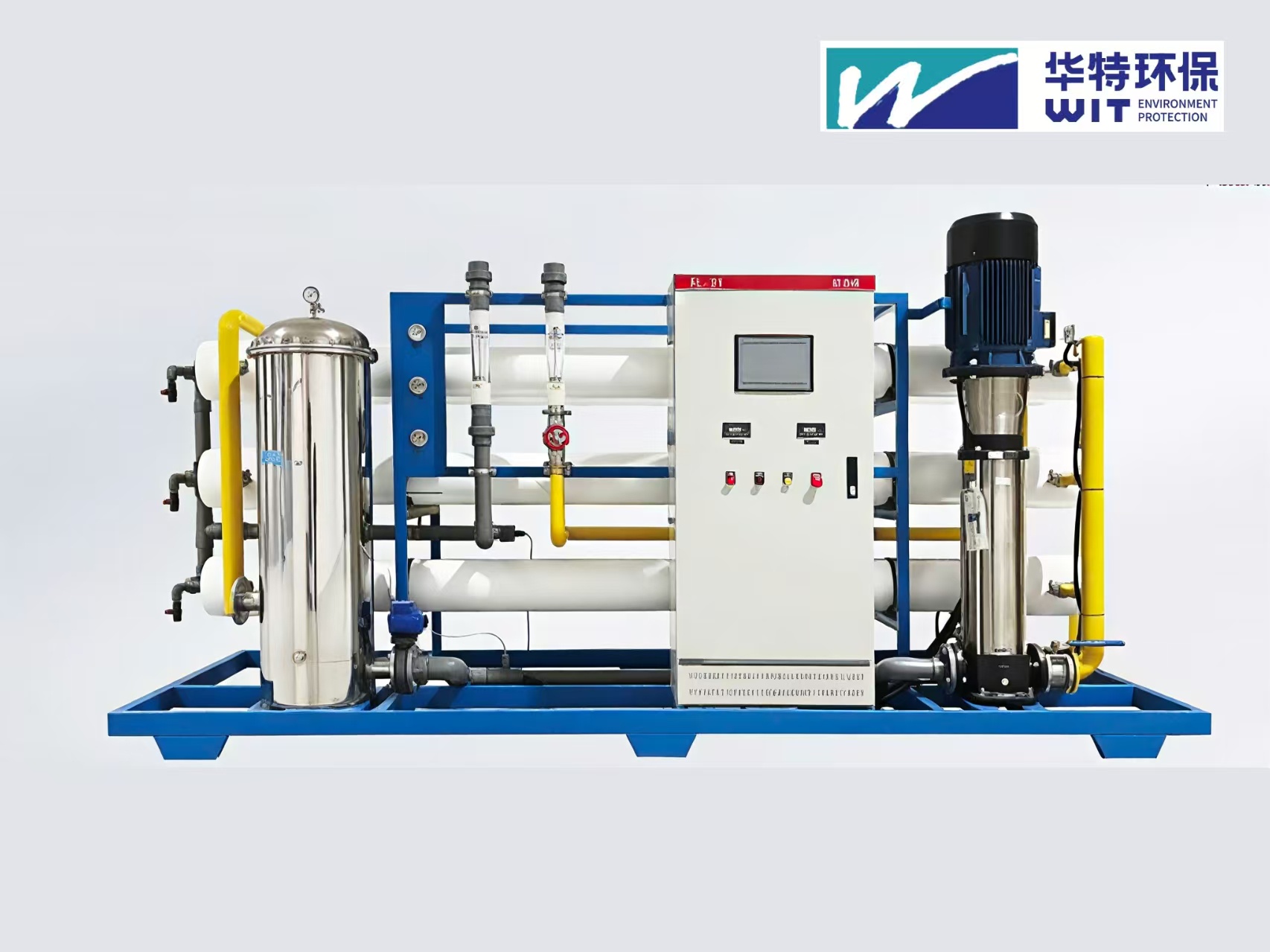
In some projects, integrated sewage treatment equipment also works alongside water purification, ecological polishing, or disinfection units. A compact option such as Small-Sized Integrated Skid-Mounted Water Purification Treatment Equipment can fit this broader modular thinking where treatment and water quality management need to be coordinated.
Practical limits that should not be ignored
Packaged systems are not a universal answer. Very high salinity, toxic industrial wastewater, or large continuous flow may require pretreatment, process customization, or a conventional plant structure.
Cold climates, unstable electricity supply, and weak maintenance capacity can also affect results. In those cases, the process should be simplified where possible, while monitoring and contingency planning should be strengthened.
More advanced equipment is not always better. If operation teams cannot maintain membranes, blowers, pumps, or dosing systems consistently, a technically simpler solution may deliver better long-term compliance.
A useful way to move from research to selection
A sound evaluation usually starts with four questions: what wastewater is being treated, what standard must be met, how stable is the flow, and who will operate the system after commissioning.
From there, compare process routes, footprint, lifecycle cost, and service support. Integrated sewage treatment equipment delivers the most value when it is treated as part of a full environmental solution rather than a simple packaged purchase.
For projects involving wastewater control, ecological improvement, or distributed treatment expansion, the next practical step is to map site conditions against process requirements, then review whether a modular integrated system can meet both current needs and future compliance changes.



 How to spot poor fabrication quality from chemical dosing skid manufacturers
 When local chemical dosing skid manufacturers are better than overseas suppliers
 Common membrane fouling causes in industrial pure water equipment
 What to check before buying industrial pure water equipment for a new plant
 How ultrapure water equipment helps reduce scaling in dosing systems
 When does industrial pure water equipment become necessary in pulp bleaching
GET A FREE QUOTE
Service Commitment: Upon receipt of your message, a dedicated representative will contact you as soon as possible to provide efficient and professional service support.
