







How to spot poor fabrication quality from chemical dosing skid manufacturers
Weak fabrication usually shows up before the skid is ever commissioned. If a dosing skid looks tidy in photos but the welds are irregular, tubing routes are inconsistent, or instruments appear added as an afterthought, the risk is not cosmetic. In chemical handling systems used in wastewater treatment, disinfection, pH control, oxidation, or nutrient dosing, poor fabrication can lead to leakage, unstable feed rates, premature corrosion, and difficult maintenance access. Those problems often become visible only after installation, when correction is slower and more expensive.
One of the fastest ways to judge chemical dosing skid manufacturers is to look at the relationship between process duty and physical build. A skid designed for sodium hypochlorite, ferric chloride, hydrochloric acid, caustic, polymer, or chlorine dioxide precursor chemicals should reflect the actual handling characteristics of those media. If metallic parts are placed in splash-prone zones without clear corrosion resistance, if gasket and seal materials are not identified, or if the pump, pipe, and valve materials look generically selected across all chemical services, fabrication discipline may be weak. A reliable assembly normally shows deliberate material separation: chemical contact parts, fasteners, supports, drain points, and instrument wetted parts should all match the intended service condition rather than being mixed for convenience.
Welding quality deserves closer attention than many people give it. On stainless frames or tanks, rough bead shape, undercut edges, visible spatter, heat tint left untreated, or inconsistent weld width can indicate poor process control. On plastic piping such as PVC, CPVC, PP, or PVDF, weak workmanship appears differently: misaligned sockets, uneven solvent cement residue, overheated fusion joints, or supports that force pipe stress into the fittings. None of these signs automatically proves failure, but they suggest the skid may not have been fabricated with repeatable procedures. In chemical dosing service, vibration from metering pumps, pulsation, and frequent valve operation can turn minor fabrication defects into leaks over time.
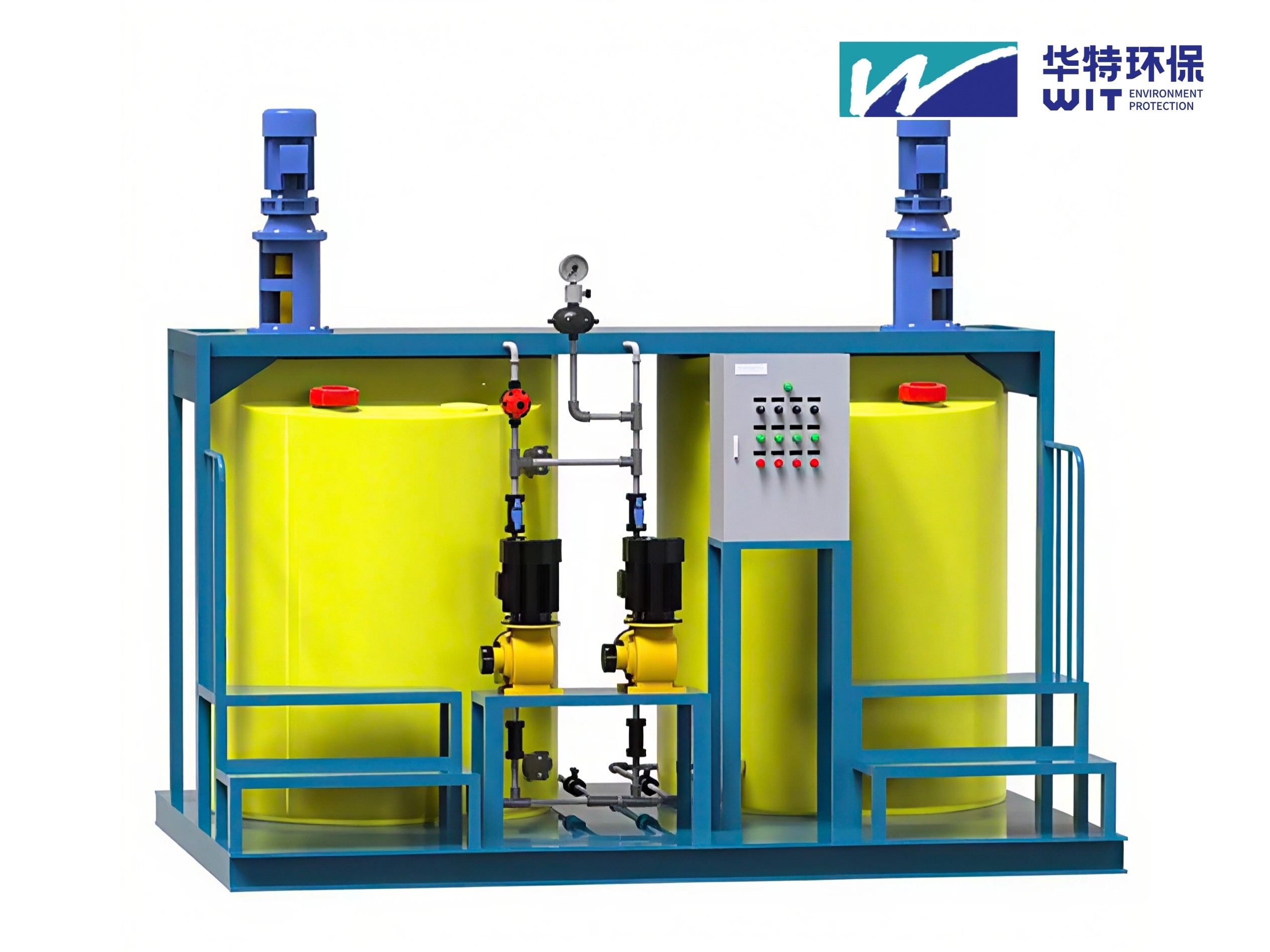
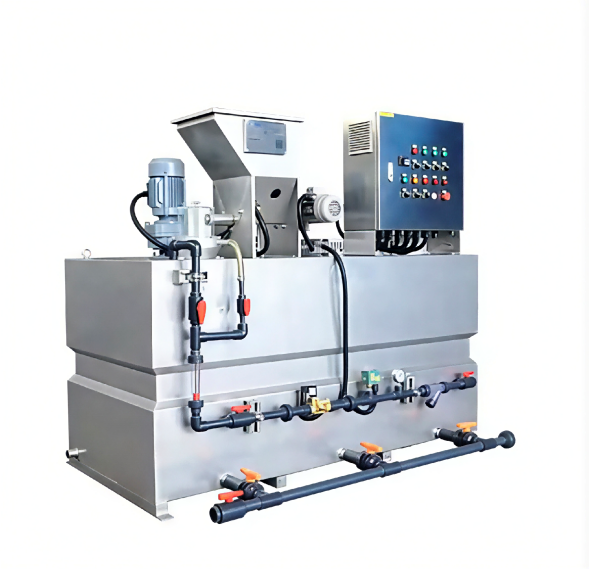
Pipe routing often exposes whether the skid was engineered first and fabricated second, or simply assembled around available parts. Good routing is usually compact without becoming cramped. Isolation valves should be reachable, calibration columns should be readable, pressure relief lines should return safely, and drain or vent points should not discharge toward cable trays, pump motors, or walk areas. When pipe runs cross each other unnecessarily, instruments are installed at awkward angles, or maintenance points are blocked by support members, poor fabrication quality is often hiding behind poor layout discipline.
Metering pump installation is another revealing area. The suction line should be short enough to avoid unnecessary head loss, but not arranged so tightly that maintenance requires dismantling half the skid. Pulsation dampeners, back-pressure valves, pressure gauges, and injection assemblies should appear as part of a coherent dosing loop rather than a collection of accessories. If the pump sits on shims, if the baseplate holes do not align cleanly, or if flexible connections are added only to compensate for misfit piping, the skid may have been corrected during assembly instead of built to drawing. That usually affects long-term dosing stability.
Fabrication quality is also visible in small details that are easy to overlook during vendor comparison. Labeling should be durable and specific enough to identify line function, valve direction, instrument tag, and utility interface. Electrical cable routing should be separated from chemical splash areas where practical, and gland entries should not be left exposed in a way that could admit moisture or fumes. Junction boxes mounted directly below likely leak points are a poor sign. On skids intended for outdoor use or humid treatment environments, surface finishing on the structural frame matters as much as component selection. Chips, sharp edges, unsealed cut ends, or coating inconsistency can become corrosion initiation points.
Testing records matter, but the physical evidence of test readiness matters too. A skid that has clearly defined venting, flushing, isolation, and drain arrangements is usually easier to pressure test and commission properly. By contrast, if there is no obvious way to purge trapped air, no low-point drain, or no practical location for calibration and sampling, it may indicate that testing was treated as paperwork rather than as part of fabrication logic. Some chemical dosing skid manufacturers provide generic factory acceptance documentation that says little about actual assembly quality. It is worth looking for signs that the skid could realistically be hydrotested, leak-tested, electrically checked, and functionally simulated without improvisation.
Transport and lifting considerations can reveal another layer of workmanship. Skids used in environmental and energy projects are often moved more than once: from workshop to port, from port to site, and from laydown area to final installation point. If lifting lugs appear undersized, asymmetrically placed, or difficult to access once equipment is mounted, the fabrication may not have accounted for real handling conditions. Poor skid stiffness can lead to pipe strain after transport, especially on long narrow frames carrying tanks, dosing pumps, and instrument stands. Bent supports, misaligned doors, or shifted tubing clamps after delivery are often symptoms of inadequate structural fabrication rather than rough logistics alone.
There is also a common misjudgment around cleanliness. A freshly painted frame and polished control panel do not compensate for poor internal execution. Look behind removable covers, beneath pipe bridges, and around drain pans. If swarf, welding residue, excess sealant, unidentified fasteners, or hand-cut gasket scraps are still present, workshop control may be inconsistent. In water treatment and chemical preparation systems, residue left inside pipework or tanks can interfere with commissioning, contaminate chemicals, or damage pump check valves.
Documents should align with what is physically built. If the skid GA drawing shows one valve orientation but the actual installation is reversed, or if the instrument list does not match the mounted devices, fabrication control may be weak even if the skid is already complete. This matters because future maintenance depends on documentation accuracy. A dosing system is not static; pump diaphragms, calibration tubes, injector quills, sensors, and relief valves all need service. If tags and drawings are already drifting apart before shipment, lifecycle reliability becomes harder to manage.
Sometimes a related skid product can help frame the evaluation standard. In packaged treatment units such as Integrated Skid-Mounted Domestic Sewage Treatment Equipment, compact assembly only works when piping logic, structural support, drainage, and maintenance access are resolved together. The same principle applies to chemical dosing skids: neat packaging without serviceability is not a sign of strong fabrication.
Environmental duty should also shape the inspection. A skid serving chlorine-based oxidants, acid-alkali neutralization, or odor control chemical feed may need better segregation between chemical storage, dosing pumps, control cabinets, and ventilation paths than a simple water-based additive system. If the manufacturer treats all skids as interchangeable modules with only minor pump changes, fabrication quality may be acceptable on paper yet unsuitable in actual service. Corrosive fumes, crystallization, viscosity changes, and temperature fluctuation all influence how supports, enclosures, tubing, and instruments should be arranged.
Warning signs are often cumulative rather than dramatic. One uneven weld may be repairable. One awkward valve position may be tolerable. But when rough weld finishing appears alongside stressed pipe joints, generic materials, poor labeling, and limited access for maintenance, the pattern usually points to weak fabrication control. Among chemical dosing skid manufacturers, the difference between a durable package and a troublesome one is often visible in these ordinary details long before operation begins.
A final screen is to ask whether the skid appears maintainable under real operating conditions. Can a pump head be removed without draining unrelated lines? Can calibration be performed without exposing nearby electrical parts? Is there space to replace a pressure gauge, injector, or foot valve without cutting pipe? Fabrication quality is not only about whether the skid can leave the workshop; it is about whether the assembly still makes sense after repeated shutdowns, chemical changeovers, and routine service in a treatment plant.



 How to spot poor fabrication quality from chemical dosing skid manufacturers
 When local chemical dosing skid manufacturers are better than overseas suppliers
 Common membrane fouling causes in industrial pure water equipment
 What to check before buying industrial pure water equipment for a new plant
 How ultrapure water equipment helps reduce scaling in dosing systems
 When does industrial pure water equipment become necessary in pulp bleaching
GET A FREE QUOTE
Service Commitment: Upon receipt of your message, a dedicated representative will contact you as soon as possible to provide efficient and professional service support.
