







Integrated Sewage Treatment Equipment vs Civil STP: Which Fits Small Sites Better?
Integrated Sewage Treatment Equipment vs Civil STP: where does the real difference show up?
When wastewater treatment is planned for a small site, space and time usually become the first constraints, not the last.
That is why the choice between integrated sewage treatment equipment and a civil STP matters far beyond treatment capacity alone.
In practice, the better option depends on land availability, discharge targets, construction conditions, and how much operating complexity the site can absorb.
With more than a decade of wastewater treatment project experience, Shandong Wit Environmental Protection Technology Co.Ltd has seen that small municipal, industrial, and aquaculture sites rarely fit one fixed model.
A compact project may need fast deployment. Another may need stronger process flexibility or easier future expansion. That is where this comparison becomes useful.
Is integrated sewage treatment equipment simply a smaller STP?
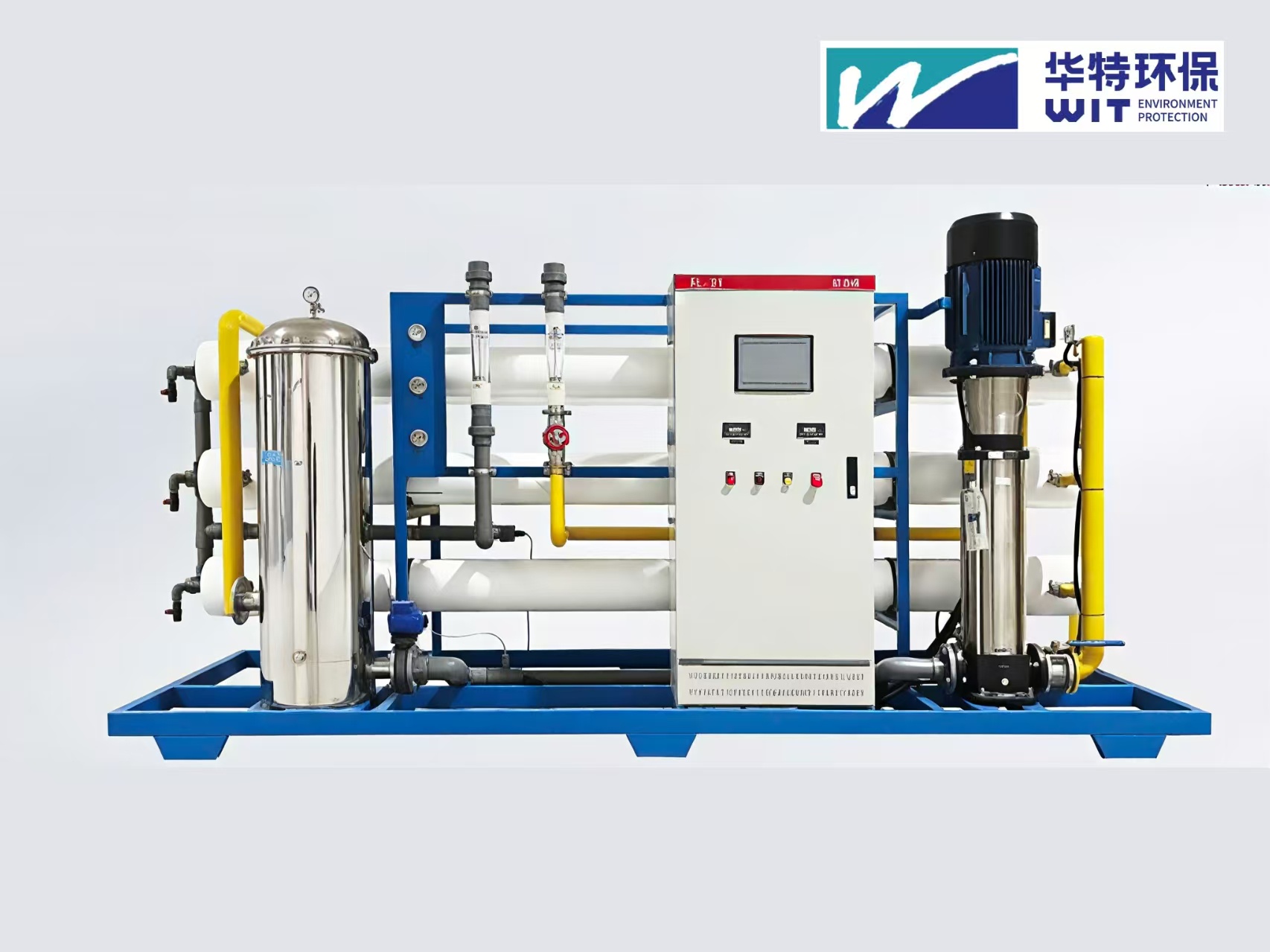
Not exactly. Integrated sewage treatment equipment is a packaged system that combines major treatment units into a factory-built module or skid.
A civil STP, by contrast, is usually built on site with reinforced concrete structures, separate process zones, and longer construction coordination.
The key difference is not only size. It is how the project is delivered, installed, upgraded, and managed over time.
For small sites, integrated sewage treatment equipment often reduces civil work, shortens startup, and lowers site disruption.
A civil STP usually offers broader customization when influent quality changes significantly or when the treatment train must serve a larger long-term master plan.
Which option usually fits limited land and tight schedules better?
For constrained plots, integrated sewage treatment equipment usually has the advantage.
Its footprint is smaller because tanks, piping, controls, and auxiliary units are arranged in a more compact layout.
Installation is also faster. Much of the fabrication and assembly is completed before the equipment arrives on site.
That matters in projects near operating factories, resorts, service areas, rural communities, or temporary treatment points where long construction windows are difficult.
A civil STP can still work well on small sites, but only when there is enough room for structures, access roads, and staged construction.
In some advanced pretreatment or polishing sections, compact modules such as Rare Earth Disk Separation and Purification Skid-Mounted Equipment / Magnetic Coagulation Skid-Mounted Equipment are also considered to save layout space and simplify integration.
A quick comparison helps clarify the trade-off
How should cost be judged: initial budget or lifecycle value?
This is where many decisions go wrong.
A civil STP may look competitive on equipment price in some cases, yet total project cost can rise after excavation, concrete work, piping, weather delays, and site management are counted.
Integrated sewage treatment equipment often shifts more value into factory fabrication, so field installation becomes simpler and more predictable.
Lifecycle value should also include energy use, sludge handling, spare parts access, automation level, and operator burden.
If the project needs stable compliance with limited on-site manpower, a well-designed integrated sewage treatment equipment package can reduce operational variability.
If the influent is highly variable and future process retrofits are likely, a civil STP may justify the longer build.
What project conditions make a civil STP the better choice?
Civil STP is often stronger when the site is expected to expand into a large permanent treatment complex.
It also suits projects requiring multiple parallel process units, deeper equalization, or highly customized hydraulic design.
For example, where wastewater quality varies by production season, additional reaction stages or future tertiary treatment may be easier to incorporate into a civil layout.
Still, even in these cases, modular equipment can support selected sections. Pretreatment, clarification, or advanced polishing may be added without rebuilding the entire plant.
That hybrid thinking is becoming more common in regional environmental projects, especially where engineering teams want both flexibility and shorter implementation cycles.
What mistakes are most common when selecting integrated sewage treatment equipment?
The first mistake is choosing by nominal capacity only.
A small site may have low average flow but high shock loads, irregular discharge, or stricter local standards. Those factors shape the real design.
The second mistake is underestimating pretreatment needs. Oil, suspended solids, color, or special industrial pollutants can overload a compact biological system.
The third mistake is ignoring maintenance access. Small footprint does not mean operators can work without safe clearance, spare parts planning, or sludge removal logistics.
In actual applications, supporting units such as Rare Earth Disk Separation and Purification Skid-Mounted Equipment / Magnetic Coagulation Skid-Mounted Equipment may be evaluated when influent needs better solid-liquid separation before the main process.
A practical pre-selection checklist
- Confirm peak flow, not only average daily flow.
- Check influent fluctuations, seasonal changes, and pollutant spikes.
- Match discharge requirements with process stability, not brochure claims.
- Review land limits, crane access, and installation conditions.
- Estimate operator skill level and remote monitoring needs.
- Compare total project cost, including civil work and downtime risk.
So which one fits small sites better?
For most limited-space projects, integrated sewage treatment equipment is the more practical starting point.
It usually wins on footprint, deployment speed, and easier standardization.
Civil STP becomes more attractive when the site is permanent, land pressure is lower, and process customization is expected to grow over time.
The better decision is rarely made from a single parameter. It comes from matching discharge goals, construction limits, pretreatment needs, and operating reality.
A sensible next step is to map the site conditions, define peak influent characteristics, and compare both routes using total cost, schedule, and compliance risk together.
That approach leads to a wastewater treatment solution that is not only buildable, but dependable in long-term use.



 How to spot poor fabrication quality from chemical dosing skid manufacturers
 When local chemical dosing skid manufacturers are better than overseas suppliers
 Common membrane fouling causes in industrial pure water equipment
 What to check before buying industrial pure water equipment for a new plant
 How ultrapure water equipment helps reduce scaling in dosing systems
 When does industrial pure water equipment become necessary in pulp bleaching
GET A FREE QUOTE
Service Commitment: Upon receipt of your message, a dedicated representative will contact you as soon as possible to provide efficient and professional service support.
