







Industrial Separation Centrifuge vs Standard Models: What Changes in Practice
Choosing an industrial separation centrifuge instead of a standard model changes far more than purchase cost. In environmental and energy operations, it affects solids capture, sludge consistency, dosing rhythm, cleaning frequency, and how stable the whole treatment line remains under variable loads.
That difference matters in real projects such as municipal wastewater, industrial effluent, aquaculture discharge, and resource recovery. In these settings, separation equipment is not an isolated machine. It sits inside a larger process where uptime, chemical control, discharge compliance, and operator workload are closely linked.
For companies active across wastewater treatment, ecological restoration, and industrial water systems, practical equipment selection supports both environmental performance and long-term operating discipline. That is why the comparison between an industrial separation centrifuge and a standard unit deserves a more grounded look.
What the two categories really mean
A standard centrifuge usually fits lighter-duty or more uniform separation tasks. It may perform well when feed composition is predictable, solids loading is limited, and production hours are moderate.
An industrial separation centrifuge is built for harsher conditions. It is typically designed for continuous operation, wider feed variation, stronger wear resistance, and tighter control over moisture content and solids recovery.
In practice, the gap is less about labels and more about design intent. Bowl strength, drive system, materials, automation level, and sludge discharge behavior all influence whether a machine stays stable when conditions stop being ideal.
Why the environmental and energy sectors pay attention
Wastewater and resource recovery systems rarely run on steady feed alone. Flow changes by hour, solids concentrations swing by season, and chemical conditions shift with upstream production.
Under those conditions, a standard model may still separate material, but it often needs more manual correction. Operators may see unstable cake dryness, cloudy centrate, higher polymer demand, or more frequent shutdowns for cleaning.
An industrial separation centrifuge is valued because it helps absorb that variability. This is especially relevant in projects where process continuity matters, including chlorine dioxide related water systems, municipal sludge handling, and industrial reuse loops.
Organizations with broad treatment experience, such as Shandong Wit Environmental Protection Technology Co.Ltd, tend to view separation equipment as part of a system solution rather than a standalone asset. That approach fits field reality.
What changes during daily operation
The biggest difference appears during ordinary shifts, not during factory acceptance tests. A machine can look similar on paper and behave very differently after weeks of exposure to abrasive solids and fluctuating flow.
Feed tolerance
Industrial units usually manage broader feed variation without losing separation quality immediately. Standard models often need a narrower operating window to keep performance stable.
Maintenance rhythm
A standard machine may require more frequent inspection of wear parts, seals, vibration condition, and solids buildup. Industrial designs often extend maintenance intervals through stronger materials and more robust assemblies.
Control and automation
A modern industrial separation centrifuge is often integrated with instrumentation, alarms, and dosing logic. When feed quality changes, response can be faster and more consistent than manual adjustment alone.
Energy and chemical use
Higher-grade separation sometimes reduces downstream load. Better solids capture can lower return contamination, while stable dewatering may reduce chemical waste caused by repeated overcorrection.
Where the difference becomes most visible
The gap between equipment types grows in demanding applications. Waste activated sludge is one example, because solids characteristics can change quickly with weather, biology, and upstream chemistry.
Industrial wastewater is another. Printing, dyeing, pulp processing, chemical production, and large-scale water treatment often introduce fine particles, variable pH, and difficult sludge structures.
In resource reuse projects, separation quality directly affects what happens next. If centrate remains overloaded with fine solids, downstream filtration, oxidation, or biological treatment must compensate.
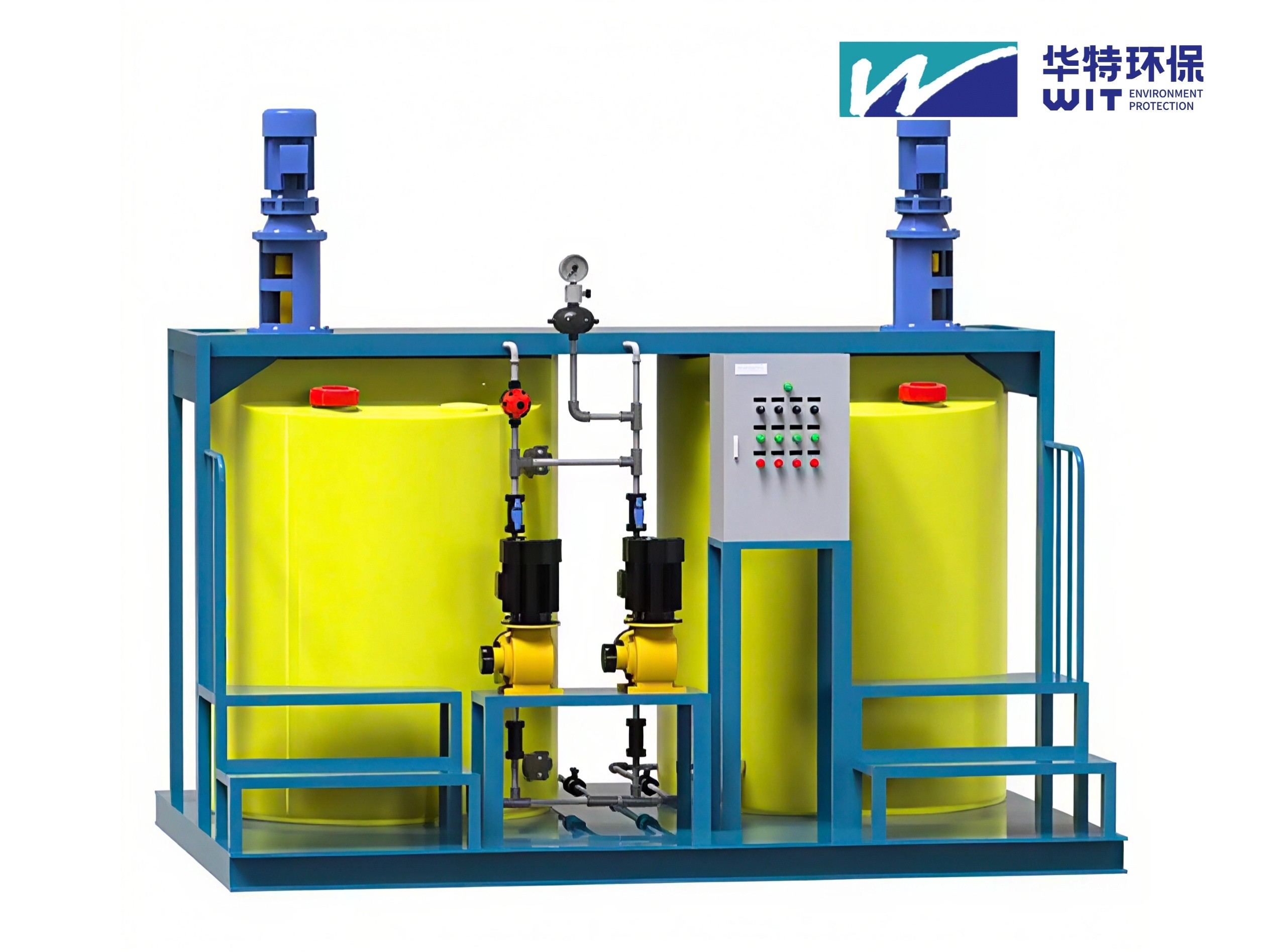
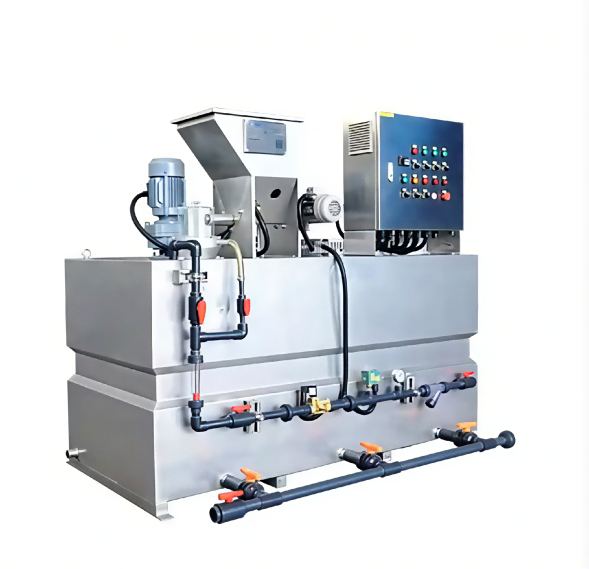
That is also where coordinated dosing becomes important. A unit such as Automatic Dosing Device for Sewage Treatment can improve feed conditioning, helping the centrifuge work within a more stable chemical range.
How to judge the right configuration
Selection should begin with the actual material, not just the desired throughput. Sludge type, particle size distribution, oil content, corrosiveness, and seasonal variation often matter more than nominal capacity.
- Check whether the feed is continuous, intermittent, or highly variable.
- Review target cake dryness and acceptable solids carryover.
- Estimate wear risk from grit, crystals, or fibrous material.
- Compare labor availability for monitoring and maintenance.
- Assess how separation performance affects downstream compliance.
If the process runs close to discharge limits, a more capable industrial separation centrifuge often makes economic sense even when initial investment is higher. The benefit comes from fewer disruptions and steadier treatment quality.
A system view leads to better results
Reliable separation is rarely achieved by the centrifuge alone. Feed equalization, polymer preparation, dosing control, sludge storage, and operator visibility all shape actual results on site.
This is why integrated environmental solution providers increasingly connect separation equipment with upstream and downstream controls. In complex treatment lines, that system thinking usually delivers more value than chasing one isolated specification.
When reviewing options, it helps to compare the centrifuge together with chemical conditioning support, automation logic, and maintenance access. In some cases, pairing separation with Automatic Dosing Device for Sewage Treatment creates a more stable operating envelope.
A practical next step is to map current feed conditions, upset frequency, and downstream pain points. With that baseline, it becomes much easier to decide whether a standard model is sufficient or an industrial separation centrifuge is the better long-term fit.


 How to spot poor fabrication quality from chemical dosing skid manufacturers
 When local chemical dosing skid manufacturers are better than overseas suppliers
 Common membrane fouling causes in industrial pure water equipment
 What to check before buying industrial pure water equipment for a new plant
 How ultrapure water equipment helps reduce scaling in dosing systems
 When does industrial pure water equipment become necessary in pulp bleaching
GET A FREE QUOTE
Service Commitment: Upon receipt of your message, a dedicated representative will contact you as soon as possible to provide efficient and professional service support.
