







Horizontal Decanter Centrifuge Selection: Capacity, Dryness, and Energy Use
Horizontal Decanter Centrifuge Selection: Capacity, Dryness, and Energy Use
Choosing the right horizontal decanter centrifuge can directly affect sludge handling capacity, cake dryness, and long-term energy costs.
In environmental and energy projects, this choice influences operating stability, disposal cost, and payback speed.
A good selection process compares real feed conditions, separation targets, and lifecycle power demand before any quotation is accepted.
This guide focuses on the factors that matter most when evaluating a horizontal decanter centrifuge for practical decision-making.
Start With the Actual Feed, Not the Nameplate
The first mistake in horizontal decanter centrifuge selection is sizing only by hourly flow.
Flow matters, but solids concentration, particle size, viscosity, and temperature usually decide real performance.
Municipal sludge, industrial sludge, and chemical by-products behave very differently inside the same machine.
In practice, feed variability is often a stronger signal than average design conditions.
- Minimum, normal, and peak solids throughput
- Expected changes in sludge type over seasons
- Polymer use and conditioning quality
- Required centrate clarity and cake dryness
A horizontal decanter centrifuge that handles average conditions well may still underperform during shock loads.
That is why feed testing or pilot verification is worth more than a broad brochure claim.
How to Judge Capacity the Right Way
Capacity should be evaluated as solids handling capacity, not only liquid feed rate.
For a horizontal decanter centrifuge, the real question is how many kilograms of dry solids it can process per hour.
This approach makes cross-supplier comparison much more reliable.
Check whether the supplier provides performance data under conditions close to your application.
- Confirm dry solids throughput at normal and peak load.
- Review residence time and bowl geometry.
- Ask how torque reserve supports upset conditions.
- Check whether capacity depends on unusually high polymer dosage.
A lower-priced machine can become expensive if it needs frequent derating or backup operation.
From a procurement view, stable throughput often brings more value than an aggressive nominal figure.
Cake Dryness Affects More Than Dewatering
Cake dryness is a major decision point because it shapes hauling cost, downstream treatment, and final disposal expense.
Even a small increase in dryness can reduce transport volume over the full project life.
Still, higher dryness is not always free.
A horizontal decanter centrifuge may need more differential speed, more polymer, or more power to push dryness upward.
That tradeoff should be calculated against actual disposal pricing.
This is especially relevant in wastewater treatment and resource recovery projects.
For integrated treatment lines, upstream and downstream compatibility also matters.
In some compact systems, such as Small-Sized Integrated Skid-Mounted Water Purification Treatment Equipment, stable pretreatment and water quality control can improve overall process consistency.
Energy Use Should Be Measured Across the Full Operating Window
Energy use is often underestimated during horizontal decanter centrifuge selection.
Quoted motor power alone does not reveal real consumption.
A better comparison looks at kilowatt-hours per ton of dry solids processed.
That metric connects energy cost to actual output.
- Main drive and back drive efficiency
- Performance at partial load
- Power draw during feed fluctuation
- Impact of target dryness on energy demand
This also means VFD control, automation logic, and torque management deserve careful review.
Over several years, small efficiency gains can offset a noticeable part of capital cost.
Look Beyond the Machine: Reliability and Serviceability
A horizontal decanter centrifuge is a wear-intensive asset.
Wear protection, bearing quality, scroll design, and spare parts availability can strongly affect ownership cost.
This becomes more obvious in abrasive sludge or continuous-duty plants.
When comparing offers, ask for maintenance intervals, critical spare lists, and local technical response capability.
A well-supported unit with predictable maintenance often outperforms a cheaper unit with uncertain downtime risk.
For broader water treatment projects, suppliers with system integration experience can also reduce interface problems.
That is one reason some buyers also review related modular solutions, including Small-Sized Integrated Skid-Mounted Water Purification Treatment Equipment, when planning compact or phased treatment facilities.
A Practical Evaluation Checklist
To make horizontal decanter centrifuge selection more defensible, compare suppliers with the same decision framework.
- Feed solids range and sludge characteristics
- Dry solids throughput under real conditions
- Guaranteed cake dryness and centrate quality
- Energy use per ton of dry solids
- Polymer consumption assumptions
- Wear protection and maintenance cycle
- Automation, instrumentation, and control flexibility
- Reference projects in similar industries
This kind of side-by-side review keeps the decision focused on lifecycle value, not just bid price.
Final Decision Guidance
The best horizontal decanter centrifuge is not simply the largest or fastest model.
It is the one that matches feed reality, reaches required dryness, and controls energy use over time.
For environmental and energy applications, selection should connect process goals with operating economics.
A short pilot, clear guarantees, and a lifecycle cost model usually lead to a better purchase decision.
When those three elements are aligned, a horizontal decanter centrifuge becomes a stable long-term asset rather than a recurring operating problem.


 Artificial Wetland Planning and ConstructionSince 2012, the company has been involved in the construction of artificial wetlands. In recent years, it has undertaken more than 100 artificial wetland construction projects and has an excellent technical team. It professionally provides full-process consulting, engineering design, EPC contracting, technical training, operation and maintenance and other services for artificial wetland projects.
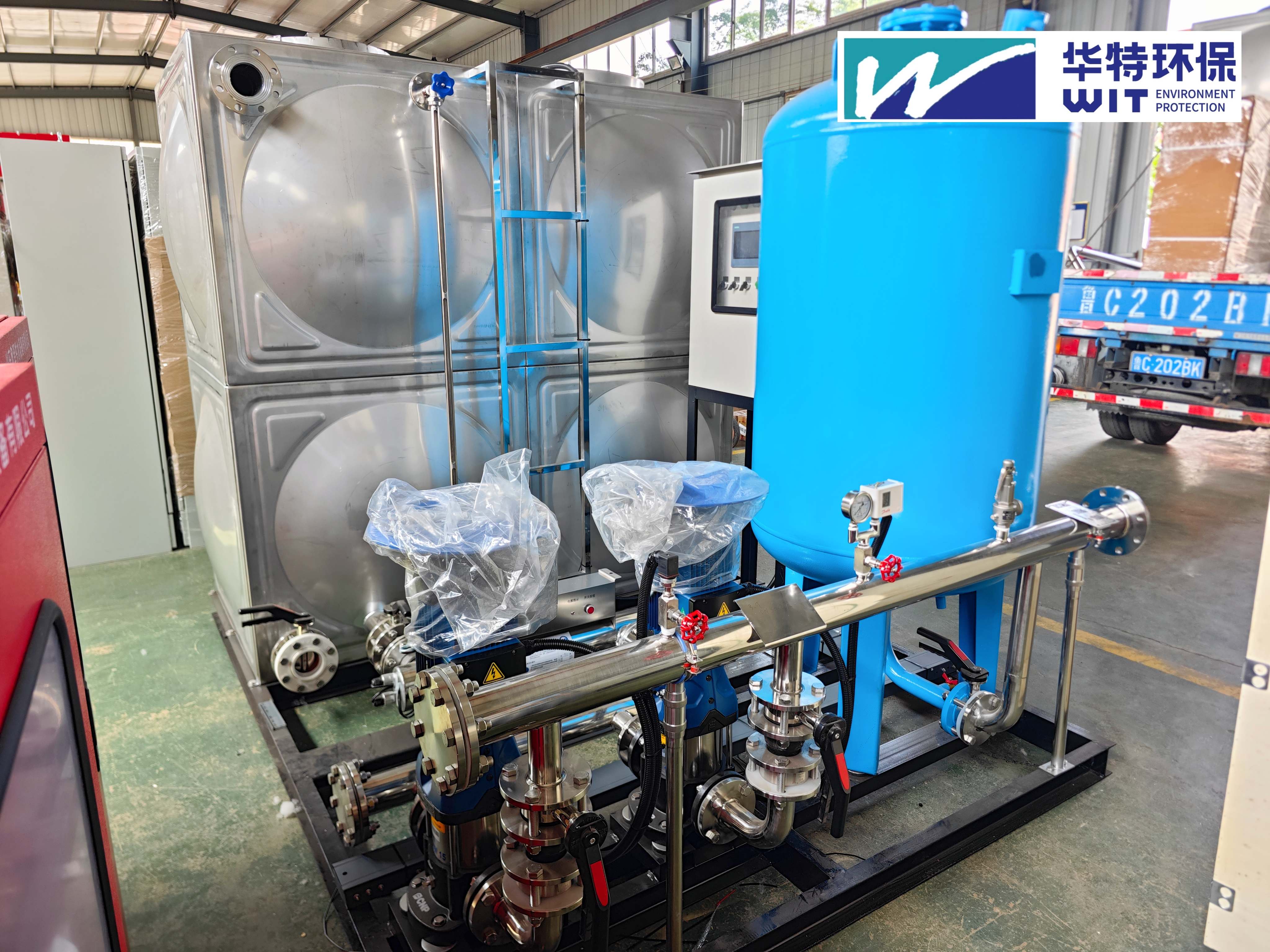
![]() Skid mounted & Modular Variable frequency Constant pressure Water Supply UnitIt comprehensively addresses the needs for boosted and constant pressure water supply during construction, operation, and various special scenarios, replacing traditional water towers, elevated water tanks, and pneumatic water supply equipment. It can automatically adjust the pump speed and number of pumps in operation according to real-time water consumption to achieve precise constant pressure water supply, ensuring the stability and safety of water for production, daily life, and fire fighting. At the same time, it significantly reduces water supply energy consumption and operation and maintenance costs, and is suitable for various scenarios without municipal pipe network coverage or with insufficient pipe network water pressure.
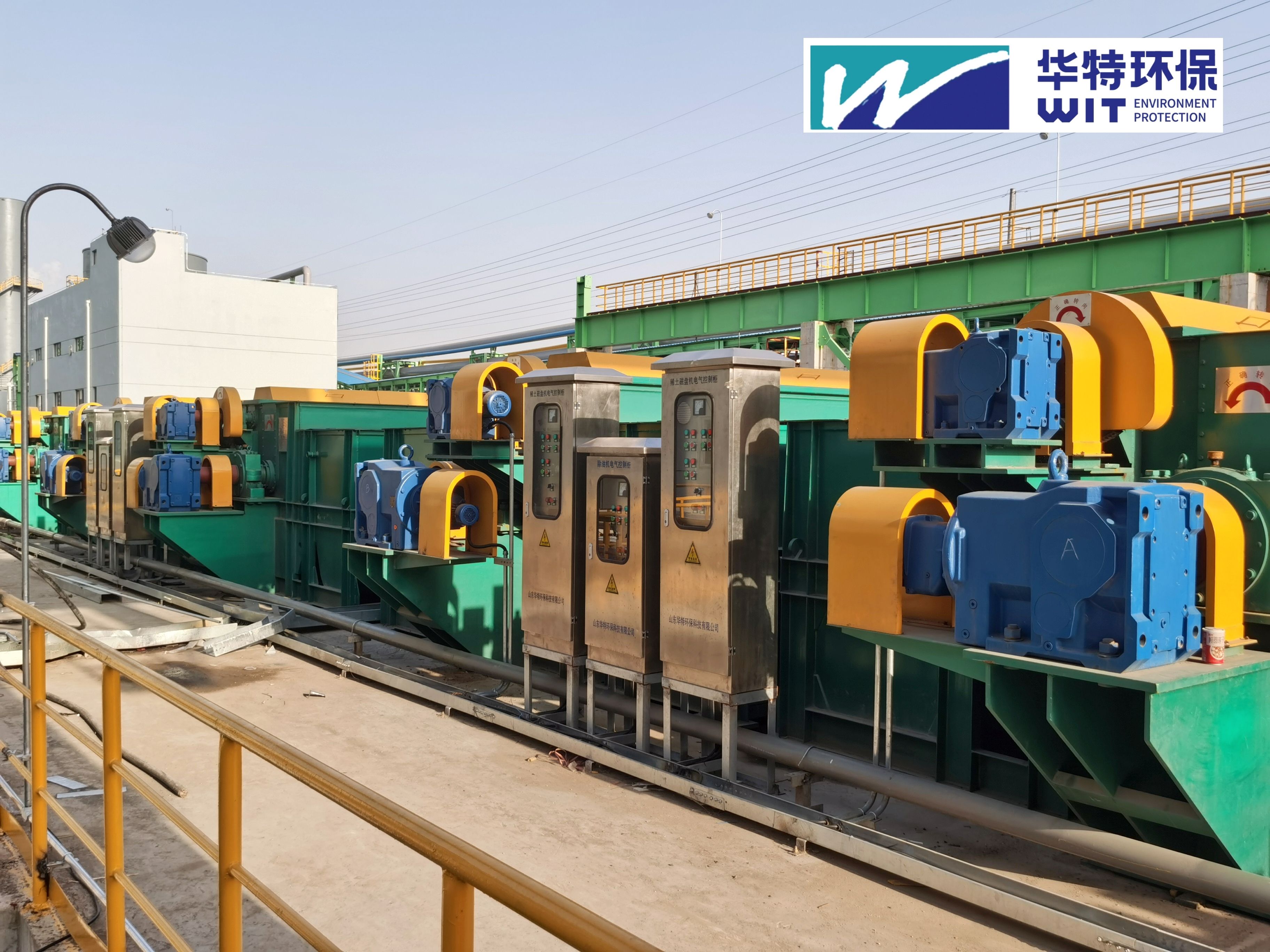
Skid mounted & Modular Variable frequency Constant pressure Water Supply UnitIt comprehensively addresses the needs for boosted and constant pressure water supply during construction, operation, and various special scenarios, replacing traditional water towers, elevated water tanks, and pneumatic water supply equipment. It can automatically adjust the pump speed and number of pumps in operation according to real-time water consumption to achieve precise constant pressure water supply, ensuring the stability and safety of water for production, daily life, and fire fighting. At the same time, it significantly reduces water supply energy consumption and operation and maintenance costs, and is suitable for various scenarios without municipal pipe network coverage or with insufficient pipe network water pressure.![]() Skid mounted Rare Earth Separation and Purification Equipment/Skid mounted Magnetic Flocculation UnitFocusing on the efficient separation and removal of pollutants such as suspended solids, total phosphorus, silt, and magnetic flocs in water, this product adopts a skid-mounted integrated design, making it suitable for water purification scenarios such as industrial wastewater and municipal sewage. It features convenient installation, high treatment efficiency, and small footprint, allowing for rapid deployment and operation to meet the rapid purification and upgrading needs of various water treatment scenarios.
Skid mounted Rare Earth Separation and Purification Equipment/Skid mounted Magnetic Flocculation UnitFocusing on the efficient separation and removal of pollutants such as suspended solids, total phosphorus, silt, and magnetic flocs in water, this product adopts a skid-mounted integrated design, making it suitable for water purification scenarios such as industrial wastewater and municipal sewage. It features convenient installation, high treatment efficiency, and small footprint, allowing for rapid deployment and operation to meet the rapid purification and upgrading needs of various water treatment scenarios.

 How to spot poor fabrication quality from chemical dosing skid manufacturers
 When local chemical dosing skid manufacturers are better than overseas suppliers
 Common membrane fouling causes in industrial pure water equipment
 What to check before buying industrial pure water equipment for a new plant
 How ultrapure water equipment helps reduce scaling in dosing systems
 When does industrial pure water equipment become necessary in pulp bleaching
GET A FREE QUOTE
Service Commitment: Upon receipt of your message, a dedicated representative will contact you as soon as possible to provide efficient and professional service support.
