







Common Problems in Integrated Sewage Treatment Equipment and How to Fix Them
Why Integrated Sewage Treatment Equipment Often Runs Into Trouble
Integrated sewage treatment equipment can develop performance issues over time, from unstable effluent quality to pump failures, clogging, odor and control system alarms.
Quick root cause analysis matters because downtime raises compliance risk and operating cost.
In daily service work, most faults do not begin as sudden breakdowns.
They usually start with small signals, such as higher turbidity, slower flow, abnormal noise or repeated alarms.
For integrated sewage treatment equipment, early intervention is usually cheaper than emergency repair.
The practical goal is simple: restore stable treatment performance and prevent the same fault from returning.
1. Unstable Effluent Quality
This is one of the most common problems in integrated sewage treatment equipment.
Typical signs include rising COD, ammonia, SS or cloudy discharge.
The first check should be influent fluctuation.
Shock loading, toxic chemicals and sudden pH change can quickly disturb biological treatment.
Then inspect aeration, sludge return, dissolved oxygen and sludge settling condition.
If dissolved oxygen is too low, microorganisms lose activity and removal efficiency drops.
If sludge age is too short, biomass cannot stay stable.
A practical troubleshooting sequence is:
- Review influent records from the previous three to seven days.
- Measure pH, DO, MLSS and sludge settling ratio.
- Check blower output, diffuser blockage and valve opening.
- Adjust sludge return and waste sludge rate.
- Verify chemical dosing accuracy if phosphorus removal is involved.
2. Pump Failure and Reduced Flow
Pump issues are another high-frequency fault in integrated sewage treatment equipment.
Sometimes the pump stops completely.
More often, flow gradually drops before total failure appears.
Common causes include impeller blockage, seal wear, cavitation, power issues and float switch failure.
Start with the simplest checks.
Confirm power supply, overload protection, cable connection and control signal first.
Then inspect suction blockage and abnormal vibration.
If the system relies on chemical adjustment, unstable dosing can also affect hydraulic and treatment performance.
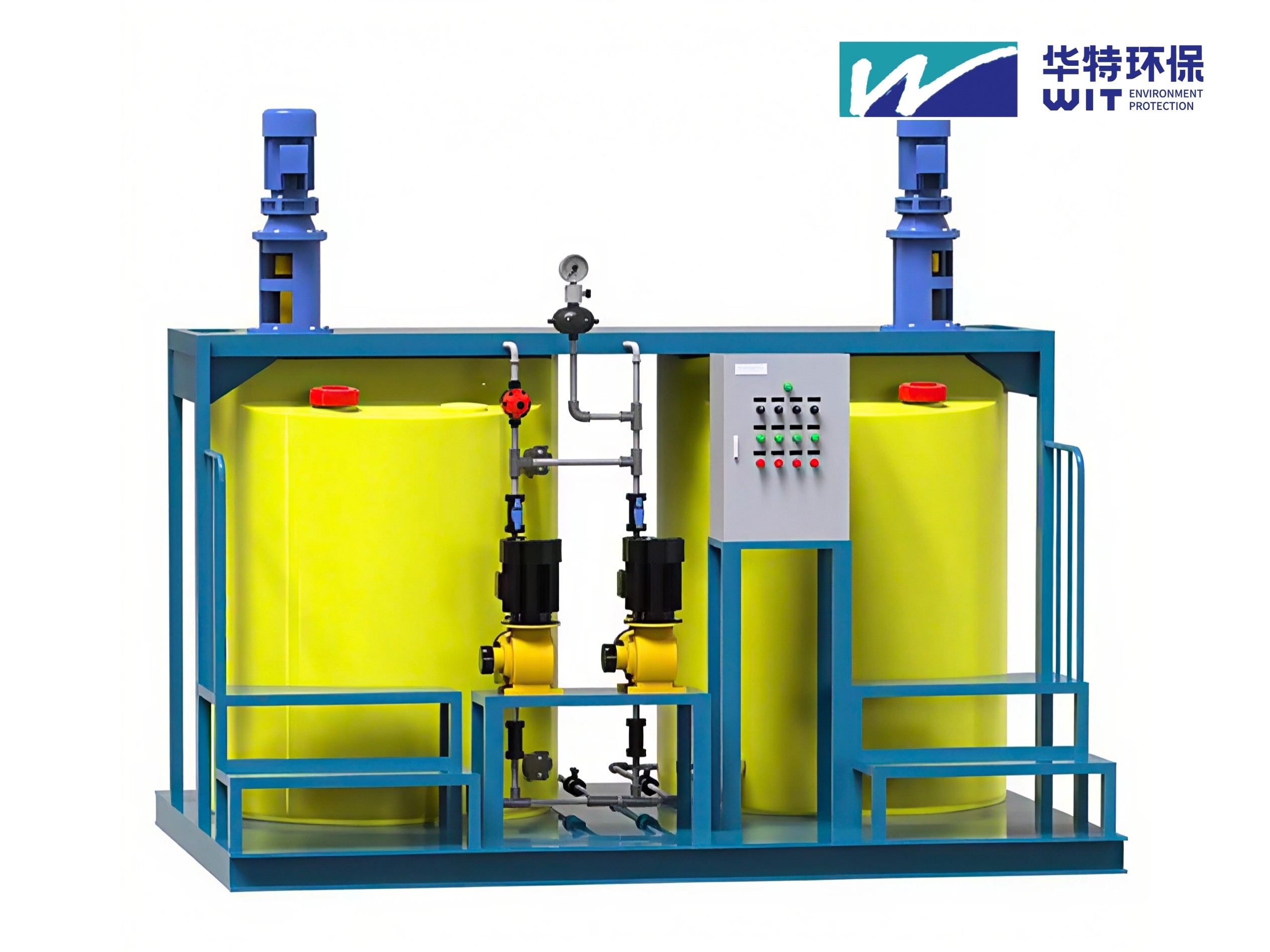
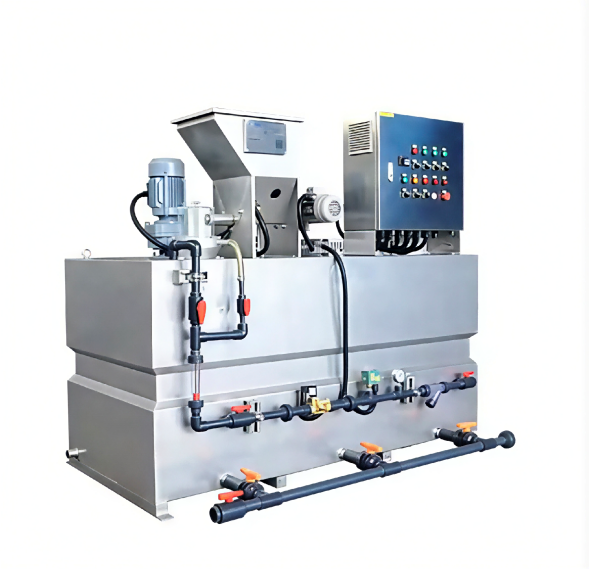
In some projects, pairing with Automatic Dosing Device for Sewage Treatment helps keep chemical addition more consistent.
That reduces process fluctuation, especially during variable influent periods.
3. Clogging in Pipes, Media and Diffusers
Clogging usually develops slowly, but its impact becomes obvious fast.
Integrated sewage treatment equipment may show rising liquid level, uneven aeration or lower treatment capacity.
Grease, fiber, biofilm overgrowth and inorganic scale are the usual reasons.
In MBBR or contact oxidation systems, filler accumulation can also limit oxygen transfer.
For pipes and pumps, regular flushing is essential.
For diffusers, compare air distribution across each zone.
A weak aeration area usually points to fouling or pressure imbalance.
If clogging repeats, upstream screening and equalization should be reviewed instead of only cleaning the symptom.
4. Odor Problems Around the Unit
Bad smell is often the first complaint from the site.
For integrated sewage treatment equipment, odor usually means anaerobic conditions or sludge decay.
Check whether retention time is too long in the front section.
Also check dead zones, poor aeration and sludge accumulation in corners or pipelines.
Hydrogen sulfide odor often indicates insufficient oxygen or septic influent.
The fix should match the source.
- Increase ventilation and confirm blower performance.
- Remove deposited sludge and clean hidden corners.
- Shorten sludge storage time before disposal.
- Stabilize influent with equalization when load changes are frequent.
- Check covers, vent pipes and odor collection points.
5. Control System Alarms and Sensor Errors
Modern integrated sewage treatment equipment depends heavily on electrical and control reliability.
Frequent alarms can come from sensor drift, moisture, loose terminals or PLC logic mismatch.
Do not clear alarms without recording them.
Alarm history often reveals whether the issue is process-related or electrical.
Sensors for pH, level and DO should be cleaned and calibrated on schedule.
If one value changes sharply without process evidence, verify the sensor before adjusting the system.
This avoids unnecessary intervention and protects stable operation.
A Simple Maintenance Routine That Prevents Repeat Failures
A good routine keeps integrated sewage treatment equipment reliable and easier to troubleshoot.
Where chemical control is critical, stable metering equipment also supports better maintenance results.
That is why some operators consider Automatic Dosing Device for Sewage Treatment during system upgrades.
Final Fix: Solve the Cause, Not Just the Alarm
Most integrated sewage treatment equipment problems can be solved faster with a clear sequence.
Start with symptoms, confirm data, inspect equipment, then verify process conditions.
This approach reduces repeated shutdowns and avoids temporary fixes.
In real operating environments, stable performance depends on both technical judgment and consistent preventive maintenance.
When each small warning is handled early, integrated sewage treatment equipment stays safer, more efficient and more compliant over the long term.



 How to spot poor fabrication quality from chemical dosing skid manufacturers
 When local chemical dosing skid manufacturers are better than overseas suppliers
 Common membrane fouling causes in industrial pure water equipment
 What to check before buying industrial pure water equipment for a new plant
 How ultrapure water equipment helps reduce scaling in dosing systems
 When does industrial pure water equipment become necessary in pulp bleaching
GET A FREE QUOTE
Service Commitment: Upon receipt of your message, a dedicated representative will contact you as soon as possible to provide efficient and professional service support.
