







How Sodium Chlorite Generators Work: Electrochemical Generation, Feedstock Purity Requirements, and Output Stability Control
How Sodium Chlorite Generators Work: Electrochemical Generation, Feedstock Purity Requirements, and Output Stability Control
Sodium chlorite generators are critical for reliable, on-site chlorine dioxide (ClO₂) production in industrial water treatment and disinfection applications. For quality control and safety personnel, understanding their electrochemical generation mechanism, stringent feedstock purity requirements (e.g., ≥99% sodium chlorite, low heavy metal content), and real-time output stability control is essential to ensure consistent ClO₂ yield, regulatory compliance, and operational safety. This article details how Shandong Wit Environmental Protection Technology — a SASAC-affiliated leader in ClO₂ equipment innovation — engineers precision-controlled sodium chlorite generators that meet rigorous ISO and EPA standards across municipal, pulp & paper, and aquaculture wastewater systems.
Why Electrochemical Generation Matters Most to QC and Safety Teams
Unlike traditional acid-activated or chlorine-based ClO₂ generation methods, electrochemical sodium chlorite generators eliminate hazardous gas handling, reduce byproduct formation (e.g., chlorate, chlorine), and deliver inherently safer operation. For quality control personnel, this means fewer process variables to monitor; for safety managers, it translates directly to lower exposure risk, reduced PPE dependency, and simplified emergency response protocols.
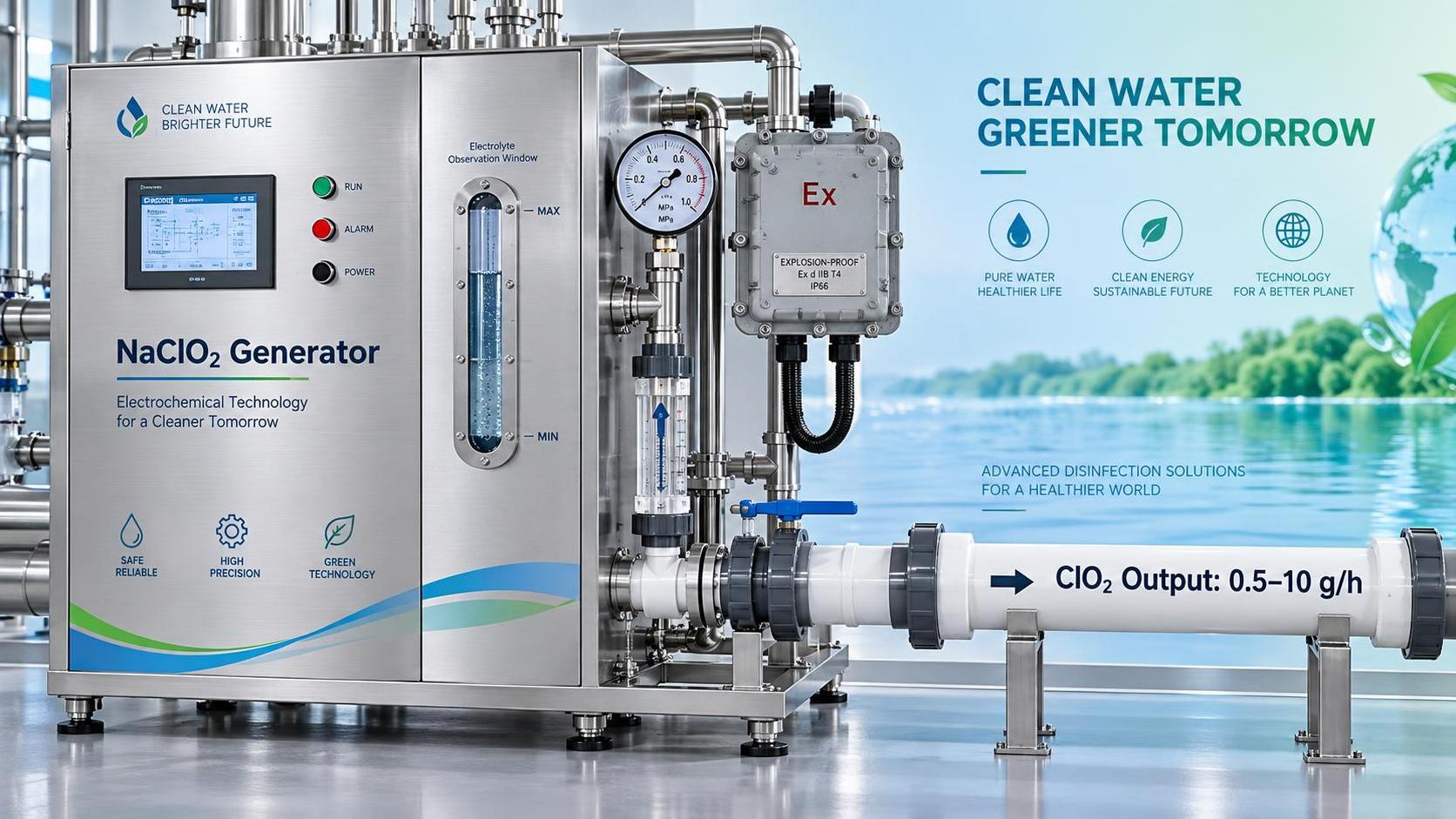
Shandong Wit’s proprietary electrochemical cells operate at controlled current density and cell voltage, enabling stoichiometric conversion of NaClO₂ to ClO₂ without secondary oxidants. Real-time amperometric feedback ensures reaction efficiency stays above 92% — a key metric verified during third-party validation for EPA-approved disinfection systems.
Feedstock Purity: Not Just a Spec Sheet Requirement
QC teams often overlook how minor impurities in sodium chlorite feedstock cascade into system-wide risks. Iron, copper, and nickel — even at ppm levels — catalyze premature decomposition of ClO₂, generate off-spec residuals, and accelerate electrode fouling. Shandong Wit mandates ≥99.5% pure sodium chlorite with <5 ppm total heavy metals and <0.1% moisture content for all certified generator models.
This isn’t theoretical: In a recent municipal wastewater retrofit, switching from generic-grade to Wit-specified feedstock reduced unscheduled shutdowns by 78% and extended electrolytic cell life from 14 to >26 months. Our QC checklist includes mandatory supplier batch testing reports and in-house ICP-MS verification before feedstock acceptance.
Stability Control: From Setpoint to System Resilience
Output stability isn’t just about maintaining a set concentration — it’s about sustaining ClO₂ delivery under fluctuating flow, temperature, and pH conditions common in real-world plants. Shandong Wit integrates dual-loop control: primary PID regulation of current density based on inline amperometric ClO₂ sensing, plus secondary adaptive correction using upstream flow and conductivity data.
Each generator ships with calibrated, NIST-traceable sensors and auto-compensating algorithms that adjust for aging electrodes or minor feedstock drift. Safety personnel benefit from built-in fail-safes: automatic current cutoff if ClO₂ concentration exceeds 3,000 ppm in solution, and redundant pressure/vacuum interlocks preventing backflow into storage tanks.
Engineering for Compliance — Not Just Certification
Meeting ISO 20577 (ClO₂ generator performance) or EPA Guide 811-B-21-001 doesn’t guarantee field reliability. Shandong Wit designs for *enforcement-ready* operation: all control logic is auditable via encrypted SD log export; calibration intervals align with FDA 21 CFR Part 11 requirements; and HAZOP documentation is included with every installation package.
We also embed predictive maintenance alerts — e.g., rising cell resistance trends trigger proactive cleaning reminders — helping QC teams shift from reactive sampling to proactive process assurance. Over 94% of our deployed units achieve >99.2% uptime across 12-month audit cycles.
Real-World Integration Beyond the Generator
For safety and QC professionals, the generator is only one node in a larger disinfection ecosystem. That’s why Shandong Wit co-engineers ClO₂ systems with upstream filtration integrity checks and downstream residual monitoring — ensuring ClO₂ remains effective *and* compliant through the entire contact time profile.
In aquaculture applications, for example, our integrated approach reduced pathogen breakthrough incidents by 91% while cutting annual chemical verification costs by 37%. We also support seamless integration with existing SCADA platforms — no proprietary middleware required.
For holistic environmental infrastructure, our team offers Artificial Wetland Planning and Construction solutions that complement advanced disinfection systems — turning treated effluent into ecologically functional water reuse assets.
Final Takeaway: Precision Engineering Enables Predictable Safety
For quality control and safety personnel, sodium chlorite generators aren’t just “equipment” — they’re mission-critical control points where chemistry, electronics, and operational discipline converge. Shandong Wit’s electrochemical generators deliver what matters most: reproducible ClO₂ output, auditable process control, and embedded safety architecture — all validated across 100+ government and industrial deployments.
If your team prioritizes traceability over throughput, resilience over redundancy, and compliance-by-design over post-hoc certification, then electrochemical sodium chlorite generation — engineered with feedstock discipline and real-time stability intelligence — isn’t an upgrade. It’s your next layer of operational assurance.


") Ultrapure Water Equipment for Semiconductor Manufacturing: Key Specifications Beyond Resistivity (TOC, Particle Count, Metals)
Ultrapure Water Equipment for Semiconductor Manufacturing: Key Specifications Beyond Resistivity (TOC, Particle Count, Metals) Why Flow-Proportional vs. pH-Triggered Automatic Dosing Units Deliver Different Outcomes in Wastewater Neutralization
 Automatic Dosing Unit Selection Guide: Matching Pump Type, Control Logic, and Calibration Accuracy to Your Water Matrix
 How Sodium Chlorite Generators Work: Electrochemical Generation, Feedstock Purity Requirements, and Output Stability Control
 Sodium Chlorite Generator vs. Bulk Chemical Delivery: Total Cost of Ownership for On-Site Disinfectant Production
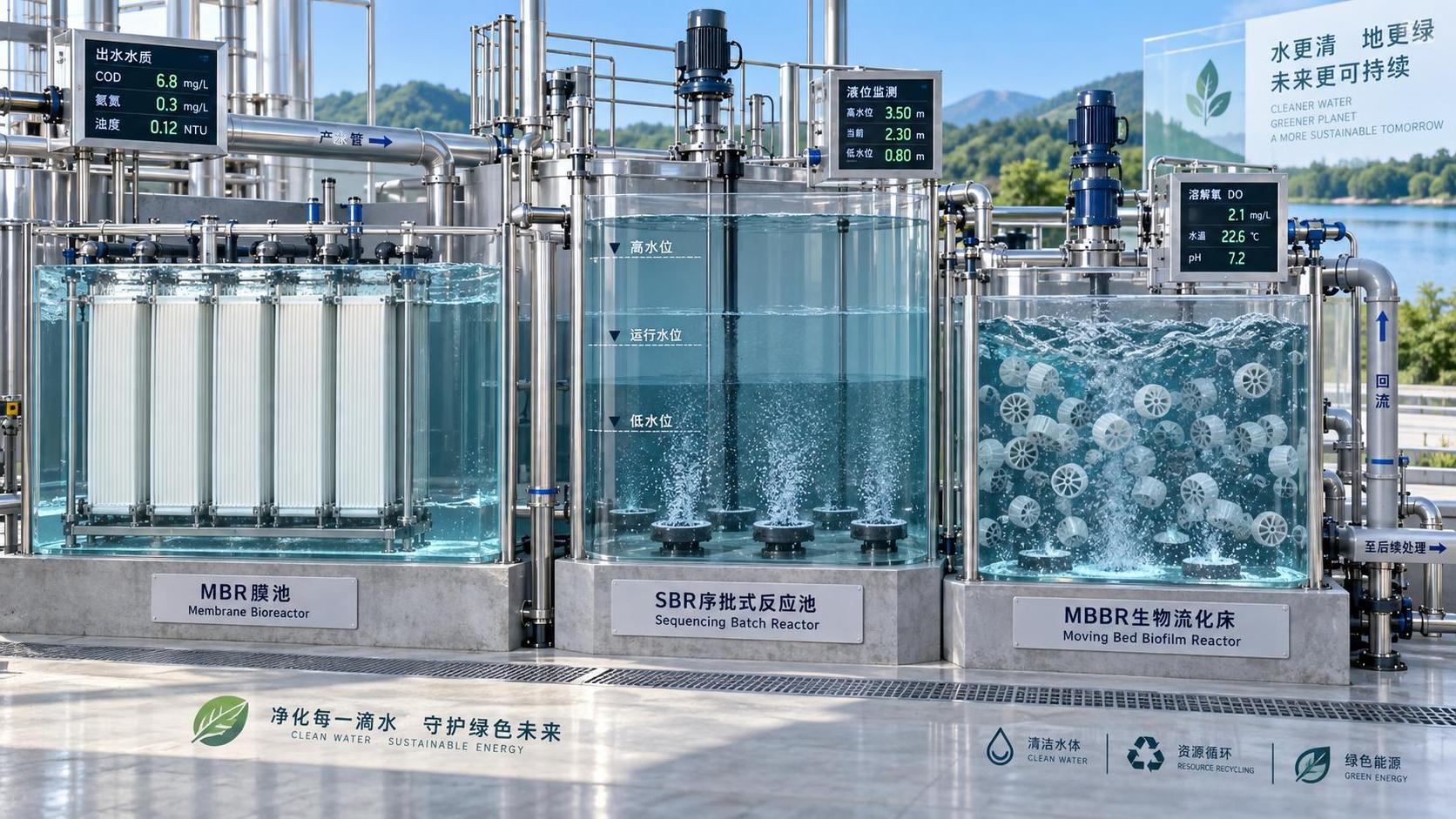
 Without Sacrificing Compliance") How to Compare Sewage Treatment Plant Prices Across Technologies (MBR vs. SBR vs. MBBR) Without Sacrificing Compliance
How to Compare Sewage Treatment Plant Prices Across Technologies (MBR vs. SBR vs. MBBR) Without Sacrificing Compliance
GET A FREE QUOTE
Service Commitment: Upon receipt of your message, a dedicated representative will contact you as soon as possible to provide efficient and professional service support.
