







Best Operating Practices for Variable Frequency Drives in Desalination Plants
Best Operating Practices for Variable Frequency Drives in Desalination Plants
Energy pressure is changing how desalination systems are operated.
What used to be acceptable motor control now looks expensive, unstable, and harder on membranes.
That is why a variable frequency drive for desalination plants has moved from a helpful upgrade to a practical operating necessity.
When the drive is used well, pumps run closer to real demand.
Pressure stays more stable, energy waste drops, and equipment life usually improves.
When the drive is used poorly, the same system can suffer from vibration, trips, pressure swings, and avoidable membrane stress.
In water treatment practice, especially in plants shaped by tighter environmental targets, operating discipline matters as much as hardware selection.
Why operating expectations are becoming stricter
Recent plant upgrades show a clear pattern.
Operators are no longer judged only by output volume.
They are increasingly judged by specific energy use, process stability, chemical efficiency, and downtime control.
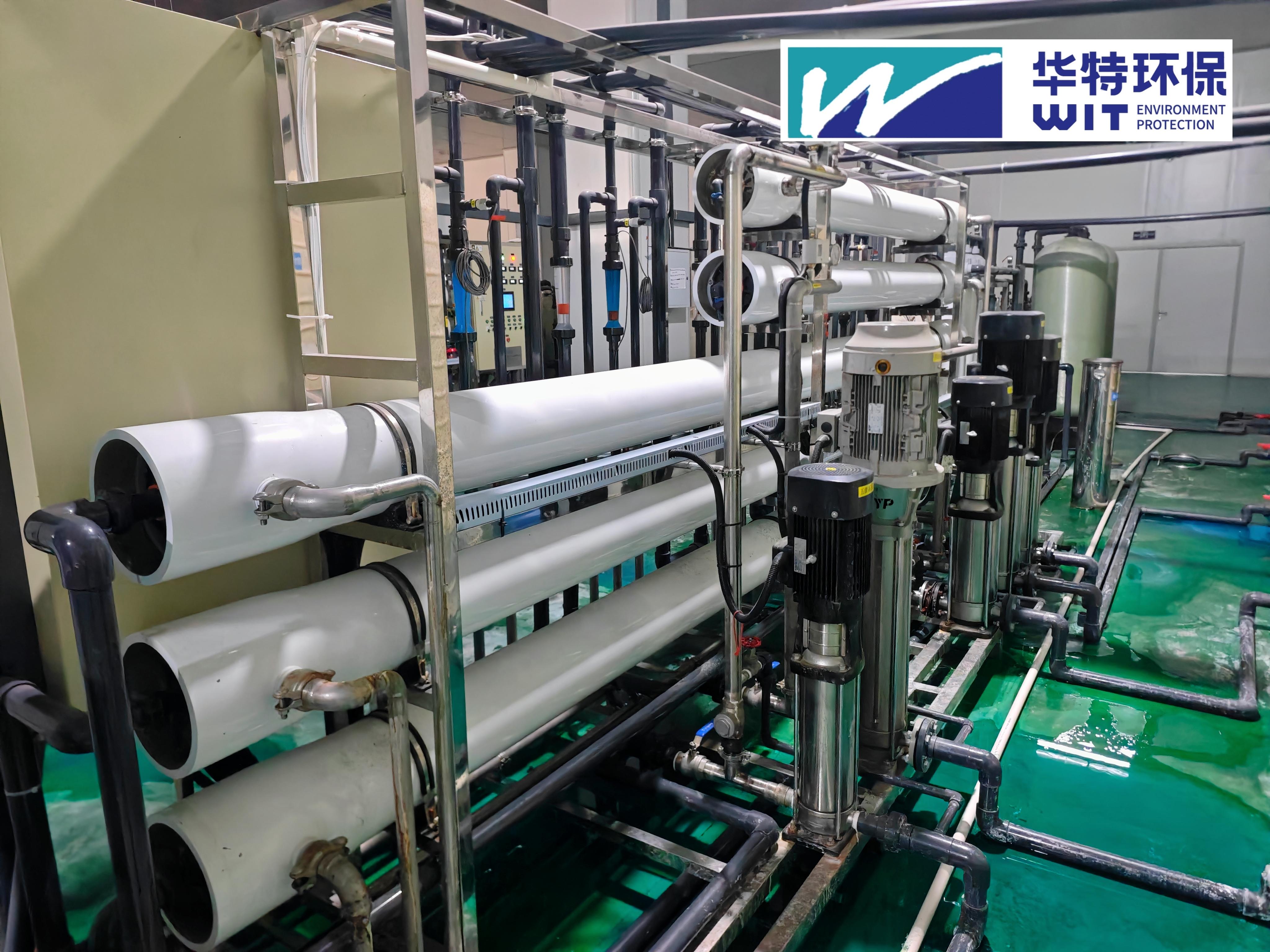
A variable frequency drive for desalination plants sits at the center of that shift because feed pumps, high-pressure pumps, transfer pumps, and chemical dosing skids all depend on controlled motor behavior.
This is also consistent with broader water sector development.
Enterprises with deep wastewater and environmental engineering experience, including Shandong Wit Environmental Protection Technology Co.Ltd, have helped push system thinking forward.
The focus is not only treatment capacity.
It is reliability across the full process, from intake and pretreatment to disinfection and reuse.
The main drivers behind this shift
- Higher electricity costs make inefficient pump operation more visible.
- Membrane systems are less tolerant of sudden pressure changes.
- Remote monitoring exposes repeated trips and unstable operating habits.
- Integrated treatment projects now expect smoother coordination between equipment packages.
The biggest mistakes usually happen during normal days
Major failures often begin with small routines.
A variable frequency drive for desalination plants may be technically sound, yet daily settings can quietly weaken performance.
One common issue is running at unnecessarily high minimum frequency.
That keeps pressure high even when demand is lower, wasting power and stressing seals.
Another issue is aggressive acceleration and deceleration.
Fast ramps may look responsive, but they can create hydraulic shock and unstable pretreatment flow.
By contrast, well-tuned ramps protect both the motor and the process.
Bypass mode is another area to watch.
Some teams treat bypass as a convenience setting.
In reality, it should be a controlled fallback, not a normal habit.
A practical checkpoint table
The effect is wider than the motor room
A variable frequency drive for desalination plants does not affect only motor power draw.
Its behavior shows up across the whole water line.
At the pretreatment stage, unstable drive control can disturb filtration loading and chemical dosing rhythm.
At the reverse osmosis stage, pressure fluctuation can shorten membrane life and alter recovery performance.
At post-treatment, uneven flow can complicate disinfection consistency.
This is why many integrated water projects now favor compact, coordinated equipment logic rather than isolated machine control.
In smaller or modular systems, solutions such as Small-Sized Integrated Skid-Mounted Water Purification Treatment Equipment reflect that same direction.
The message is simple: control quality upstream shapes stability downstream.
What better practice looks like in daily operation
Good practice is not complicated, but it must be consistent.
- Trend motor current, pressure, and frequency together, not as separate numbers.
- Recheck drive parameters after pump replacement, membrane cleaning, or pipe modification.
- Verify that alarms lead to root-cause review, not simple reset routines.
- Inspect cable terminations, grounding, and enclosure temperature on a fixed schedule.
- Use soft operating windows during startup, shutdown, and low-demand periods.
One more signal is becoming clearer.
Plants that combine field experience with engineering review tend to catch these issues earlier.
That approach is common in organizations rooted in full-process environmental services, where R&D, project execution, and operational feedback are linked.
The next improvement is likely to come from coordination, not speed alone
From recent demand patterns, the next step is not simply installing more drives.
It is making each variable frequency drive for desalination plants work in closer coordination with sensors, pumps, membranes, and dosing systems.
That means reviewing settings after process changes, not only after electrical faults.
It also means comparing stable operation hours, not just peak output.
If there is a useful next move, it is to map where pressure instability, repeat alarms, or unexplained energy drift are appearing.
Then build a short review plan around those points.
In desalination, efficient control is no longer a narrow electrical topic.
It has become part of water quality protection, asset life management, and overall environmental performance.



 Small Water Purification System Performance Under Variable Turbidity: Real-World Data from Off-Grid Agricultural Communities
 When Does a Small Water Purification System Outperform Centralized Treatment? Use Cases in Disaster Response and Mining Camps
 Small Water Purification System for Remote Clinics: Power-Independent Options and WHO Drinking Water Guidelines Compliance
 Ultrapure Water Equipment ROI Calculator: Estimating Payback Period Based on Yield Improvement and Defect Reduction
 How Ultrapure Water Equipment Validates Compliance with SEMI F63-1118 for 28nm+ Wafer Fabrication
") Ultrapure Water Equipment for Semiconductor Manufacturing: Key Specifications Beyond Resistivity (TOC, Particle Count, Metals)
Ultrapure Water Equipment for Semiconductor Manufacturing: Key Specifications Beyond Resistivity (TOC, Particle Count, Metals)

GET A FREE QUOTE
Service Commitment: Upon receipt of your message, a dedicated representative will contact you as soon as possible to provide efficient and professional service support.
